

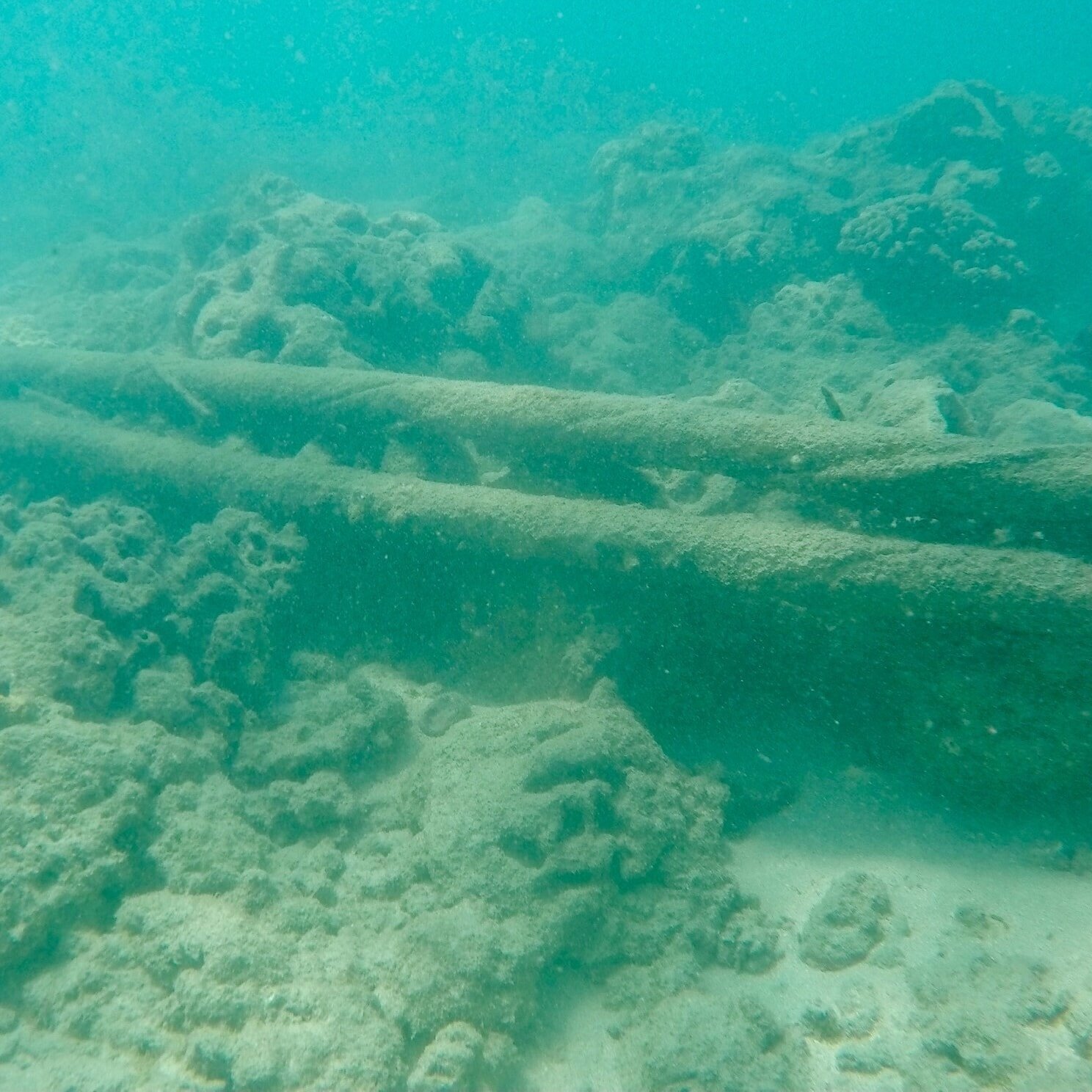
Before dawn on August 5, 1914, just hours after Britain declared war on Germany, an aging civilian cable-layer named the Alert slipped quietly into the English Channel. Her crew dropped heavy dragging hooks to the sea floor, searching for five underwater copper lines: Germany’s direct telegraph links to the outside world. By morning, all five were severed.
Deprived of direct communications, Berlin was forced to route its most sensitive diplomatic traffic through wireless signals and foreign-owned cables monitored by British intelligence. Two and a half years later, Royal Navy codebreakers in Room 40 intercepted one of those rerouted transmissions: the Zimmermann Telegram, Germany’s secret proposal offering American territory to Mexico in exchange for a war alliance. Its public exposure tipped the balance, drawing the United States into World War I.
The Alert was no battleship, but her quiet mission proved a fundamental truth of modern statecraft: whoever controls the physical wires controls the conversation—and with it, the intelligence, the narrative, and the outcome.
A century later, copper wires have given way to hair-thin strands of fiber-optic glass carrying pulses of laser light. Yet the underlying geopolitical reality remains entirely unchanged. Today, more than 600 submarine cable systems trace the ocean floor—a global digital circulatory system carrying over 95% of all intercontinental data traffic. Every international wire transfer, foreign-exchange trade, cloud computation, and artificial intelligence model query travels along the bottom of the sea. Satellites, by comparison, carry a mere rounding error.
Yet this critical foundation of the modern global economy rests on infrastructure that is startlingly, dangerously fragile.
An Ecosystem Under Threat
In deep water, a submarine cable is no thicker than a standard garden hose. The delicate glass fibers at its core are shielded by steel wire and plastic sheathing, leaving them exposed on the open seabed. While popular imagination often points to sharks biting at the electromagnetic hum, animal bites account for almost no operational failures. The true vulnerabilities are far more routine—and far more difficult to control.
According to the International Cable Protection Committee, roughly two-thirds of all cable faults are caused by commercial fishing trawlers and ship anchors dragging along the seabed. Increasingly, however, the damage is not accidental.
-
Primary Hazards: Commercial fishing gear, heavy ship anchors, shadow-war sabotage, and physical disruptions during active conflicts.
-
Economic Asymmetry: Severing a cable costs virtually nothing, but repairing one takes millions of dollars and months of specialized effort.
The Middle Eastern Chokepoints
The fragility of this system was laid bare during recent geopolitical escalations in the Middle East. Following military strikes involving the US, Israel, Iran, and Houthi forces, two of the world’s primary maritime data corridors were cast into the shadow of active war:
-
The Bab el-Mandeb Bottleneck: At just 26 kilometers wide, this narrow strait at the southern mouth of the Red Sea funnels the vast majority of digital communications flowing between Europe and Asia.
-
Delayed Repairs: When cables such as SEA-ME-WE 4 were cut near Jeddah, repairs stretched on for weeks. Few specialized maintenance vessels were willing or equipped to operate in war-shadowed waters.
-
Cascading Economic Fallout: NetBlocks documented Iran’s wartime digital blackout as the longest nationwide internet shutdown in modern history, isolating 90 million people. Drone strikes against Amazon data centers in the UAE and Bahrain disrupted Gulf banking operations, while market panic temporarily drove Brent crude oil to $126 a barrel.
The digital and energy crises are fundamentally linked: both flow through the exact same narrow geographical choke points.
Private Dominance and Cold War Echoes
As physical risks mount, a quieter transformation is altering who owns the global internet. Historically, submarine cables were funded and built by international consortia of state-backed telecom operators who shared bandwidth and costs. Today, that collaborative model is fading rapidly.
Control of global bandwidth has shifted into the hands of a small group of American technology conglomerates—principally Google, Meta, Microsoft, and Amazon.
-
Capacity Takeover: American tech giants accounted for 71% of all used international capacity in 2024, up from just 10% a decade earlier.
-
Transatlantic Control: Expert reporting for the European Commission indicates that US tech firms now carry roughly 90% of all transatlantic data capacity. Meta’s Project Waterworth alone spans more than 50,000 kilometers across five continents.
European governments scrutinize these companies’ market dominance and algorithms, yet they have handed out cable-landing licenses with virtually no regulatory conditions attached. In effect, essential global infrastructure has been quietly privatized.
This private oligopoly runs parallel to a growing technological divide between Washington and Beijing. When US diplomatic pressure successfully blocked a Chinese firm from constructing the SEA-ME-WE 6 cable system, China’s state carriers withdrew to construct their own independent networks, such as the PEACE cable (live since 2022 along the maritime Silk Road through Gwadar and Djibouti).
The result mirrors the splits seen in microchips and rare earth elements: two rival physical networks laying glass on the ocean floor, operating under almost no unified global oversight.
Aging Fleets and Legal Vacuums
Compounding the risk is a complete absence of modern international law. The primary legal instrument protecting undersea cables remains a treaty signed in 1884—an era when cables transmitted simple Morse code telegraphs.
When suspicious vessels drag anchors across seabed infrastructure in high-risk zones like the Baltic Sea, national navies often lack the legal jurisdiction to intervene effectively. Ships flying convenience flags and owned through web-like holding companies leave governments without clear legal recourse against state-sponsored or commercial sabotage.
“There is no modern international treaty protecting submarine cables as critical global infrastructure, and no international court empowered to prosecute those who deliberately sever them.”
Meanwhile, the physical means to maintain the network are rapidly eroding. The global repair fleet consists of a small, aging group of specialized ships facing chronic underinvestment. Projections by TeleGeography and Infra-Analytics indicate that nearly two-thirds of all active cable repair ships will reach the end of their operational lifespans by 2040. With new vessels costing over $100 million each and offering low commercial returns, few replacements are being built.
India’s Strategic Choice: Crossroads or Architect?
Geography has placed India at the central intersection of the world’s most critical data highways connecting Europe, Africa, the Middle East, and Southeast Asia. Yet India’s physical authority over this infrastructure remains dangerously disproportionate to its digital presence:
-
Minimal Infrastructure Ownership: India holds barely 1% of global cable-landing stations, according to telecom regulator TRAI.
-
Single Point of Failure: Roughly 95% of India’s international traffic funnels through a single six-kilometer stretch of coast in Versova, Mumbai.
-
Zero Maintenance Assets: India owns no dedicated undersea cable repair vessels.
India aims to attract over $200 billion in data-center investments, driven by digital public infrastructure like the Unified Payments Interface (UPI)—which handles nearly 23 billion real-time transactions a month. Yet, the physical data supporting this ecosystem relies almost entirely on foreign-owned cables routed through two narrow maritime corridors: the Red Sea to the west and Singapore to the east.
Bandwidth alone does not guarantee digital sovereignty. If India is to secure its economic future, it must treat undersea cables with the same strategic priority it applied to domestic financial technology.
A Roadmap for Seabed Sovereignty
-
Sovereign Cable Investment: Transition from being merely a landing destination for foreign-owned infrastructure to directly financing and building Indian-owned submarine systems.
-
Develop a Repair Fleet: Invest in a national fleet of specialized cable-laying and maintenance vessels to ensure rapid repair capabilities in the Indian Ocean.
-
Diversify Landing Sites: Reduce reliance on single points of failure like Versova by developing secure landing infrastructure along alternative coastlines.
In 1866, after earlier rushed attempts failed, engineers laid the first lasting transatlantic cable using patient, low-voltage methods that revolutionized global communications. The core lesson remains true today: the physical wires matter, the chokepoints matter, and the choices made regarding ownership and security will dictate global power dynamics for decades to come.
For India, the question is no longer whether data is vital to national power, but whether it will continue letting foreign entities own the physical pathways that carry it.
