

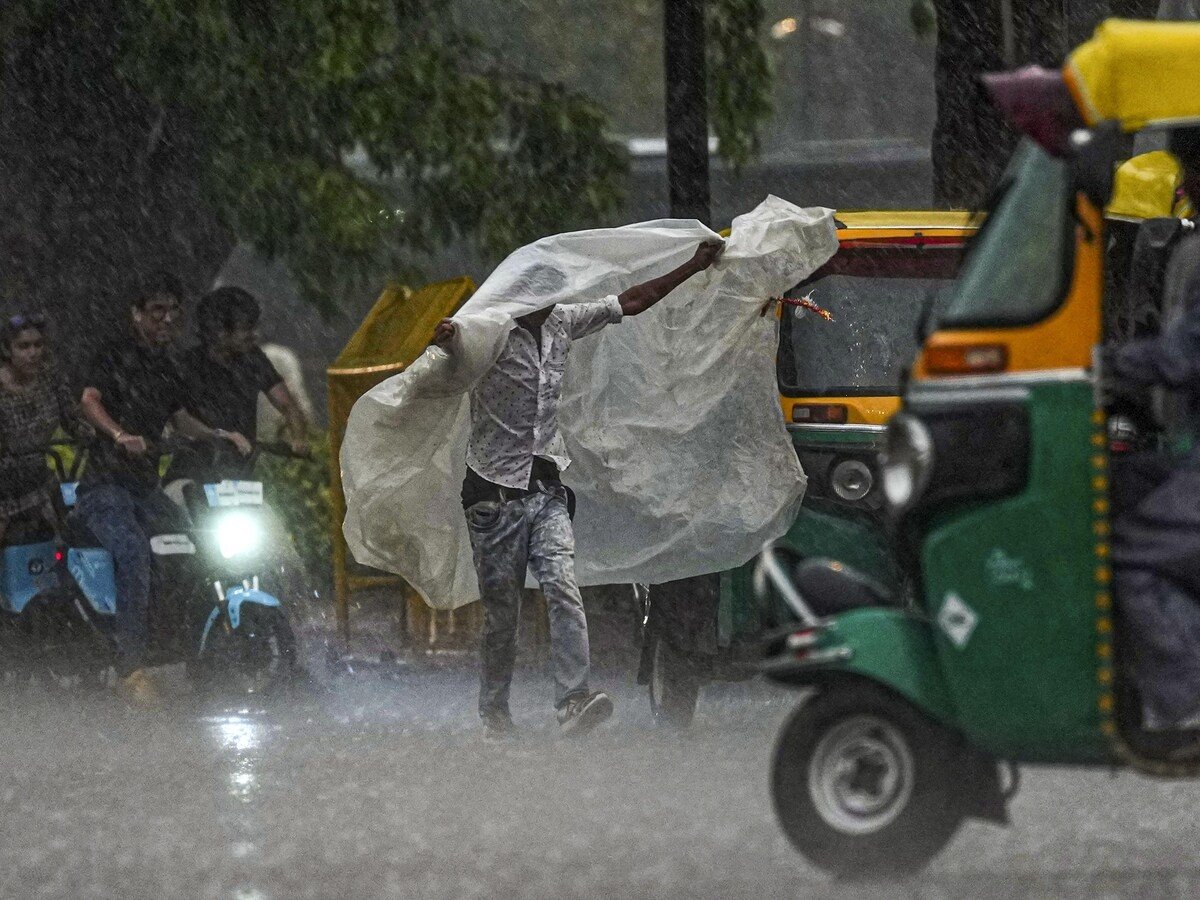
The provided text lays out a comprehensive, scientifically grounded framework for understanding the intersection of long-term climate dynamics and immediate urban infrastructure failures in India. It effectively shifts the conversation from generic global warming rhetoric to a precise mechanical breakdown of how thermodynamic alterations impact localized weather delivery.
Key Insights and Critical Takeaways
1. The Physics of Compression-Loading
The document correctly highlights the Clausius-Clapeyron relation as the core physical driver behind the changing monsoon. By connecting a 1°C rise in sea surface temperatures (SST) to a 7% increase in the atmosphere’s moisture-holding capacity, it explains why India isn’t necessarily seeing a massive change in total seasonal rainfall volume, but rather a violent shift in delivery. The monsoon has transformed into an era of erratic extremes—characterized by hyper-localized, torrential cloudbursts that dump weeks’ worth of rain in a few hours, punctuated by prolonged, economically damaging dry spells.
2. De-linking Weather from Climate (Without Ignoring the Catalyst)
A major strength of this text is its distinction between mesoscale weather systems and climate trends. By citing specific systems like the Bay of Bengal inland depressions, Arabian Sea cyclonic circulations, and the northward migration of the seasonal monsoon trough, it prevents the common analytical error of blaming a single stormy week entirely on climate change. Instead, it accurately positions climate change as an atmospheric intensifier—a thermodynamic force multiplier that supercharges existing systems with unprecedented moisture reserves.
3. Urbanization as a Disaster Multiplier
The transition from macro-meteorology to micro-urban planning emphasizes that India’s urban flooding crises are deeply structural rather than purely natural.
-
The Sponge Deficit: Treating floodplains, wetlands, and natural drainage basins as “vacant real estate” creates completely impermeable urban surfaces. When a compressed, climate-intensified rain event hits an entirely concretized landscape, the runoff coefficient approaches 100%, causing instant systemic collapse.
-
Thermodynamic Feedback Loops: The text astutely notes that the Urban Heat Island (UHI) effect isn’t just uncomfortable—it actively alters local weather. The extreme thermal signatures of concrete metros generate intense localized updrafts, contributing directly to the severity of micro-bursts over densely populated areas.
4. The Engineering Imperative
The ultimate conclusion is clear: Historical weather baselines are obsolete. India’s civic engineering, municipal drainage metrics, and infrastructure guidelines (like smart city master plans and storm-water designs) are built for a climate era that no longer exists. Moving forward, urban planning must shift toward adaptive, climate-resilient engineering—such as implementing “Sponge City” concepts, strictly preserving natural drainage topographies, and planning for maximum high-volatility scenarios rather than past averages.
