

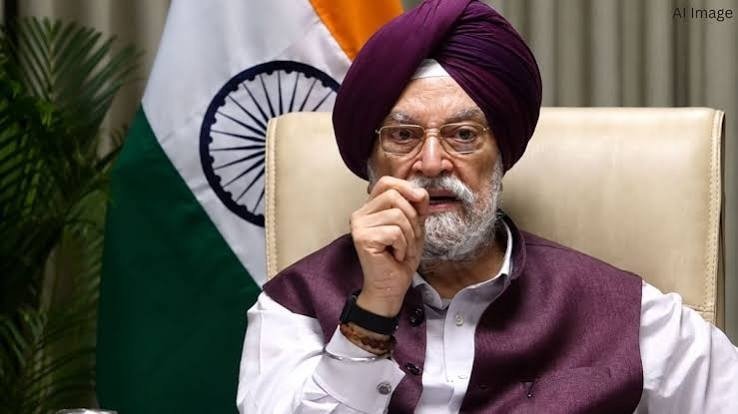
Amid rising discussions and viral social media rumors surrounding the performance of ethanol-blended fuel, Union Minister for Petroleum and Natural Gas Hardeep Singh Puri held a press conference in Delhi to address vehicle owners’ concerns.
The minister provided clarity on key issues, including minor fuel economy changes, performance characteristics, and insurance validity for vehicles running on E20 petrol (a blend of 20% ethanol and 80% regular petrol).
Key Myths vs. Facts on E20 Fuel
| The Rumor / Concern | Official Clarification from the Ministry |
| “E20 petrol will drastically drop my mileage.” | Fact: There may be a minor drop in mileage due to various chemical factors, but it is not a drastic reduction. |
| “Ethanol hurts my engine’s performance.” | Fact: Ethanol blending actually improves acceleration and reduces engine knocking. It is widely used in high-performance racing cars. |
| “Insurance companies will reject claims if I use E20.” | Fact: This is false. Insurance regulatory bodies and companies have already clarified that using E20 fuel has zero impact on vehicle insurance claims. |
The Technical Trade-Off: Efficiency vs. Power
Minister Puri acknowledged that while fuel economy might see a negligible decrease, the blending process introduces performance advantages that drivers often overlook.
“Somebody is saying that fuel mileage is going to drop. It is now well established that ethanol is even used in racing cars. Acceleration improves… Knocking also improves. Mileage? Yes, it may drop a little. But it may drop slightly due to various factors.”
— Hardeep Singh Puri, Union Minister
Because ethanol has a higher octane rating than pure gasoline, it increases the fuel’s resistance to premature detonation—commonly known as engine knocking. This higher resistance allows modern engines to run higher compression ratios, directly resulting in crisper throttle response and improved acceleration.
The Future Roadmap for Blended Fuels
The government reiterated that India’s standard fuel infrastructure is currently capped at 20% ethanol blending. While the Bureau of Indian Standards (BIS) has already formulated regulatory guidelines for higher benchmarks (such as E22, E25, E27, and E30) and granted preliminary excise duty exemptions, the ministry clarified that these are purely administrative frameworks.
There will be no immediate commercial rollout of fuels beyond E20. Any expansion to 25% blending or higher will only occur after thorough mechanical testing, safety compliance checks, and structural verification across India’s automotive manufacturing lines. The minister emphasized that the future ecosystem will cleanly distribute market space among electric vehicles (EVs), biofuels, hybrids, and CNG models.
