

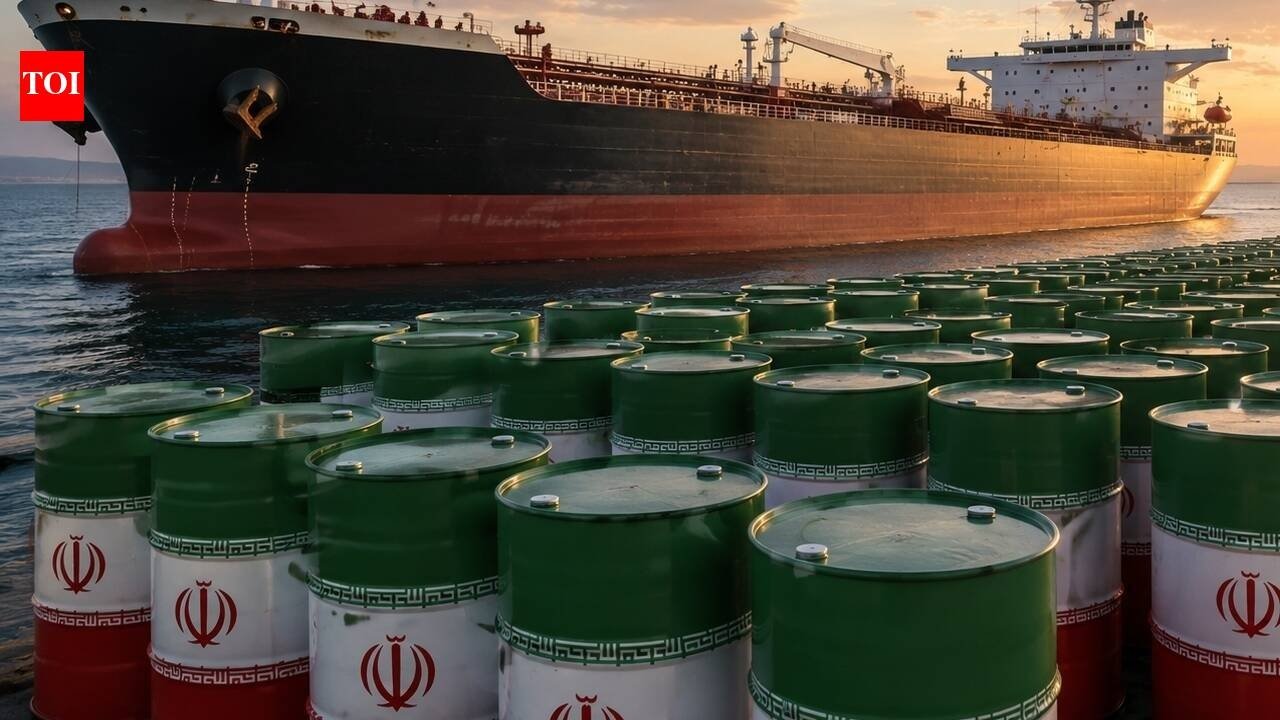
In a major geopolitical policy shift, the United States has thrown a surprise lifeline to Iran’s oil industry by issuing a temporary, 60-day general license. The waiver, active until August 21, 2026, permits the production, sale, delivery, and import of Iranian crude oil, petroleum products, and petrochemicals.
The US Treasury’s decision follows an interim memorandum of understanding signed in Switzerland, where Iran agreed to ensure open transit through the strategic Strait of Hormuz and allow inspections by the International Atomic Energy Agency (IAEA).
While this temporary window may not instantly trigger a flood of Iranian oil tankers into Indian ports, the stabilization of global markets positions India as a major indirect winner.
The Anatomy of India’s Oil Dependence
India is highly vulnerable to global oil price volatility, importing nearly 85% of the crude oil it consumes. Fluctuations in benchmark prices directly dictate the nation’s import bill, domestic inflation, and retail fuel costs.
Over the past four years, India’s energy sourcing matrix has experienced structural shifts:
-
The Russian Pivot: Following the Russia-Ukraine war, New Delhi rapidly scaled up imports of discounted Russian crude. Russia now commands roughly 33% to 40% of India’s total oil imports, making it the country’s single largest supplier.
-
The OPEC Anchor: Despite the rise of Russian imports, India continues to lean heavily on Middle Eastern suppliers like Saudi Arabia, Iraq, and the UAE, with OPEC nations fulfilling roughly half of India’s crude requirements in 2025.
Why Iran’s Partial Return Matters to India
Prior to the reimposition of strict US sanctions in 2018 under the Trump administration, Iran was consistently ranked among India’s top three oil suppliers. Indian refiners heavily favored Iranian crude due to highly competitive pricing, lower freight costs, and lucrative credit terms.
Even if Indian refiners hesitate to sign short-term, 60-day purchase contracts with Tehran, the US policy shift aids India through two crucial mechanisms:
1. Enhanced Market Supply & Bargaining Power
The immediate introduction of millions of barrels of Iranian oil puts downward pressure on global benchmark prices. More available supply globally naturally cools down prices and expands India’s leverage to negotiate steeper discounts from its current primary suppliers, including Russia.
2. De-escalating the Strait of Hormuz Risk
A massive portion of India’s energy imports must safely navigate the Strait of Hormuz—a narrow choke point connecting the Persian Gulf to global shipping lanes that handles roughly 20% of the world’s petroleum.
Because the US-Iran temporary agreement explicitly binds Tehran to maritime security commitments, the threat of supply chain disruptions in the waterway is greatly minimized, lowering insurance premiums and freight risks for Indian vessels.
The Financial Takeaway
With India’s annual crude import bill routinely eclipsing the $100 billion mark, even minor structural drops in per-barrel global oil prices translate into billions of dollars saved. For Indian policymakers, a cooler oil market provides vital breathing room to curb domestic inflation, control the fiscal deficit, and stabilize the country’s external trade balances.
