

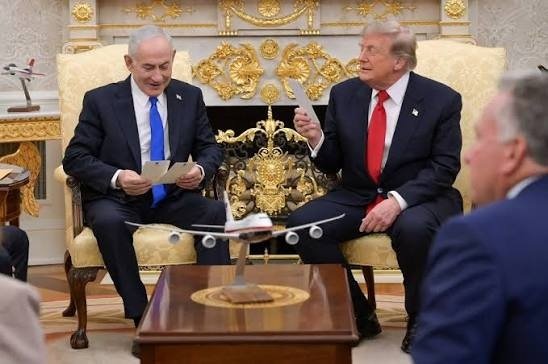
US Vice President JD Vance and Israeli Prime Minister Benjamin Netanyahu met behind closed doors at Blair House in Washington on Tuesday to confront a expanding rift between the two leaders regarding the war in Iran. Officials from both delegations characterized the face-to-face discussions as “direct and frank.”
According to an Axios report, the high-level meeting aimed to defuse months of private resentment and public friction. Sources familiar with the talks noted that Netanyahu voiced deep concerns regarding Vance’s recurring public critiques of the Israeli government, as well as the potential long-term damage to Israel’s support within the Republican Party.
US and Israeli officials both acknowledged the blunt nature of the sit-down, with a US official confirming the dialogue was “direct.”
Origins of the Falling Out
Although the Trump administration maintains an official stance of public support for Israel, Vice President Vance has become one of the prominent skeptics of Netanyahu’s military and diplomatic strategy within the White House.
As the war extended, Vance took on an influential role in steering Washington’s Middle East policy, particularly as a key architect and defender of the US-Iran memorandum of understanding following the April ceasefire. Netanyahu privately opposed the agreement—hoping it would collapse on its own—while avoiding public confrontation over its terms.
The friction reached a critical point through several key developments:
-
Evolving Diplomatic Stance: Following the April ceasefire, Vance positioned himself as the administration’s primary champion for diplomatic engagement, maintaining that the main US goal must be preventing a nuclear-armed Iran without entangling American forces in an extended regional war.
-
Challenging War Predictions: During a heated call in March, Vance reportedly pushed back against Netanyahu’s strategic projections, calling out overly optimistic assumptions—such as the expectation that the conflict would trigger a popular uprising to overthrow the Iranian government.
-
Public Escalation: Tensions spilled into public view over the summer. In June, Vance openly warned Israeli leadership against undermining US diplomatic efforts, noting that Israel should exercise caution before “attacking the only powerful ally that I have anywhere left in the entire world.”
Escalating Media and Personal Friction
The friction between the two figures went beyond policy strategy to personal grievances. Netanyahu felt aggrieved by Vance’s accusations that the prime minister was undermining the diplomatic process and questioning his allegiance to President Donald Trump.
Conversely, Vance suspected that media outlets aligned with Netanyahu in both Israel and the US were deliberately targeting him to cause political damage. The vice president further fueled tensions during a July appearance on The Joe Rogan Experience, where he accused elements of the Israeli government of attempting to manipulate US policy to prolong the war, while also making unsourced comments regarding Jeffrey Epstein’s alleged ties to Israeli intelligence.
Tuesday’s Blair House summit provided both leaders a critical window to air these grievances directly and attempt to stabilize the partnership before relations frayed further.
