

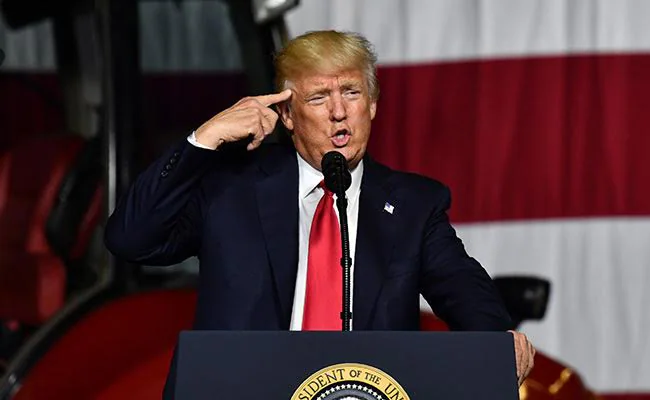
In a move reshaping global energy dynamics, President Donald Trump announced on Friday that the United States has signed what he termed “the biggest oil deal in world history” with Venezuela’s interim government.
The agreement grants the U.S. effective majority control over roughly 65 billion barrels of proven crude reserves across 17 oil fields in the South American nation. Negotiated by Secretary of State Marco Rubio, Defense Secretary Pete Hegseth, and Venezuelan interim President Delcy Rodríguez, the deal marks a dramatic geopolitical shift nearly nine months after the U.S. military operation that captured former President Nicolás Maduro.
Key Terms and Structural Details
Under the framework outlined by White House officials, the agreement creates a joint venture between the U.S. government, an unnamed private operator, and Venezuelan state interests.
-
55% Controlling Stake: The U.S. holds a 55% effective output share in the new corporate entity through equity and guaranteed “at-cost” oil purchases. White House officials claim the venture will instantly become the world’s second-largest corporate holder of proven oil reserves, behind Saudi Aramco.
-
100-Year Concessions: Acting President Delcy Rodríguez granted the newly formed entity a century-long operational mandate across 17 designated fields.
-
Revenue and Investment Targets: Rodríguez confirmed that the deal aims to channel $100 billion in private investment into Venezuela’s crumbling oil infrastructure, projecting $209 billion in long-term tax revenues for Caracas.
Energy Crisis and Geopolitical Pressures
The announcement arrives as Washington faces sharp domestic pressure regarding escalating energy costs. Domestic gasoline prices have climbed to an average of $4.09 per gallon—up from $3.21 a year ago—driven by the ongoing six-month war involving the U.S. and Israel against Iran, which has bottlenecked crude flow through the Strait of Hormuz.
Concurrently, the U.S. Strategic Petroleum Reserve (SPR) recently dipped below 300 million barrels, marking a decline of over 100 million barrels since early 2026. Officials confirmed that crude procured from the new joint venture will be funneled directly toward replenishing the national reserves and supplying the American military.
Industry Headwinds and Political Backlash
Despite Washington’s sweeping claims, energy analysts warn that a meaningful influx of Venezuelan crude to global markets will take years. Decades of underinvestment, sanctions, and decaying infrastructure mean restoring standard extraction capacity will require vast up-front capital. While major U.S. firms previously labeled the region “un-investable” following past asset nationalizations under Hugo Chávez, Rodríguez’s administration has cleared legal pathways to privatize state assets and encourage Western capital.
The arrangement has drawn sharp condemnation from members of the Venezuelan political opposition, who have labeled the concession an illegal, extra-constitutional transfer of national sovereignty. However, the Trump administration maintains that stabilizing and monetizing Venezuela’s estimated 303-billion-barrel reserves remains essential for hemispheric economic recovery and long-term energy security.
