

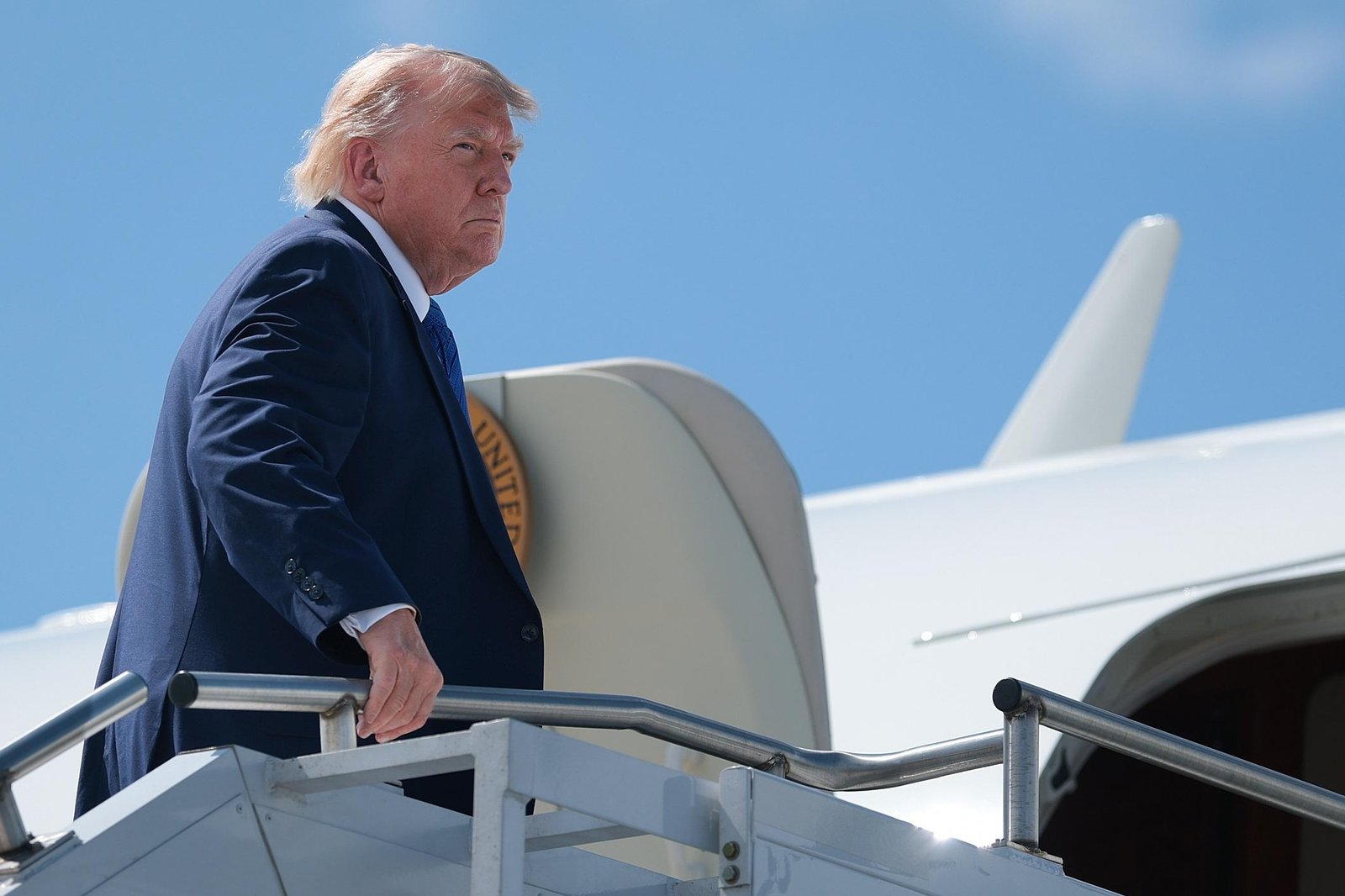
When US President Donald Trump was secretly extracted from Air Force One in Ankara following a credible Iranian missile threat, he didn’t just leave behind reporters—top Cabinet officials, military personnel, and senior White House aides were kept in the dark and flown out on the targeted decoy aircraft.
Who Was Left Behind?
According to The New York Times, Air Force One took off as scheduled without the president, carrying key administration leaders and staff who were completely unaware the plane was serving as a decoy:
-
Top Cabinet Officials: Secretary of State Marco Rubio and Treasury Secretary Scott Bessent.
-
Senior Aides: White House advisers Stephen Miller and Steven Cheung.
-
Press & Personnel: The traveling White House press pool, military personnel, and government support staff.
Passengers in the rear of the aircraft were simply instructed to keep their window shades drawn throughout the flight. To maintain the illusion of a continuous trip, Trump secretly rejoined Air Force One at a later stop before landing in the US.
Sharp Criticism Over “Human Shield” Tactics
The decision to use an unwitting crew of civilians, journalists, and high-ranking officials to draw away fire has drawn harsh condemnation from former national security and press officials:
“They just didn’t seem to give a second thought to anybody but the president… We went out of our way to make sure the maximum number of people, especially civilians, were protected and not human shields. They didn’t even think about it.” — Joe Lockhart, former Clinton White House Press Secretary (referencing Clinton’s 2000 trip to Pakistan)
Critics pointed out that while former President Bill Clinton also used a decoy plane in 2000 due to terror threats, his administration briefed select press members in advance and disclosed the operation immediately after leaving Pakistani airspace. The Trump administration kept the Ankara switch completely secret until media outlets broke the story.
The Administration’s Defense
Former White House officials and Trump defenders argued that high-stakes threat scenarios require extreme measures.
-
Acceptance of Risk: Joseph W. Hagin, former deputy White House chief of staff, argued that those traveling with the president accept inherent danger, stating, “Telling everyone what’s up in an operation like this would have obviously jeopardized the president’s safety.”
-
Trump’s Stance: President Trump defended following Secret Service orders and rejected claims that those on Air Force One were in extra danger:
“I think actually the plane that I flew on was at greater risk because that would be the plane I think that they would be more likely to go for,” Trump claimed on Tuesday.
