

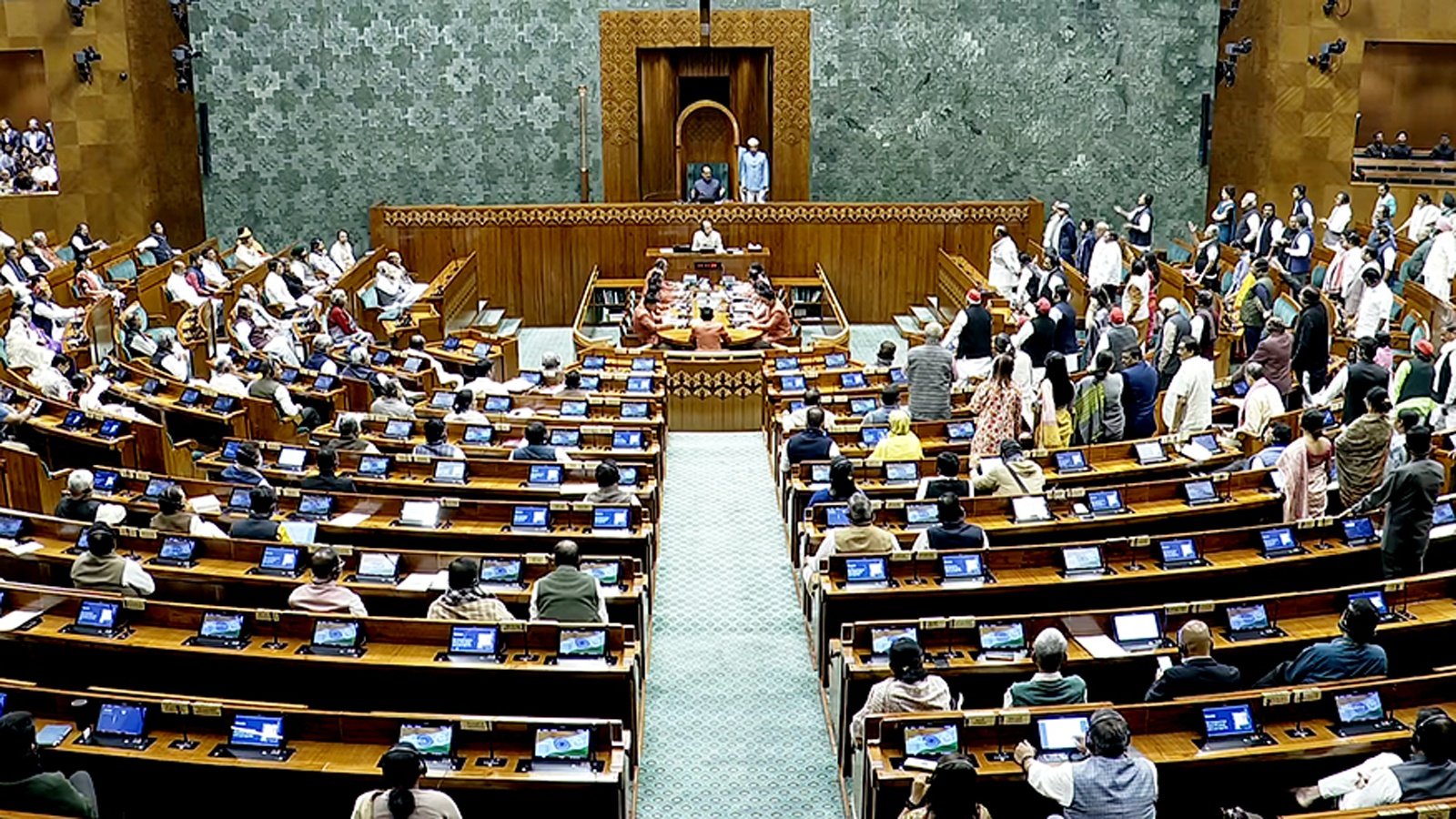
The political landscape in New Delhi has fundamentally shifted following structural fractures in regional opposition hubs. Ever since the Constitution Amendment Bill (incorporating both the Delimitation Bill and the 33% Women’s Reservation Bill) fell short of a special majority in April, the ruling National Democratic Alliance (NDA) has quietly pivoted toward dynamic numbers management.
Passing a Constitutional Amendment requires a special majority: more than half the total membership of the House must be present, and the bill must secure at least two-thirds of the votes from those present and voting. With the effective strength of the Lok Sabha hovering around 540 due to recent vacancies, the targeted magic number sits firmly at 360.
Shifting Allegiances: The New Math of the Lok Sabha
The structural path to building a constitutional supermajority relies heavily on splits within key opposition factions and issue-based regional realignments:
-
The Shock Trinamool Congress (TMC) Fracture: Following a decisive defeat in the West Bengal Assembly Elections, a major rebellion has split Mamata Banerjee’s party. Led by 20 rebel Lok Sabha MPs (one more than the structural two-thirds needed to bypass the anti-defection law), this group has aligned with the NDA, pushing its baseline past 313.
-
The DMK Realignment: Having suffered recent electoral losses in Tamil Nadu and an internal alliance split with the Congress, MK Stalin’s DMK is shifting toward strategic, issue-based support. Adding their 22 MPs brings the floor coordination to roughly 335.
-
Targeting the Shiv Sena (UBT): The NDA is actively pursuing a split within the nine-member Uddhav Thackeray faction, aiming to chip away an additional six votes to bring the dynamic threshold closer to 341.
Why the Two-Thirds Threshold is Mandatory
The upcoming Monsoon Session, scheduled for mid-July, is poised to introduce highly consequential structural reforms that cannot pass via a standard, simple majority.
-
The 131st Constitutional Amendment (Delimitation Bill): This critical legislation aims to decouple the upcoming redrawing of electoral boundaries from the delayed census, instead relying on localized 2011 demographic data. It also introduces plans to scale the Lok Sabha to a comprehensive 850-seat framework.
-
The Women’s Reservation Trigger: Because the original layout linked the implementation of the 33% women’s quota directly to the completion of delimitation, the failure of the April vote simultaneously locked out the gender quota. Passing this package ensures the structural shift is locked in ahead of the 2029 general elections.
-
One Nation, One Election: The government’s planned single-election framework requires sweeping changes to state assembly lifespans and constitutional norms, making an absolute supermajority entirely non-negotiable.
The Tactical Takeaway: By successfully closing the 54-vote gap that derailed the legislative agenda in April down to an estimated 12-seat margin, the ruling alliance is strategically positioning itself to pass its most defining constitutional reforms when the House reconvenes this July.
This analytical video from Barkha Dutt’s political review provides an essential on-the-ground breakdown of the massive regional structural crisis facing opposition leadership, showing exactly how last month’s state assembly shifts directly triggered the parliamentary realignment taking place today.
