

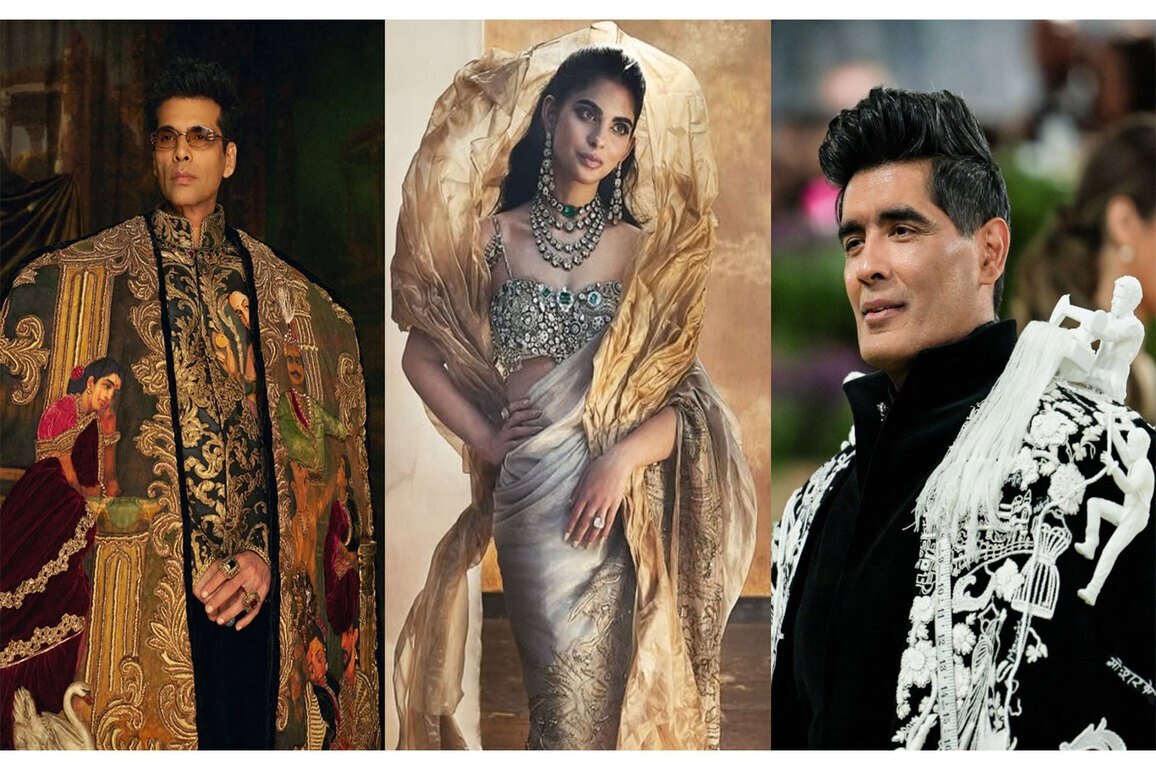
The 2026 Met Gala marked a definitive “India Inc takeover,” as the country’s corporate elite shifted the focus from mere red-carpet spectacle to strategic cultural storytelling. Under the theme “Costume Art” and the dress code “Fashion Is Art,” Indian business leaders and designers transformed the Metropolitan Museum of Art into a showcase for heritage couture and artisanal craftsmanship.
The Power Players of India Inc at the Met
| Name | Role | Look Highlights |
| Isha Ambani | Director, Reliance Retail | Wore a custom Gaurav Gupta gold-tissue sari woven with pure gold threads. Inspired by Pichwai paintings, it featured a blouse with 1,800 carats of diamonds and a Subodh Gupta mango sculpture. |
| Karan Johar | Filmmaker/Entrepreneur | Made his Met debut in a Manish Malhotra ensemble titled “Framed in Eternity.” Inspired by Raja Ravi Varma, the hand-painted cape took 80 artisans 85 days to complete. |
| Natasha Poonawalla | Executive Director, SII | Wore a “living sculpture” orchid pectoral by British artist Marc Quinn, layered over a vintage white Dolce & Gabbana gown acquired at a museum auction. |
| Ananya Birla | Entrepreneur/Musician | Debuted in a sharp Robert Wun couture look featuring a metallic face mask by artist Subodh Gupta, reimagining everyday kitchen utensils into high-concept art. |
| Sudha Reddy | Philanthropist | Collaborated with Manish Malhotra on “The Tree of Life,” featuring Kalamkari motifs from Telangana. The look was paired with a 550-carat tanzanite necklace. |
Themes of the Takeover
-
Heritage as Fine Art: Unlike previous years where Bollywood glamour led the charge, the 2026 contingent focused on “heritage as a living art form.” Garments were treated as archives, featuring antique zardozi, gold-and-silver Kanjivaram bases, and manual hand-painting inspired by the Ajanta caves and classical Indian masters.
-
The “Maker” Spotlight: Designer Manish Malhotra made a radical statement by wearing a cape embroidered with the names and signatures of his artisans, shifting the narrative from the celebrity face to the skilled hands powering India’s luxury industry.
-
Royal Representation: The Jaipur royals—Maharaja Sawai Padmanabh Singh and Princess Gauravi Kumari—brought personal legacy to the carpet. Gauravi Kumari wore a chiffon sari originally belonging to her grandmother, Maharani Gayatri Devi, reimagined by Prabal Gurung as a historical record.
The Economic Context
This presence aligns with the broader “India Inc” push on the global stage. As Indian companies announce record investments in the U.S. (surpassing $20.5 billion in 2026), the Met Gala has become a venue for India’s business elite to exercise soft power. By positioning Indian craftsmanship not just as a commodity but as high art, these leaders are bridging the gap between corporate dominance and cultural influence.
Key Takeaway
In 2026, the Met Gala white carpet served as a strategic “Silk Road” for Indian corporate leaders. They didn’t just attend the party; they utilized the platform to signal that India’s economic rise is inextricably linked to its artistic and artisanal sovereignty.
