

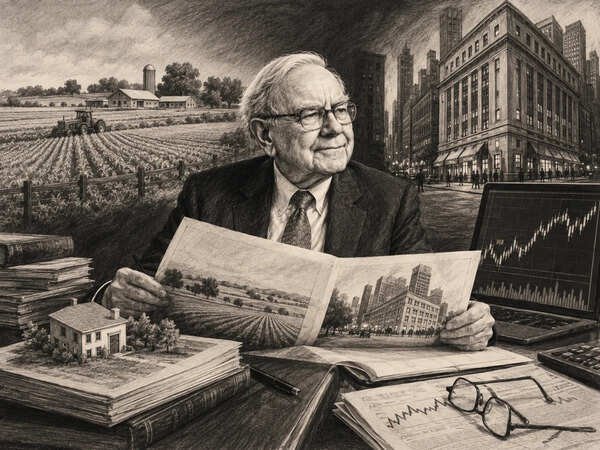
Warren Buffett often uses two simple investment stories to explain why most people fail in the stock market. Remarkably, neither story involves a financial ticker, a complex metric, or specialized skill. They rely entirely on human psychology.
-
The Quiet Asset: A man buys a small apartment. He lives in it or collects rent. Because nobody calls him the next morning to tell him the property is worth two percent less, he feels no panic. Ten years later, he has quietly built wealth.
-
The Loud Ticker: That same man buys shares in a wonderful, stable company. But because stock prices flash on a screen every second—tempting him with constant, shifting valuations—fear takes over. Within six months, he sells out at a loss.
The takeaway from Buffett is clear: The investor’s worst enemy is not the market, but the quote machine. Real estate succeeds because its price is invisible day-to-day, forcing patience. The stock market fails everyday investors not because the businesses are bad, but because constant liquidity and real-time pricing turn ordinary patience into self-sabotaging panic.
