

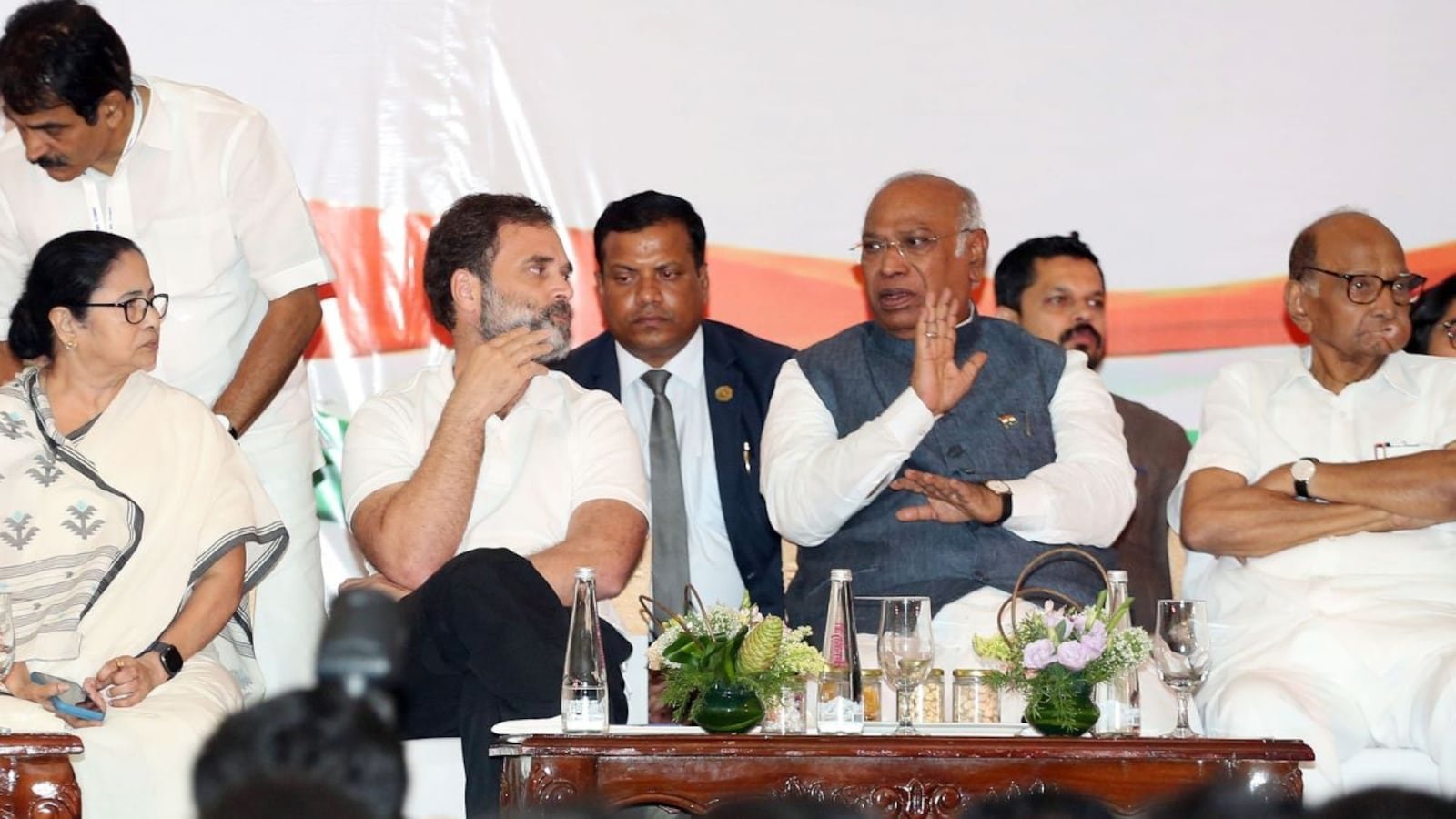
A massive consolidation wave is quietly building inside the opposition INDIA bloc. Decades after high-profile, bitter splits fractured the grand old party, top political leaders are actively pushing for an “Akhand” (Unified) Congress.
The momentum centers on a radical proposition: instead of continuing as mere coalition allies, Mamata Banerjee’s Trinamool Congress (TMC) and Sharad Pawar’s Nationalist Congress Party (NCP-SP) are reportedly laying the groundwork to completely dissolve their regional identities and merge back into the Indian National Congress.
The Voices Driving the Merger
While Congress Organisation General Secretary KC Venugopal publicly downplayed the development as “baseless rumors,” several heavyweight regional and national leaders have openly confirmed that structural talks are very real.
-
Nana Patole (Maharashtra Congress Chief): Patole dropped the most direct confirmation yet, telling reporters that this is an absolute merger, not a temporary seat-sharing alliance. “Sharad Pawar and Mamata Banerjee are making up their mind… The proposal from Pawar Saheb had already been given earlier… All parties that have secular, pluralistic ideologies should unite to stop the large-scale division of votes.”
-
Ashok Gehlot (Former Rajasthan CM): Gehlot threw his weight behind the consolidation, urging regional bosses to completely surrender their independent factions. “The time has come. All those parties that became regional parties after separating from the Congress should rejoin, and they should wholeheartedly accept Rahul Gandhi as the leader.”
-
Sanjay Raut (Shiv Sena UBT Leader): Raut originally triggered the national conversation by publicly urging structural patriarch Sharad Pawar to “take the lead” in dissolving smaller splinter groups back into the parent party to present a unified, single-symbol challenge to the BJP.
Decades of Defiance coming Full Circle
The structural irony of the proposed merger lies in the history of the leaders involved. Both Banerjee and Pawar built their vast political legacies by aggressively rebelling against Delhi’s centralized Congress high command:
| Party | Founder | Year Split | Original Reason for Leaving | Current Catalyst for Return |
| Trinamool Congress (TMC) | Mamata Banerjee | 1998 | Frustration with Congress’s perceived soft stance against the Left Front in West Bengal. | Severe ongoing internal party crises and a desire to anchor national opposition. |
| Nationalist Congress Party (NCP-SP) | Sharad Pawar | 1999 | Expelled after fiercely protesting Sonia Gandhi’s “foreign origin” path to leadership. | A devastating 2023 party split orchestrated by nephew Ajit Pawar, prompting a need for structural protection. |
Behind Closed Doors: The Sonia-Rahul Parleys
The intense political speculation follows a series of high-stakes, back-to-back meetings in New Delhi. On Tuesday, Mamata Banerjee held a private audience with Congress matriarch Sonia Gandhi. The next day, TMC General Secretary Abhishek Banerjee sat down for a marathon 90-minute meeting with Leader of Opposition Rahul Gandhi.
According to insiders, Abhishek explicitly conveyed that the TMC is ready to unconditionally accept Rahul Gandhi’s undisputed leadership in the broader national opposition ecosystem.
For the Congress, the strategy remains cautious but welcoming. High command sources indicate that the party will not aggressively pursue or force the issue; the formal proposal for an absolute merger must officially come from the desks of Mamata Banerjee and Sharad Pawar themselves.
When asked about the merger, Sharad Pawar’s daughter and senior leader Supriya Sule offered a characteristically cryptic response, noting: “Let it rain first, then we’ll see whether to take an umbrella or a raincoat.” In the fast-shifting landscape of Indian politics, that rain may arrive sooner than expected.
