

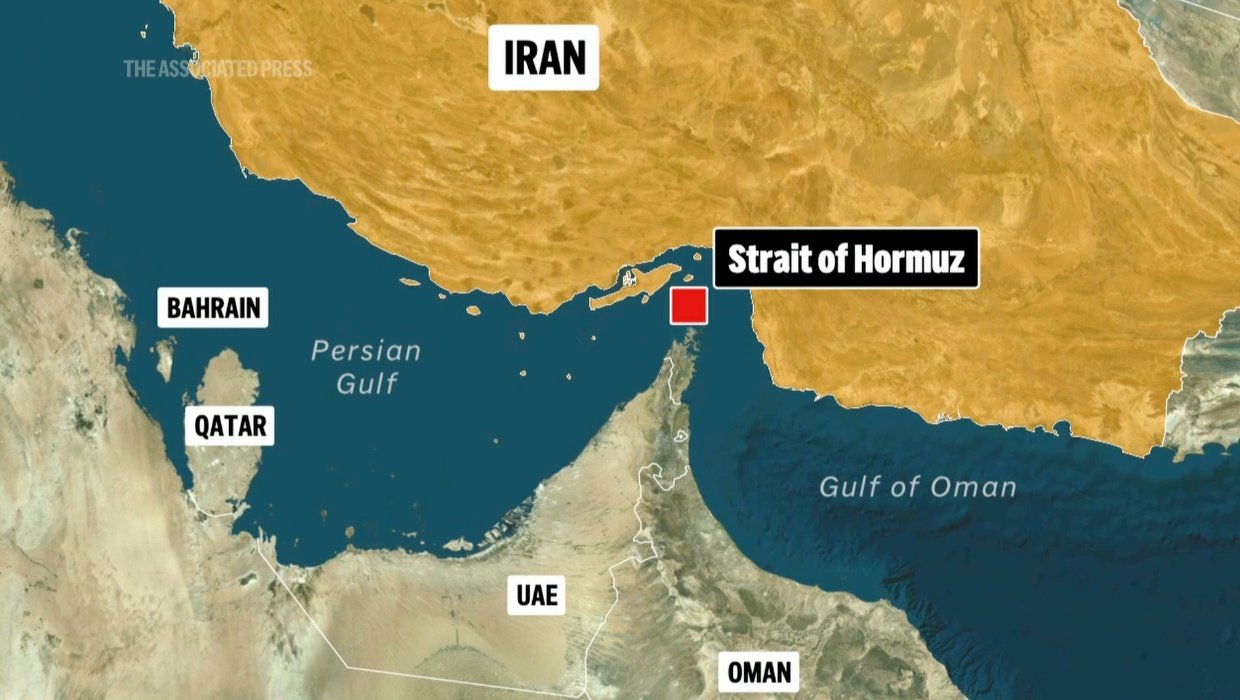
TEHRAN / WASHINGTON — The Strait of Hormuz, the world’s most critical energy artery, has transformed into a high-stakes maritime toll zone. On Sunday, Iranian officials confirmed the implementation of a “sovereign regime” over the waterway, reportedly charging certain merchant vessels $2 million for safe passage as a U.S.-imposed deadline to reopen the strait rapidly approaches.
A New “Sovereign Regime”
Alaeddin Boroujerdi, a senior member of the Iranian Parliament’s National Security Committee, defended the exorbitant fees as a necessary measure of wartime “authority.”
“Now, because war has costs, naturally we must do this and take transit fees from ships passing through the Strait of Hormuz,” Boroujerdi stated during a state television broadcast.
He added that the move reflects Iran’s “strength” after decades of international oversight. While the strait remains effectively closed to vessels from the U.S., Israel, and their allies, Tehran has adopted a “selective” blockade. Reports indicate that tankers from “friendly” or neutral partners—including India, Pakistan, and Greece—have been permitted to navigate a narrow corridor near Larak Island after paying the required toll.
Trump’s “Obliteration” Threat
The implementation of the toll comes as U.S. President Donald Trump issued a final ultimatum to the Islamic Republic. In a post on Truth Social late Saturday, Trump gave Iran 48 hours to “fully open” the strait or face the systematic destruction of its domestic energy grid.
“The United States of America will hit and obliterate their various POWER PLANTS, starting with the biggest one first,” Trump warned. According to the timestamp of his post, this deadline is set to expire at 23:44 GMT today, Monday, March 23.
Tehran’s Defiant Response
Iranian President Masoud Pezeshkian countered the ultimatum on Sunday, asserting that the waterway remains open to all “except those who violate our soil.” However, military leaders have promised a much harsher response if the U.S. acts on its threats.
-
Total Closure: The Islamic Revolutionary Guard Corps (IRGC) warned that any strike on Iranian infrastructure would result in the total, indefinite closure of the strait.
-
Regional Retaliation: Parliament Speaker Mohammad Bagher Qalibaf warned that Iran would consider all energy and desalination plants in the Middle East—specifically those in countries hosting U.S. bases—as “legitimate targets” for “irreversible destruction.”
Global Economic Fallout
The “selective” blockade and the threat of total closure have sent the global economy into a tailspin.
-
Shipping Collapse: Maritime traffic through the strait has plunged by 95% in the last three weeks.
-
Oil Volatility: While oil prices remain high, insurers have largely stopped covering vessels entering the Gulf, citing the “war of choice” initiated by the conflicting powers.
-
Supply Chain Crisis: GCC nations, which rely on the strait for up to 98% of their food imports, are facing imminent supply shortages as thousands of containers remain stranded.
As the clock ticks toward the expiration of the U.S. deadline, international diplomats from the EU, India, and Oman are reportedly engaged in a last-minute scramble to prevent a full-scale regional war.
