

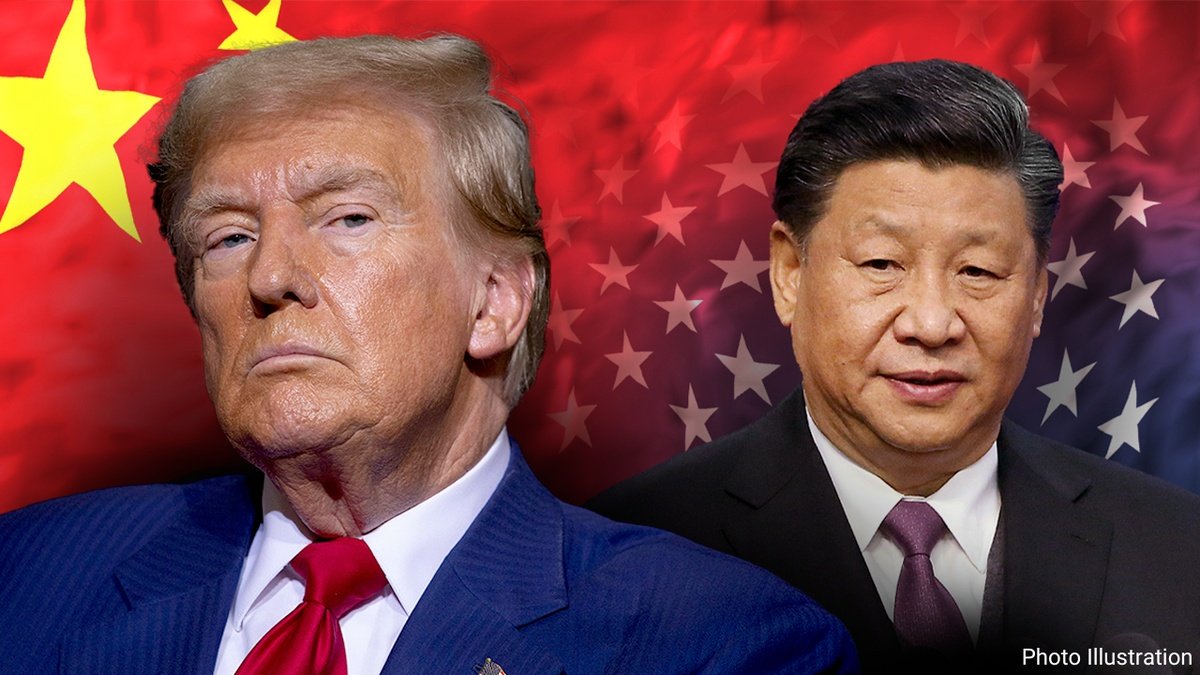
As President Donald Trump and President Xi Jinping prepare for their high-stakes summit next month, both Washington and Beijing are aggressively “armoring” their economies. While both leaders publicly seek to stabilize relations, the underlying reality is one of intensifying competition over artificial intelligence (AI) and the geopolitical fallout of the ongoing war in Iran.
The Iran Factor: Oil and Sanctions
The Trump administration is utilizing China’s dependence on Middle Eastern energy as a primary lever to force a conclusion to the conflict in Iran.
-
Energy Vulnerability: China relies on the Middle East for approximately 40% of its oil imports.
-
The “Oil Chokehold”: Chinese customers currently purchase roughly 90% of Iran’s oil exports.
-
Financial Pressure: Treasury Secretary Scott Bessent has warned Chinese banks of potential secondary sanctions if they continue to facilitate revenue for the Iranian regime.
-
Strategic Pain Point: China receives more liquefied natural gas (LNG) through the Strait of Hormuz than any other nation, making the current naval blockade a significant economic threat to Beijing.
The AI Arms Race: Locking Down Intellectual Property
The “tectonic plates” of tech are shifting as both nations move to prevent their strategic rivals from gaining an edge in frontier technologies.
-
Meta vs. Manus: In a major move to prevent “brain drain,” Beijing blocked Meta’s $2 billion bid for the Chinese AI startup Manus. This signals a new era where China aggressively keeps its homegrown innovation within its borders.
-
DeepSeek V4: Proving its self-reliance, Chinese startup DeepSeek recently launched its V4 model, which notably runs on Huawei’s advanced domestic chips, bypassing the need for sanctioned US hardware.
-
Legislative Pressure: In Washington, the bipartisan MATCH Act is gaining momentum. If passed, it would shift control of chip export decisions from the White House to Congress, potentially stripping Trump of a key bargaining chip before he meets Xi.
Summary of Pre-Summit “Leverage Building”
| Issue | US Strategy | China’s Response |
| Energy | Sanctioning refiners; threatening banks over Iran oil. | Urging US to stop “long-arm jurisdiction” and unilateral sanctions. |
| Artificial Intelligence | Restricting advanced chip sales; legislative “MATCH Act.” | Blocking foreign acquisitions of local startups (e.g., Manus). |
| Supply Chains | Pressuring companies to move manufacturing out of China. | New regulations targeting firms that comply with US export controls. |
| Geopolitics | Increased arms sales to Taiwan. | Warning Trump to handle Taiwan with “utmost caution.” |
The Taiwan “Menu”
Adding to the friction, Taiwan has expressed deep anxiety over being a “bargaining chip” at the summit. The island is currently attempting to pass a special military budget to increase arms purchases from the US, a move that Xi has warned is a “core concern” for China.
While the summit is still expected to proceed, the path to the meeting is increasingly cluttered with sanctions, blocked deals, and military posturing.
