

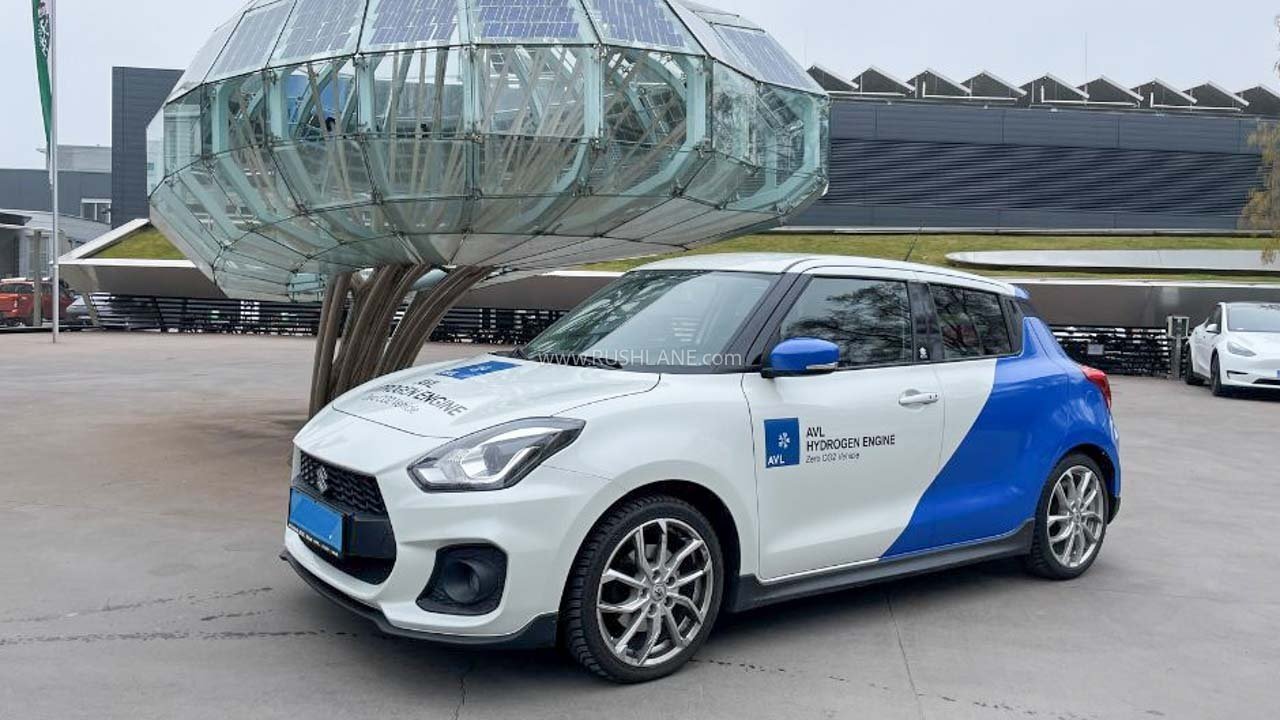
In a significant move toward alternative energy, Austrian powertrain specialist AVL Racetech, in collaboration with Suzuki, has unveiled a hydrogen-powered prototype of the Suzuki Swift. This functional technology demonstrator showcases a different path to zero emissions, potentially aligning with Union Minister Nitin Gadkari’s long-standing vision for a hydrogen-based economy in India.
Hydrogen Internal Combustion: A Practical Twist
Unlike most modern hydrogen vehicles (such as the Toyota Mirai) that use Fuel Cell Electric Vehicle (FCEV) technology to generate electricity, this Swift prototype uses a Hydrogen Internal Combustion Engine (H2-ICE).
-
Engine: A heavily modified 1.4-litre direct-injection engine.
-
Performance: It delivers 134 hp and 220 Nm of torque—outperforming the standard petrol version by 13 hp and 20 Nm.
-
The Advantage: While FCEVs are often more efficient, H2-ICE technology is significantly more cost-effective and easier to manufacture using existing engine production lines, making it a more viable candidate for mass-market adoption in price-sensitive markets like India.
Strategic Alignment with “Green Hydrogen” Goals
Union Minister Nitin Gadkari has been a vocal proponent of Hydrogen as the “fuel of the future.” The Indian government’s push for a clean energy ecosystem includes:
-
Infrastructure Development: Pilot projects for hydrogen refueling stations are already underway.
-
Diversified Fuel Strategy: Moving beyond just EVs to include Ethanol, CNG, and Hydrogen to reduce dependence on fossil fuel imports.
-
The Popularity Factor: The Swift is consistently one of India’s top-selling cars. If Maruti Suzuki were to move this from a prototype to a production reality, it could single-handedly accelerate the public acceptance of hydrogen fuel.
Production Reality: Is It Coming Soon?
While the prototype is fully functional, it currently serves as a technology demonstrator.
-
Timeline: There is no official word on a commercial launch in the immediate future.
-
Challenges: The widespread adoption of a Hydrogen Swift would require a robust national refueling network, which is still in its nascent stages in India.
However, the collaboration between AVL and Suzuki proves that the transition to clean energy doesn’t necessarily mean the end of the internal combustion engine—it just means a change in what we put in the tank.
