

Faced with plunging sales, a €22 billion electrification restructuring charge, and vast amounts of underutilized factory space, legacy automotive giant Stellantis—the parent company behind Jeep, Ram, Fiat, and Peugeot—is aggressively pivoting its business model. Under the leadership of CEO Antonio Filosa, who assumed the role a year ago to revive the struggling carmaker, Stellantis is throwing a lifeline to its idling factories by forming deep joint ventures with Chinese electric vehicle (EV) competitors.
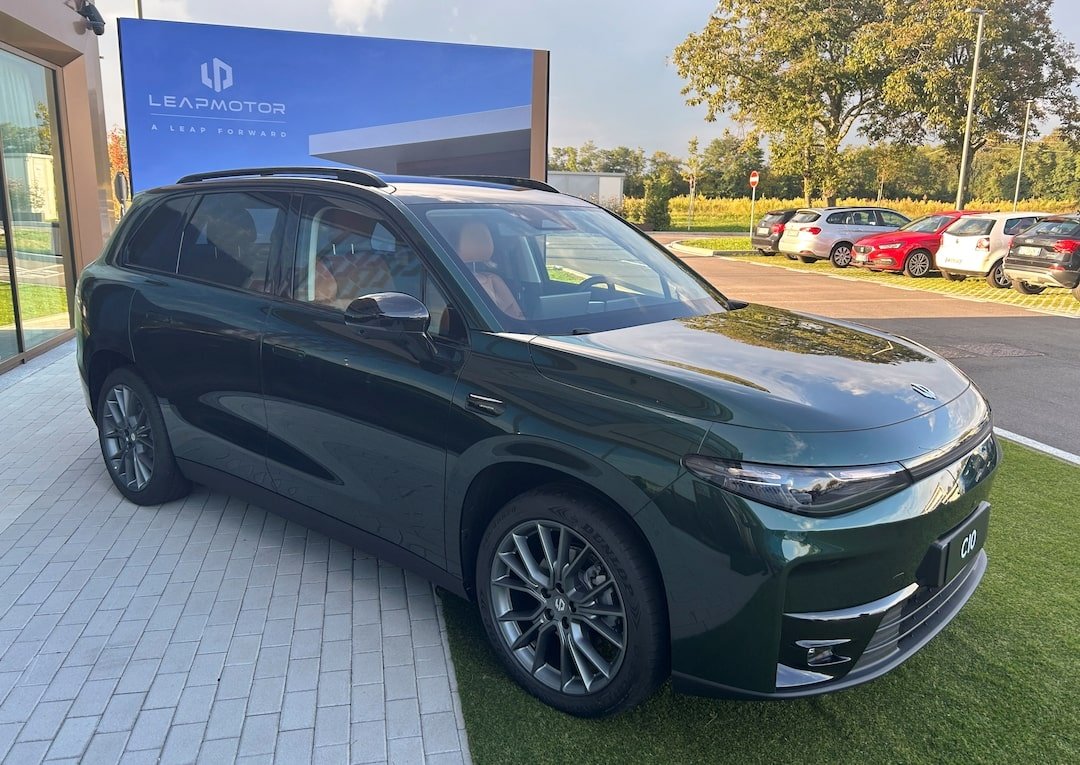
At the center of this survival strategy is an unexpected partnership with Leapmotor, a fast-growing Chinese EV startup. Rather than viewing Chinese automakers solely as an existential threat to Western manufacturing, Filosa is treating them as essential tech and manufacturing partners to rapidly lower costs and accelerate vehicle development.
The Strategy: Trading Idle Factories for Cheap Tech
Stellantis holds a 21% equity stake in Leapmotor and leads a 51/49 joint venture called Leapmotor International (LPMI), which owns the exclusive rights to manufacture and sell Leapmotor vehicles outside of Greater China.
By integrating Leapmotor’s cost-advantaged supply chain and advanced electric battery platforms, Stellantis aims to dramatically cut down its new vehicle development cycle from a sluggish 40 months to just 24 months. Simultaneously, the partnership helps Leapmotor entirely bypass mounting European Union and North American tariffs on Chinese-assembled vehicles.
A Global Manufacturing Roadmap
Stellantis’s five-year strategy explicitly states that it intends to maintain all 14 of its traditional brands without shutting down a single plant, despite reducing European capacity by 800,000 vehicles. Instead, it is filling that empty factory space with Chinese vehicle platforms.
| Region / Country | Factory / Location | Partnership & Model Allocation |
| Spain | Zaragoza (Figueruelas) | Adding Leapmotor’s B10 C-SUV assembly line alongside a new, jointly developed electric Opel C-SUV that leverages Leapmotor’s battery architecture. |
| Spain | Villaverde (Madrid) | Allocating future Leapmotor global models to the site; discussions are underway to transfer factory ownership directly to the LPMI Spanish subsidiary. |
| France | Rennes | Partnering with Dongfeng Motor to launch a separate 51%-led joint venture to produce and distribute Dongfeng’s high-end Voyah-branded premium EVs. |
| North America | Brampton, Ontario (Canada) | Exploring the use of this idle plant (inactive since late 2023) to manufacture and sell Leapmotor EVs for the Mexican and Canadian markets. |
Strategic Footnote: While Stellantis is eyeing EV manufacturing expansions with Leapmotor in Canada and Mexico—capitalizing on Canada’s favorable policy allowing the import of up to 49,000 Chinese-made EVs annually at a low 6.1% tariff—the company has explicitly stated that the U.S. market is currently excluded from these Chinese co-production plans due to intense political and trade barriers.
Looking Ahead
Stellantis is doubling down on this highly collaborative, asset-light ecosystem. Beyond Leapmotor and Dongfeng, the group has engaged in talks with direct Chinese giants like BYD to utilize additional idle Western factory lines, while signing concurrent technology agreements with legacy marques like Jaguar Land Rover and autonomous software firms like Wayve.
If Filosa’s gamble pays off, Stellantis will hit its target utilization rate of 80% across its global factories by 2030, transforming a legacy automotive giant into a nimble, multi-national distribution house powered by Chinese EV technology.
