

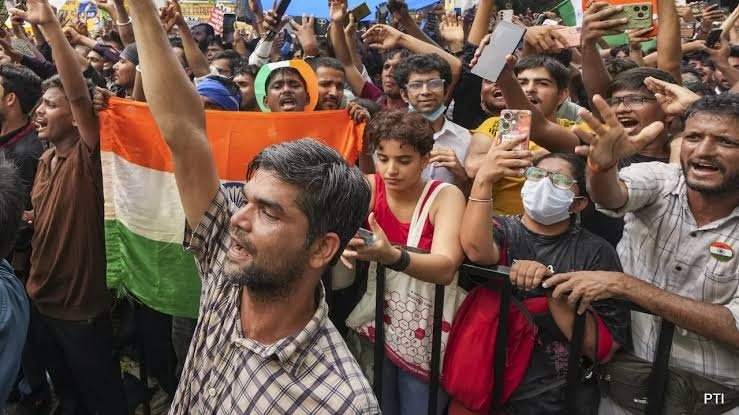
In this commentary, veteran journalist Madhavan Narayanan analyzes the political seismic shift triggered by the Cockroach Janata Party (CJP)—a youth-led movement that mobilized at Jantar Mantar and successfully pressured Union Education Minister Dharmendra Pradhan to resign over the NEET exam paper leak controversy.
Narayanan argues that traditional political parties—both the ruling BJP and opposition outfits—are deeply out of touch with Generation Z. Older leaders attempt to apply outdated playbook strategies to a demographic that rejects standard political alignment in favor of hyper-pragmatic, internet-native activism.
Core Themes & Key Takeaways
1. The Entitlement vs. Anxiety Paradox
-
Unspoken Expectations: Older generations often view Gen Z as entitled, expecting workplace perks like flexible hours, remote work, and instant privileges that previous generations had to earn.
-
Underlying Reality: The intense anger on display at Jantar Mantar revealed that this outward confidence is driven by deep underlying stress: high unemployment, extreme competition, career uncertainty, and fear of a compromised meritocracy.
2. The Mechanics of the “Instagram Revolution”
-
Memes as Political Currency: The CJP movement was built on a blend of offline courage, street plays, sharp internet memes, viral short-form video reels, and irreverent language.
-
Ideological Eclecticism: Protesters seamlessly invoked historical icons across the ideological spectrum—from Bhagat Singh and Chhatrapati Shivaji to Dr. B.R. Ambedkar—showing an eclectic, non-partisan approach to political symbolism.
-
Bypassing Traditional Media: Gen Z gets its political education from stand-up comedians, social media creators, and peer networks rather than traditional op-ed writers or prime-time news anchors.
3. Political Precedents and Lessons Across States
-
The Tamil Nadu Example: Narayanan points to the recent assembly election outcome in Tamil Nadu, where C. Joseph Vijay’s two-year-old party, TVK, defeated the incumbent DMK. Despite DMK’s economic welfare record, Gen Z voters used platforms like Instagram to shift family voting dynamics around issues of governance and modern aspirations.
-
Historical Parallel: The CJP’s focus on exam integrity is compared to the early days of the Indian National Congress in 1885, which initially formed around educated youth demanding access to the British-era Indian Civil Service (ICS) exams before evolving into a broader mass movement.
The Big Picture: Traditional political parties cannot win over Gen Z through top-down “outreach” or superficial social media presence. Until politicians shift from lecturing to genuinely listening to youth economic anxieties, their relationship with India’s youngest voters will remain an unstable, unpredictable “situationship.”
