

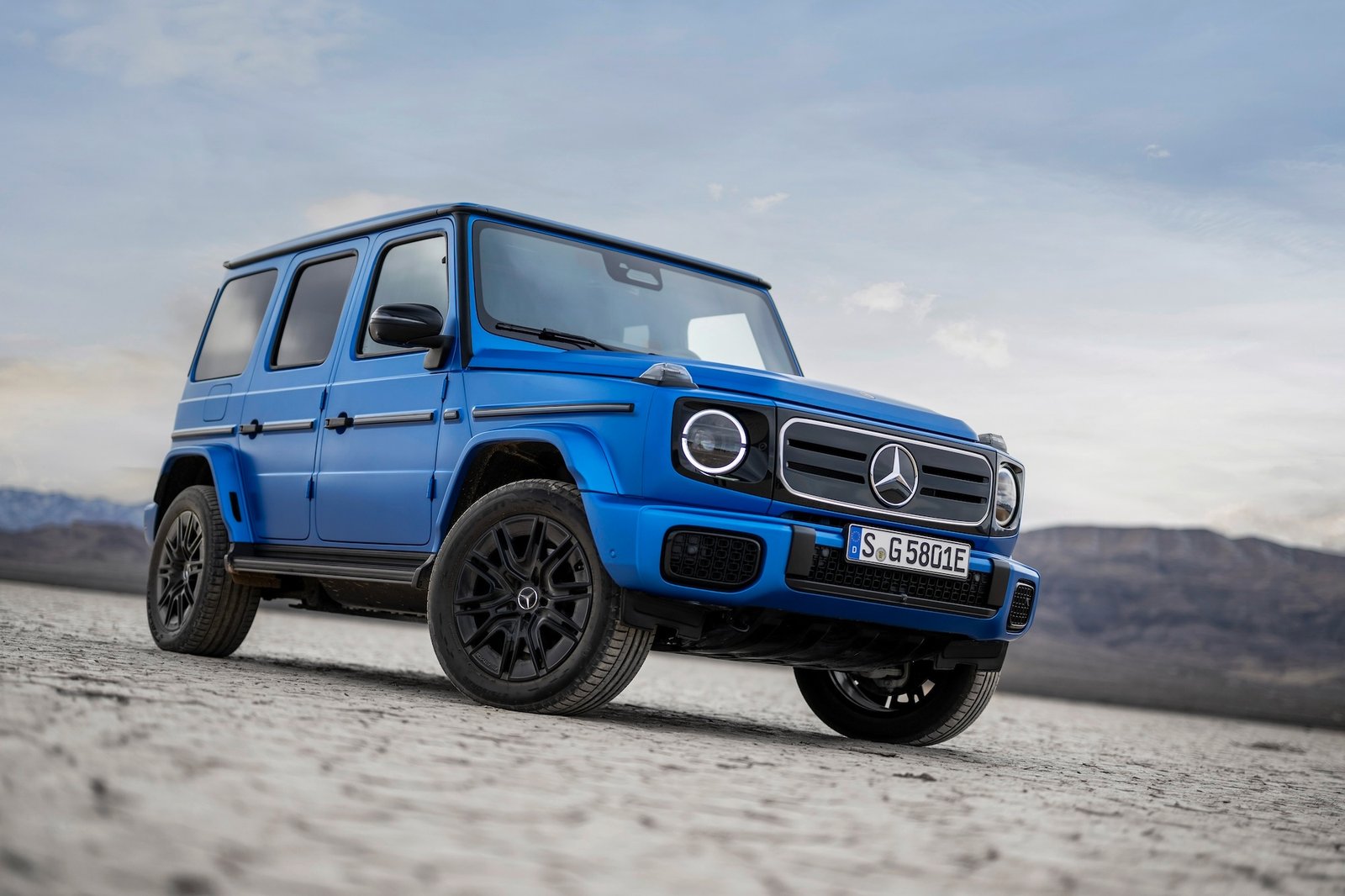
Mercedes-Benz India has issued a voluntary recall for its newly launched flagship electric SUV, the G 580 with EQ Technology. The recall highlights a specific manufacturing defect concerning wheel bolt integrity that could pose a serious driving hazard if left unaddressed.
The Cause of the Recall
According to an official communication from the luxury automaker, a limited batch of the electric G-Class SUVs was fitted with wheel bolts that do not meet the company’s strict quality and structural specifications.
-
The Risk: Over a prolonged period of standard vehicle operation, these substandard wheel bolts may gradually loosen.
-
The Consequence: If the bolts loosen significantly, the structural connection between the wheel and the wheelbase will be compromised. This can lead to heavy vibrations, decreased driving stability, and in extreme scenarios, increase the risk of a high-speed accident.
Affected Batches & Next Steps
The proactive recall affects a highly exclusive pool of vehicles imported into the country.
-
Total Units Affected: 99 units in India.
-
Manufacturing Timeline: Vehicles produced between July 12, 2024, and August 18, 2025.
-
The Remedy: Mercedes-Benz dealerships will directly contact owners of the impacted luxury off-roaders. The inspection and replacement of the wheel bolt assembly will be carried out entirely free of cost to ensure the vehicles comply with global safety regulations.
Quick Look: The G 580 EQ At a Glance
The Mercedes-Benz G 580 with EQ Technology is the first-ever fully electric version of the iconic, boxy G-Wagen. It commands a massive price tag but matches it with ultra-premium performance metrics.
| Feature | Specification |
| Starting Price | ₹3.10 Crore (Ex-showroom, India) |
| Powertrain | Quad-motor setup (four individually controlled motors) with 2-speed transmission |
| Total Output | 587 Horsepower & 1,164 Nm of torque |
| Performance | 0 to 100 kmph in 4.7 seconds; Top speed of 180 kmph |
| Battery Pack | 116 kWh lithium-ion battery pack |
| Claimed Range | 473 kilometers (WLTP cycle) |
| Fast Charging | 10% to 80% in 32 minutes using a 200 kW DC fast charger |
