

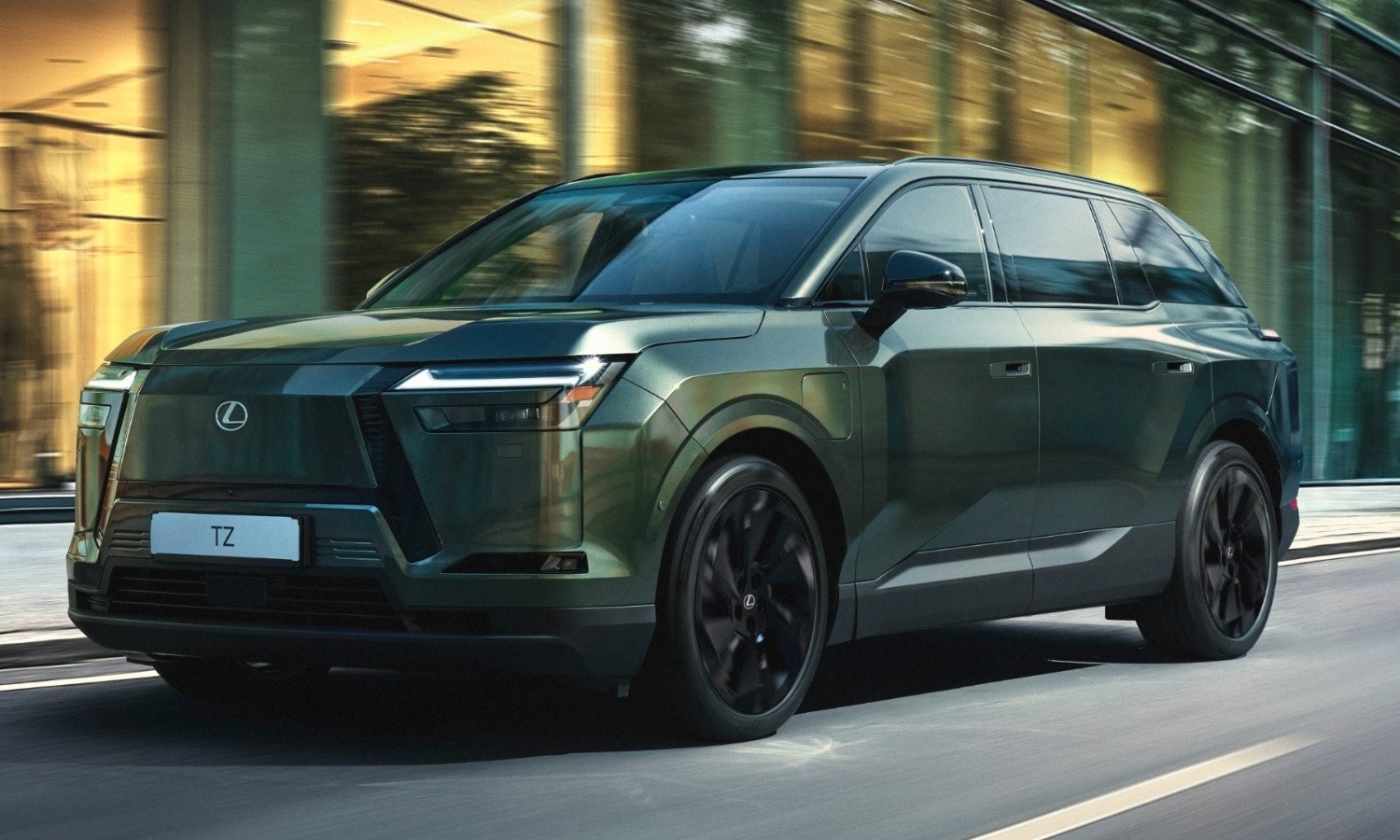
Lexus has officially entered the large electric SUV segment with the unveiling of the Lexus TZ. Positioned as a flagship six-seater above the RX, this all-new model is engineered for long-distance travel, emphasizing a “Driving Lounge” experience that prioritizes passenger comfort and high-tech refinement.
Design and Dimensions
The Lexus TZ is built on a massive scale to accommodate its three-row configuration, sharing its core architecture with the Toyota Highlander EV.
-
Size and Stance: The vehicle stretches over five meters in length with a 3,050 mm wheelbase, ensuring significant interior volume.
-
Signature Aesthetics: It features an enclosed “spindle” grille, sharp C-shaped LED headlights, and a rugged look enhanced by black cladding and muscular wheel arches.
-
Rear Profile: The rear is defined by a split LED light bar, illuminated “LEXUS” branding, and signature L-shaped tail lamps.
The “Driving Lounge” Interior
Lexus has focused heavily on the cabin experience, moving away from traditional SUV utility toward a more relaxed, lounge-like atmosphere.
-
Premium Seating: The standard layout features six seats, including second-row captain’s chairs equipped with powered ottomans and ventilation.
-
Tech-Forward Dash: The driver interface consists of a 12.3-inch digital cluster and a large 14-inch touchscreen infotainment system.
-
Sustainable Luxury: The interior incorporates eco-friendly materials, such as recycled aluminum and forged bamboo.
-
Amenities: High-end features include a 21-speaker Mark Levinson audio system, a panoramic glass roof, and a comprehensive ADAS safety suite.
Performance and Range
Despite its substantial curb weight of approximately 2,630 kg, the TZ offers competitive performance metrics through its dual-motor AWD system.
| Feature | Specification |
| Max Power | 402 bhp |
| 0–100 kmph | 5.4 Seconds |
| Battery Options | 76.96 kWh / 95.82 kWh |
| Max Range | Up to 530 km |
| DC Fast Charging | 10% to 80% in ~35 minutes (150 kW) |
The Lexus TZ is designed for global flexibility, supporting CCS, CHAdeMO, and NACS charging standards to ensure compatibility across different international markets.
