

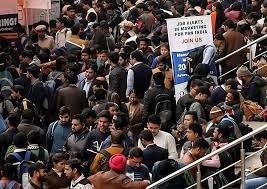
India’s youth job market faced renewed pressure in the final quarter of the financial year 2025-26. According to recent data, unemployment among the 15-29 age group climbed steadily during the first three months of 2026, reaching 15.2% in March.
The report highlights a growing gender disparity, with young women bearing a disproportionate share of the economic burden despite their lower overall participation in the workforce.
The Upward Trend: A Quarterly Breakdown
After a brief period of moderation in late 2025, the youth unemployment rate reversed course as the new year began.
| Month | Youth Unemployment Rate (15-29) |
| December 2025 | 14.4% |
| January 2026 | 14.7% |
| February 2026 | 14.8% |
| March 2026 | 15.2% |
The Gender Gap: Young Women at High Risk
The most alarming finding is the sharp rise in unemployment among young women. While male unemployment increased to 14.3% in March, female unemployment surged significantly higher, consistently hovering near the 18% mark during the first quarter.
-
Female Unemployment (March 2026): 17.7%
-
Male Unemployment (March 2026): 14.3%
This gap is particularly concerning when viewed alongside the Labour Force Participation Rate (LFPR). While over 60% of young men are either working or looking for work, the participation rate for young women remains stagnant between 20% and 23%.
The “Double Burden”: Even with fewer women entering the job market, those who do are finding it increasingly difficult to secure employment compared to their male counterparts.
Economic Implications and Context
The rise in unemployment coincides with a period of significant macroeconomic volatility in India:
-
Geopolitical Ripples: Persistent tensions in West Asia and oil prices at $105/barrel have likely pressured sectors like manufacturing and logistics, which are traditional employers of young talent.
-
Corporate Austerity: As major firms pivot toward hybrid work and travel restrictions to conserve fuel and energy, entry-level hiring and “on-the-ground” roles may have seen a temporary slowdown.
-
NEET & Education Disruptions: The recent cancellation of major exams like NEET-UG 2026 due to paper leaks adds further uncertainty to the career paths of millions of young aspirants, potentially delaying their entry into the formal professional workforce.
The Road Ahead
The combination of weak labour participation and rising unemployment suggests a mismatch between the skills available and the current needs of a shifting economy. Experts suggest that while India Inc remains optimistic about long-term growth (targeting 8% GDP), the immediate focus may shift toward vocational reskilling and stabilizing the Gig Economy to absorb the surplus of young job seekers.
