

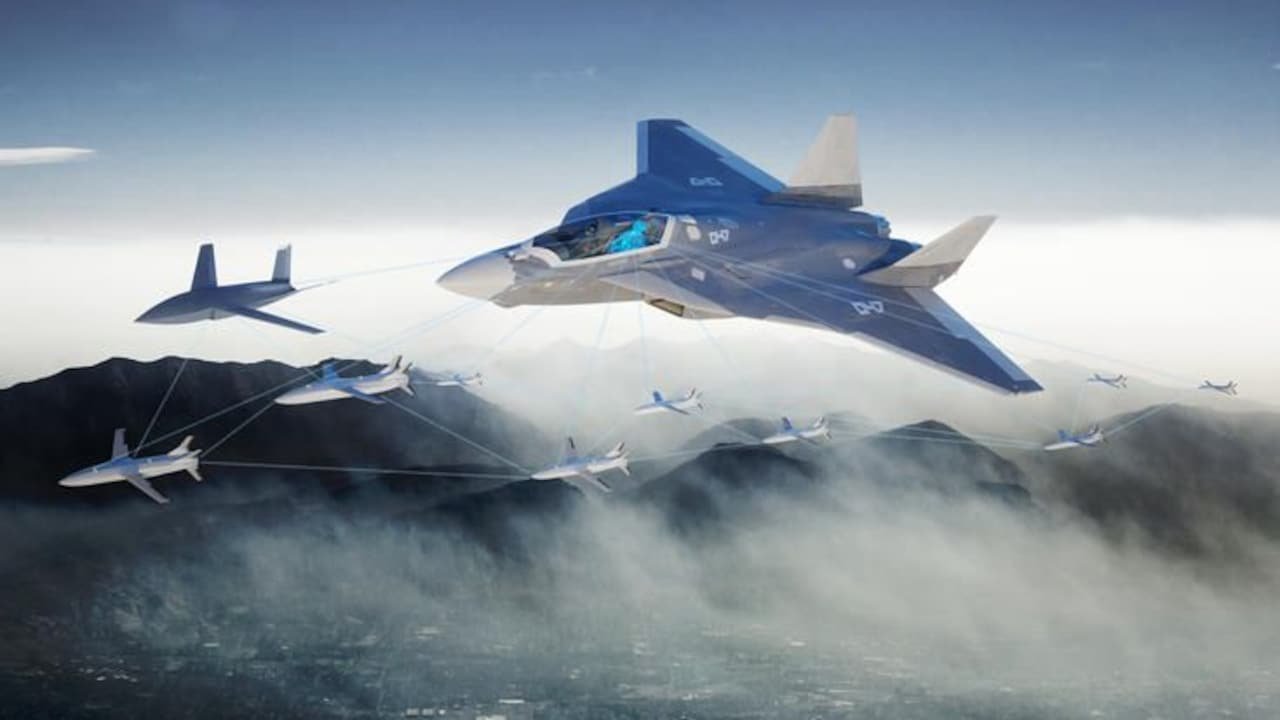
India’s exploratory interest in international sixth-generation fighter jet programs—such as the UK-led GCAP or European collaborative frameworks—highlights the Indian Air Force’s (IAF) strategic vision for future network-centric warfare. However, a comprehensive analysis by defense experts warns that India risks stretching its financial, industrial, and technological resources too thin by pursuing an overcrowded modern-air portfolio simultaneously.
The Overcrowded Aerospace Pipeline
India is currently juggling multiple concurrent combat aircraft programs, each demanding immense capital, design bandwidth, and institutional focus:
-
Tejas Mk2: A 4.5-generation platform estimated to cost roughly $1.5 billion in development.
-
MRFA Programme: A massive $39 billion acquisition initiative for 114 multi-role fighter aircraft.
-
AMCA (Advanced Medium Combat Aircraft): Positioned as an indigenous fifth-generation fighter with an estimated R&D budget of $1.8 billion (though similar global projects like Russia’s Su-57 or Turkey’s TF Kaan have absorbed over $10 billion).
-
Sixth-Generation Exploration: Initial inquiries into joining international next-generation combat air networks.
Major Structural and Technical Hurdles
-
The Engine Bottleneck: India’s most critical vulnerability remains high-thrust aero-engine technology. While initial AMCA prototypes rely on GE F414 engines, developing a domestic 120-kN-class engine—with proposed partners like Safran or Rolls-Royce—remains an uphill battle requiring advanced metallurgy, thermal management, and decades of design expertise.
-
International Partnership Realities: The collapse of the core fighter partnership between France and Germany in the European FCAS program serves as a cautionary tale. If experienced European aerospace giants struggled over workshare, intellectual property, and industrial responsibility, India faces severe hurdles in securing genuine technology transfer rather than mere supplier status within established consortia like GCAP (Britain, Italy, and Japan).
-
The Cost of Over-Proliferation: Funding simultaneous streams across procurement, electronic warfare, space assets, naval aviation, and domestic manufacturing creates competing demands on a limited defense budget.
Rather than chasing multiple parallel aircraft announcements, defense analysts emphasize that New Delhi must properly sequence its roadmap, prioritize the success of the indigenous AMCA and engine development, and establish a coherent air-power architecture rather than spreading resources across too many fronts.
