

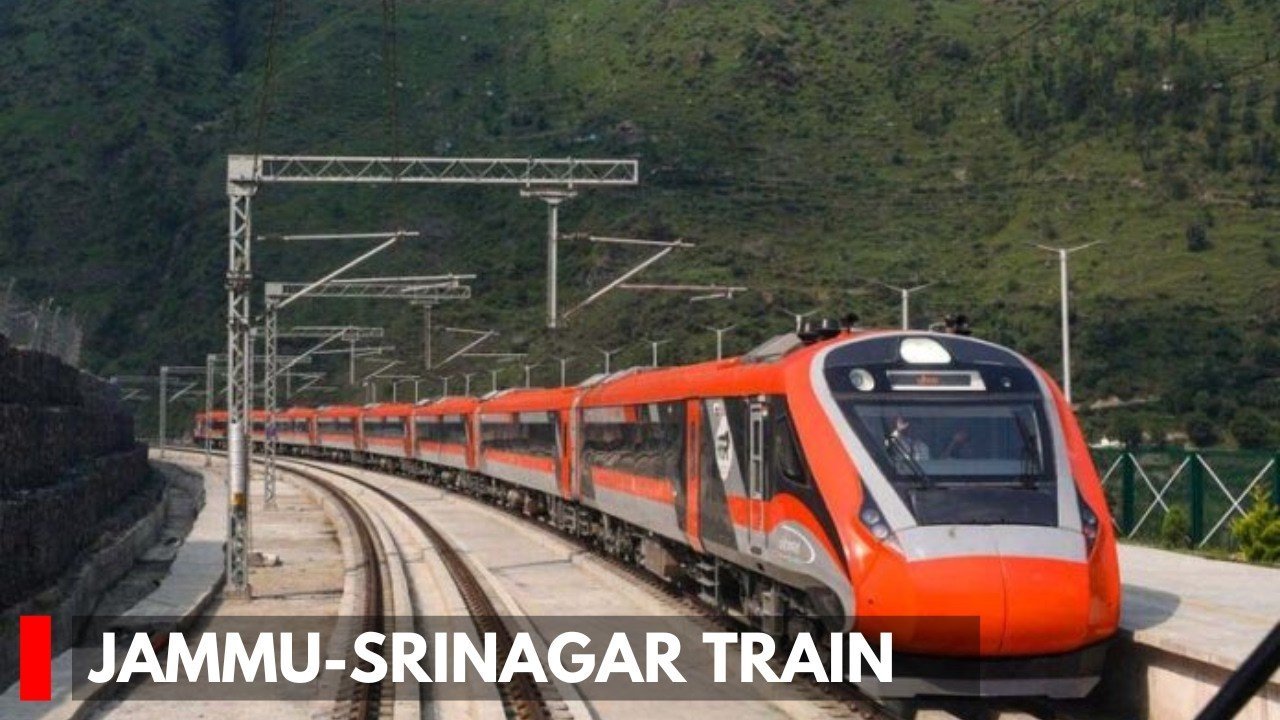
The Ministry of Railways has officially cleared a proposal by Northern Railway to increase the maximum operational speed of trains to 100 kmph along the 111-kilometer Katra–Banihal broad-gauge stretch. This section, situated under the Jammu Division, forms a key link in the regional rail network.
Key Operational Changes
-
Previous Limits: According to railway officials, permissible speeds were restricted to 85 kmph on the Shri Mata Vaishno Devi Katra–Sangaldan stretch and 75 kmph on the Sangaldan–Banihal section.
-
New Standard: All compliant trains along the entire 111 km Katra–Banihal corridor can now operate at speeds up to 100 kmph.
-
Safety Protocols: Approval for the speed upgrade was granted only after comprehensive safety audits and full compliance with mandated railway regulations.
Economic and Regional Impact
Uchit Singhal, Senior Divisional Commercial Manager for the Jammu Division, noted that higher operating speeds will improve overall transit efficiency across Jammu and Kashmir. Key benefits highlighted by the administration include:
-
Reduced Travel Time: Commuters will experience faster journeys between Katra and Banihal.
-
Economic Growth: Improved regional transit is projected to support local commerce, trade, and economic expansion.
-
Tourism Sector Boost: Faster and safer connectivity is anticipated to make travel easier for tourists and pilgrims traveling to the region.
Expansion Initiatives in Madhya Pradesh
In a related infrastructure development reported by ANI News, Union Railway Minister Ashwini Vaishnaw, along with Union Communications Minister Jyotiraditya M. Scindia and Madhya Pradesh Chief Minister Mohan Yadav, virtually flagged off services on the newly gauge-converted Kailaras–Sabalgarh–Birpur section.
This project extends the Gwalior–Kailaras passenger train service to Birpur, providing direct railway connectivity for rural and tribal communities in Birpur, Vijaypur, and Sabalgarh to Gwalior. The line is expected to improve public access to healthcare, higher education, and employment opportunities in urban hubs.
