

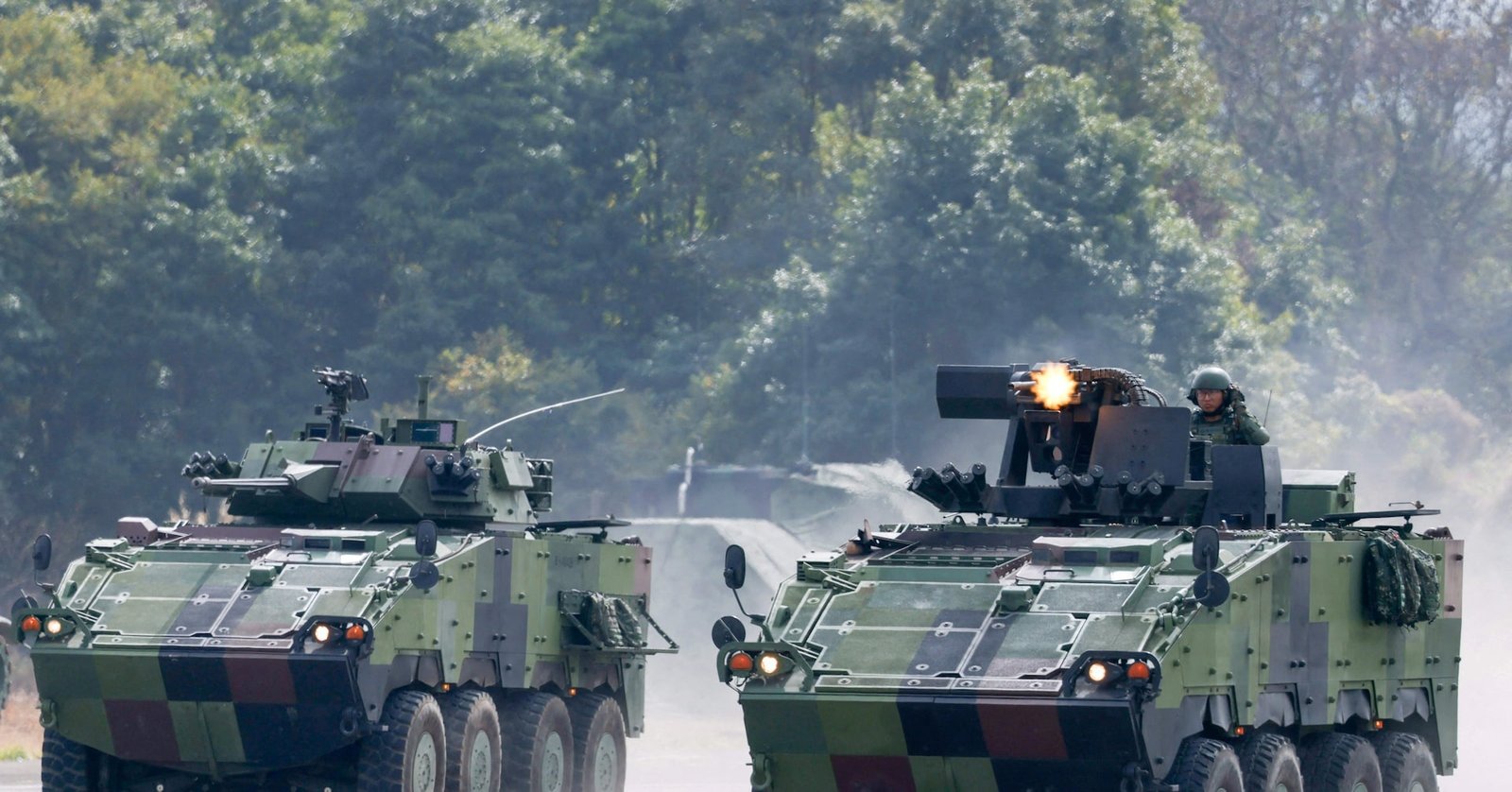
Hundreds of demonstrators gathered in central Taipei on Saturday to protest recent parliamentary cuts to Taiwan’s proposed defense budget, demanding full funding to bolster deterrence against China.
The rally follows a contentious decision by Taiwan’s opposition-controlled parliament to approve only two-thirds of a requested $40 billion supplementary defense package proposed by President Lai Ching-te.
The Budget Standoff
President Lai’s proposed budget aimed to fund both major U.S. arms purchases and domestically manufactured military equipment, including advanced drone fleets and the new “T-Dome” integrated air defense system.
However, the opposition coalition—which holds a majority in parliament—voted to pass a heavily stripped-down version of the package this month:
-
Approved: Only funding designated for U.S. weapon systems.
-
Blocked: Funding for domestic defense manufacturing programs.
-
The Reason: Opposition lawmakers claimed the government’s domestic proposals lacked transparency and posed high corruption risks.
“True Peace Requires National Defense”
Organized by a coalition of human rights and pro-independence groups, the demonstration saw protestors waving flags and chanting slogans urging lawmakers to reverse the cuts.
“True peace requires national defense. Only by strengthening our national defense can we ensure Taiwan’s freedom,” Wang Hsing-huan, chairman of the pro-independence Taiwan Statebuilding Party, told the gathered crowd.
Public sentiment at the rally echoed an urgent need for self-reliance. “We need to protect ourselves against China’s expansion,” said 34-year-old civil engineer Angela Yen. “China and Taiwan are two different countries.”
Opposition Defends the Cuts
Taiwan’s primary opposition parties, including the Kuomintang (KMT), maintained that while they conceptually support national defense, they refuse to sign “blank checks” for the current administration.
Speaking from southern Taiwan, KMT Chairwoman Cheng Li-wun—who recently met with Chinese President Xi Jinping in Beijing—emphasized fiscal responsibility over rapid militarization.
According to party statements, Cheng argued that Taiwan is financially stable but must not spend recklessly. She stated that the island should “invest in peace, not war,” rather than sending the next generation into conflict.
What’s Next?
The executive branch is actively lobbying to restore the slashed funding, maintaining that domestic projects like the T-Dome system are vital to countering Beijing’s ongoing sovereignty claims over the democratic island.
