

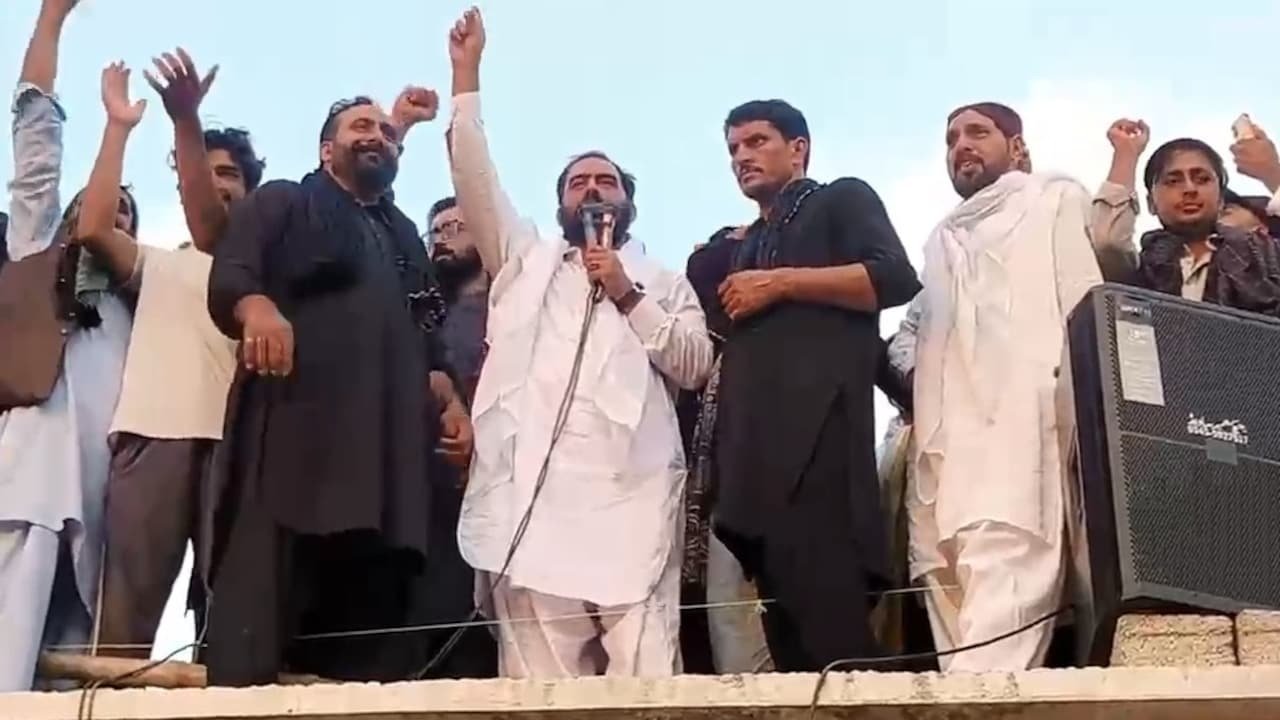
A dramatic escalation in the ongoing unrest across Pakistan-occupied Kashmir (PoK) has culminated in a direct, public plea to India for humanitarian intervention. Sardar Aman Khan, a core leader of the Joint Awami Action Committee (JAAC), has openly urged New Delhi to provide essential relief and open the borders along the Line of Control (LoC).
The appeal highlights a severe humanitarian and political crisis in the occupied territory, which has been gripped by intense clashes and widespread civilian demonstrations.
A Desperate Cry for Rations and Medicines
In a video addressing a massive gathering at Rawalakot’s Eidgah Ground, Sardar Aman Khan exposed the punishing conditions being endured by local residents under an administrative blockade.
“We need India’s help. There is a shortage of rations… and we need your help. We appeal to the people across the border—in Poonch, Mendhar, Rajouri, and Doda… On this side, our food supply routes are closed, our medicine routes are closed.”
— Sardar Aman Khan, JAAC Leader
During his fiery speech, Khan directly challenged the security apparatus by asking the crowd if they should march toward the Line of Control to escape the conditions. The gathering responded with an overwhelming roar of, “Move towards it.” Khan further warned the Pakistani government that if peaceful civilian demands continue to be met with bullets, the local population is fully prepared to explore “other paths.”
From Economic Grievances to Calls for Independence
The current phase of unrest underscores a historic disconnect between the local population and the regional administration. What began as a civil movement has transformed into a fundamental challenge to Islamabad’s rule.
-
The Triggering Demands: The JAAC launched its agitation based on a 38-point charter of demands centered on hyperinflation, soaring electricity tariffs despite local hydropower generation, and systemic corruption.
-
The Refugee Seat Contention: A major political trigger is the JAAC’s demand to abolish the 12 seats in the local legislature reserved for refugees living in wider Pakistan. Locals argue major Pakistani political parties use these seats to manipulate regional elections and force absolute subservience to Islamabad.
-
The Escalation: Following weeks of demonstrations, protesters have increasingly discarded basic economic demands in favor of explicit anti-Pakistan rhetoric. Rallies at the Eidgah Ground feature open chants of “PoK is not part of Pakistan” and “We want freedom,” signaling a total breakdown of state authority.
Islamabad’s Heavy-Handed Crackdown
Rather than addressing the deep-seated local grievances through diplomatic dialogue, Pakistani authorities have treated the civil uprising strictly as a national security threat:
-
The Terrorist Brand: Tensions hit a breaking point after the Pakistani government officially outlawed the JAAC, classifying the grassroots civil rights organization as a “terrorist” outfit.
-
Mass Arrests and Violence: Security forces launched a sweeping military-style crackdown, detaining hundreds of political activists and protest leaders. Clashes between armed law enforcement and stone-pelting citizens have left dozens dead and over 70 critically injured, particularly in Rawalakot and Kotli.
-
Information Blackout: To curb the mobilization of protestors and stop video evidence of state violence from leaking, authorities have enforced a total shutdown of mobile internet services across PoK for over a month.
Experts note that the direct appeal to India reflects the utter desperation of a marginalized population that feels completely abandoned and systematically exploited by Pakistan’s military-driven governance.
