

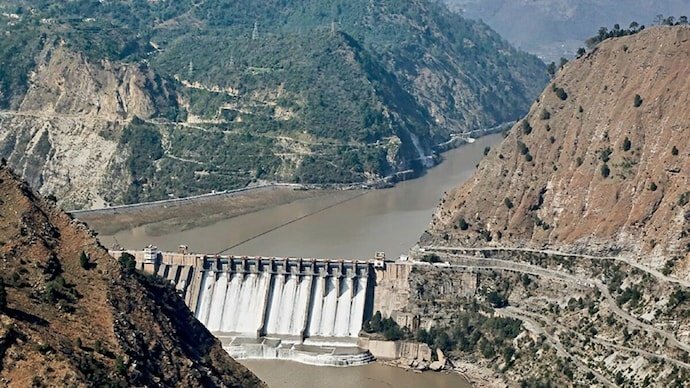
Amid critical monsoon-season water shortages, Pakistan’s political and military establishments have issued a series of aggressive warnings to India, vowing to defend the country’s water supply “on all fronts.” The escalation follows India’s decision to place the historic 1960 Indus Waters Treaty (IWT) in “abeyance”—a punitive measure enacted after last year’s Pahalgam terror attack in Jammu and Kashmir, which claimed 26 lives.
Military and Political Posturing in Islamabad
During Pakistan’s 276th Corps Commanders’ Conference, the military leadership under Chief of Defence Forces Field Marshal Asim Munir reaffirmed a National Security Committee (NSC) directive that categorizes any stoppage or diversion of water by India as “an act of war.” The military high command stated its “resolute commitment” to taking all necessary measures to secure what it defines as Pakistan’s rightful share of the river system.
Reinforcing the military’s rhetoric, Pakistan Peoples Party (PPP) Chairman Bilawal Bhutto Zardari accused New Delhi of weaponizing regional water resources. Speaking at a public rally, Bhutto Zardari declared, “There will be no compromise on the Indus Water Treaty. If we have to fight a war with India, we will fight.”
India’s Strategic Leverage and Ground Realities
New Delhi has maintained a firm stance, linking the treaty’s revival directly to cross-border security. External Affairs Ministry spokesperson Randhir Jaiswal reiterated that treaties cannot function in isolation from ground realities, stating, “Pakistan must credibly and irrevocably abjure its support for cross-border terrorism.”
With the treaty suspended:
-
Data Blackout: India is no longer obligated to share critical monsoon flood-warning data with Pakistan, complicating Islamabad’s disaster management during peak weather cycles.
-
Infrastructure Push: India is accelerating several major upstream hydroelectric projects in the Indus basin, including the Sawalkote, Ratle, Bursar, Pakal Dul, Kwar, Kiru, and Kirthai I and II plants.
Pakistan’s Existential Vulnerability
The suspension of the World Bank-brokered pact targets Pakistan’s most critical economic vulnerability. Between 80 to 90 percent of Pakistani agriculture relies entirely on the Indus River system. The threat is compounded by the country’s severely limited water-storage capacity—which barely spans 30 days of flow—and reports that its primary reservoirs, the Tarbela and Mangla dams, are hovering near dead storage.
In response to losing its structural water guarantees, Islamabad has launched a frantic diplomatic campaign, appealing to the United Nations, dispatching delegations to global capitals, and initiating international legal challenges to pressure India into restoring the agreement.
