

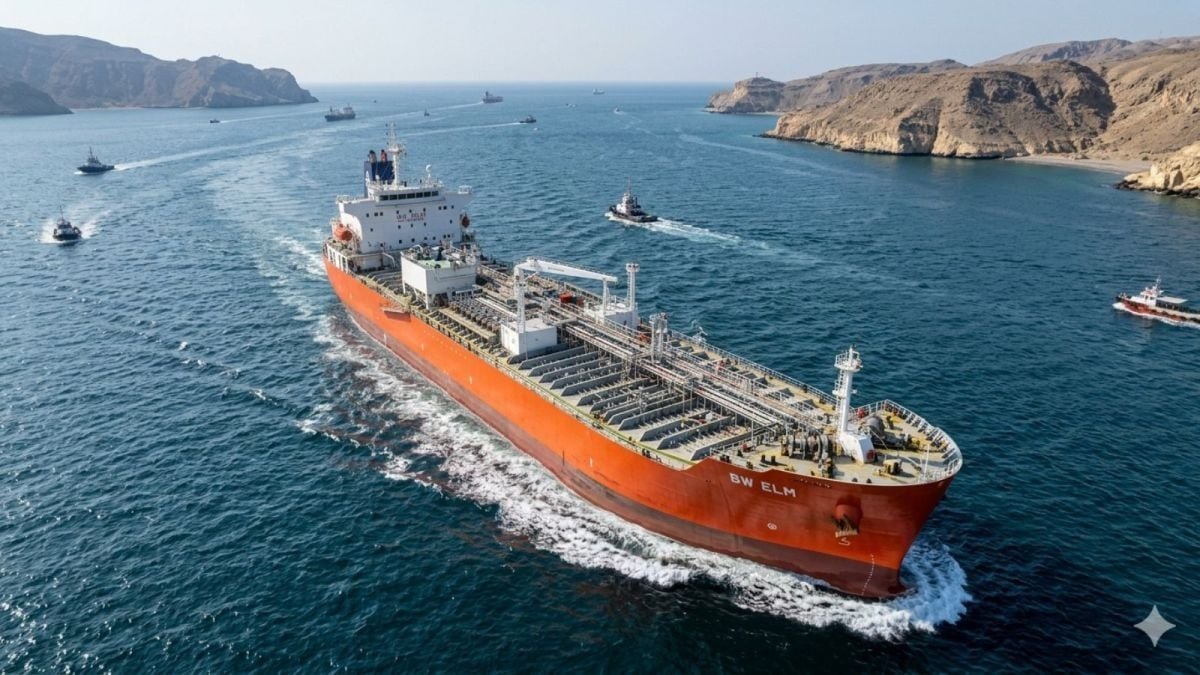
The escalating conflict in West Asia has left at least 18 Indian-flagged vessels and 10 India-bound foreign ships anchored in high-risk zones near the Strait of Hormuz. With the waterway virtually paralyzed by the war between Iran and the U.S.-Israel coalition, New Delhi is scrambling to ensure the safety of nearly 500 seafarers and the security of its energy imports.
According to Rajesh Kumar Sinha, Special Secretary in the Ministry of Ports, Shipping, and Waterways, the stranded fleet includes a mix of critical fuel carriers trapped to the west of the strait.
The Stranded Fleet: A Breakdown
The following table details the ships currently unable to proceed due to the naval blockade and high-risk conditions:
| Vessel Flag | LPG Tankers | Crude Oil Tankers | LNG Carriers | Total Ships |
| Indian-Flagged | 4* | 4 | 1 | 18 |
| Foreign-Flagged | 3 | 4 | 3 | 10 |
*Includes one empty tanker currently being filled.
Economic Fallout: Insurance and Risk
The “High-Risk Area” (HRA) designation has seen shipping costs skyrocket.
-
Sky-high Premiums: Commercial insurance premiums for vessels have surged from a pre-war 0.04% to 0.7% of the insured value, with some cases trending even higher.
-
The 500-Ship Jam: These vessels are part of a massive maritime logjam of roughly 500 ships currently stuck in the narrow passage.
Small Wins: Successful Transits
Despite the “chokehold,” diplomatic coordination with Tehran has allowed a few vessels to escape the war zone.
-
Recent Successes: The LPG carriers BW TYR (arriving Mumbai March 31) and BW ELM (expected New Mangalore April 1) successfully transited with 94,000 tonnes of cargo.
-
Overall Progress: Out of the 28 Indian-flagged ships originally in the area when the war began on February 28, 8 have reached safety so far.
Why the Strait of Hormuz Matters to India
The paralysis of this route is a direct threat to India’s national energy security, as the country remains heavily dependent on the Persian Gulf:
-
90% of India’s LPG imports.
-
Over 50% of LNG imports.
-
40% of crude oil imports.
“The government’s priority is to ensure that Indian-flagged vessels carrying India-bound cargo are allowed to pass,” said Rajesh Kumar Sinha.
While Iran recently stated that “non-hostile vessels” could transit after coordination, the situation remains volatile, and New Delhi is currently prioritizing getting existing ships out rather than sending new ones in for refills.
