

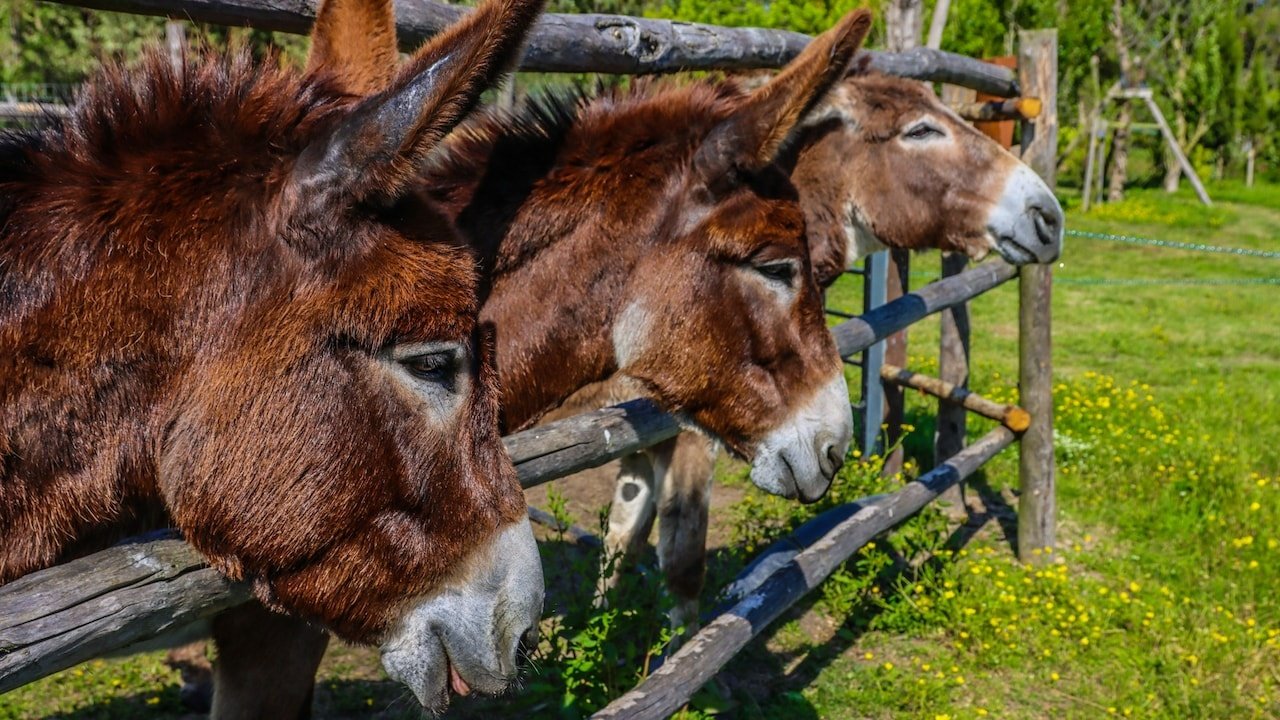
Faced with severe wildfire seasons, Spain is turning to an unconventional firefighting force: a herd of rescued donkeys.
In the hills of Catalonia, the non-profit Tivissa Donkey Firefighters initiative uses 62 rescued donkeys to clear the dry vegetation that fuels deadly blazes. Rather than replacing human firefighters, these animals provide critical support by eating through the hazardous undergrowth.
How the “Donkey Firefighters” Work
Started in 2020 by Joan Cedo Sans (now the mayor of Tivissa) and currently managed by volunteer Jordi Garcia, the initiative addresses two issues at once—rehabilitating abused animals and protecting local ecosystems.
-
Clearing “Fine Fuel”: Donkeys naturally feast on dry summer grasses, which are primary drivers of rapid flame spread.
-
Creating Firebreaks: As the herd grazes and treads across the landscape, their heavy footsteps break up thick vegetation on the forest floor, slowing down potential fires.
-
Assisting Tactical Teams: Catalonia’s specialist wildfire unit (GRAF) clears initial firebreaks, and the donkeys are brought in to keep those corridors clear. The trails they leave behind also help firefighters haul equipment and hoses during emergencies.
A Second Chance for Rescued Animals
Many donkeys in the herd come from neglectful or abusive backgrounds:
-
Roberto, a former racing donkey, was saved from a slaughterhouse after being deemed too bulky to win races.
-
Paloma arrived severely overweight after being fed a harmful diet of sugar cubes and supermarket cookies.
Today, the herd lives together, receives volunteer veterinary care, and is fed donated produce from nearby farms and a local theme park.
“We aren’t doing anything our ancestors didn’t do. All we’re doing is putting value back on those rural tasks, that way of life that depended so much on animals.” — Joan Cedo Sans, Project Founder
Why Donkeys?
While goats and sheep are frequently used for targeted grazing worldwide, founder Joan Cedo notes that donkeys bring unique advantages to dense terrain: they weigh more, tread harder, and consume larger quantities of tough vegetation.
According to Dr. Jordi Bartolome Filella, a herbivore ecology researcher at the Universitat Autònoma de Barcelona, combining different livestock species offers the best defense. While controlled grazing cannot completely eliminate the risk of wildfires, it significantly lowers their intensity, making them far easier for emergency crews to extinguish.
The Challenge Ahead
Using livestock for ecosystem management is an ancient practice returning to favor across Europe, alongside similar Spanish initiatives like Galicia’s wild horses and Catalonia’s “Ramats de Foc” (Fire Flocks).
However, funding remains a primary hurdle. Shepherds and organizers often receive minimal subsidies—roughly 70 to 80 euros per hectare cleared—forcing projects like Tivissa to rely heavily on donations to maintain their herds. Experts argue that governments should formally fund these natural grazing efforts as essential public ecosystem services alongside traditional fire control methods.
