

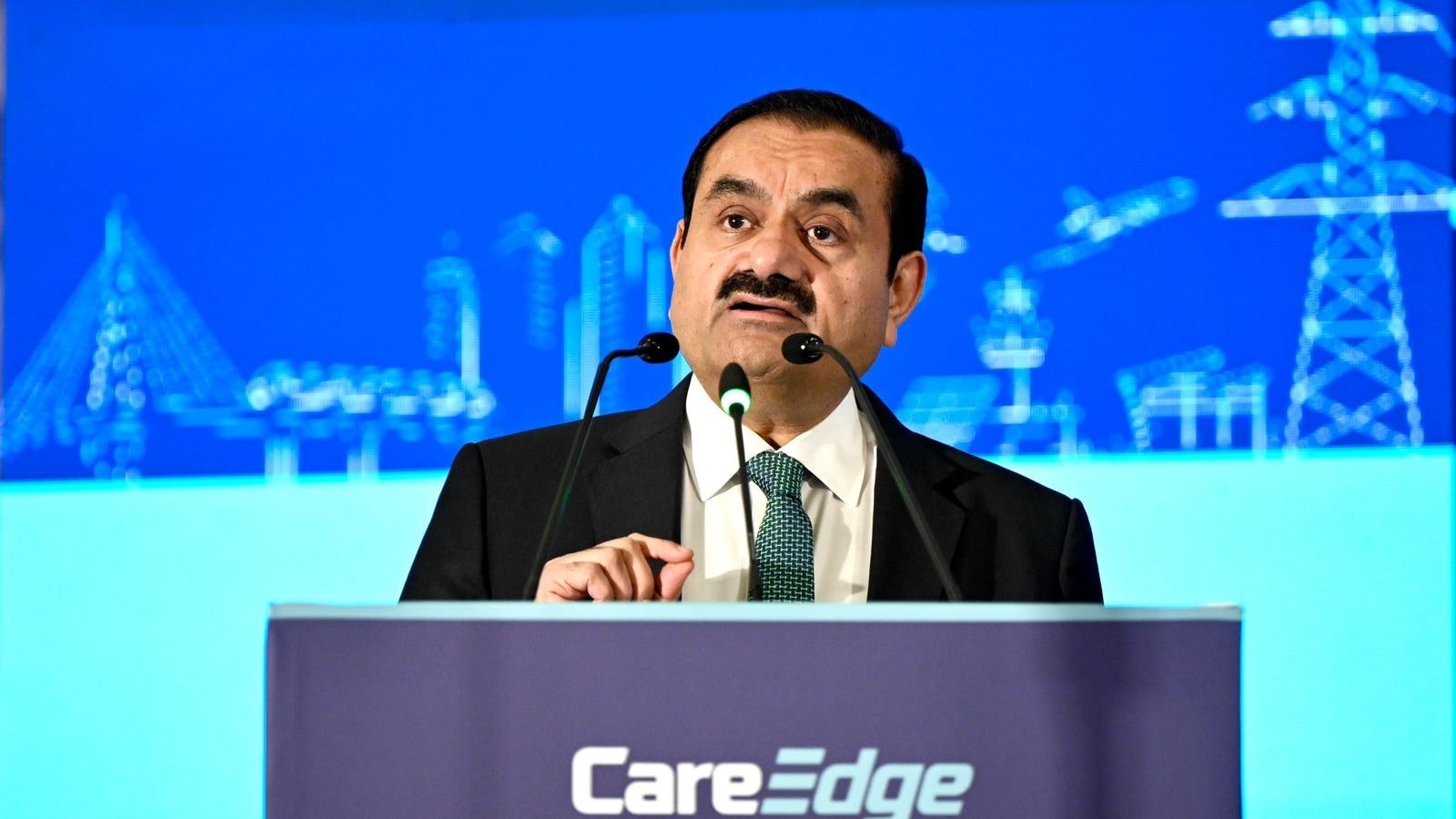
Speaking at CareEdge Group’s annual summit in Mumbai, Adani Group Chairman Gautam Adani emphasized that large-scale infrastructure projects—such as the Mundra and Vizhinjam ports and the Khavda renewable energy project—do more than just meet existing market demand. Instead, they actively forge new capabilities and fundamentally reshape regional and national economics.
Challenging Traditional Rating Frameworks
Adani argued that traditional rating and risk-assessment frameworks often fail to capture the long-term transformative potential of massive projects, as they tend to evaluate assets based strictly on immediate, visible demand.
-
The Mundra Success Story: Recalling the evolution of Mundra in Gujarat—now India’s largest commercial gateway—Adani noted that three decades ago, a conventional rating assessment would have dismissed the site as a mere marshy coastline devoid of any industrial ecosystem. Today, it serves as an interconnected hub linking railways, logistics centers, power plants, and industrial zones across India.
-
Overcoming the Vizhinjam Bottleneck: Adani pointed to the Vizhinjam port project in Kerala, which faced 25 years of hesitation because traditional capital markets viewed the venture as too complex and high-risk. Highlighting the historic cost of inaction, he noted that despite sitting just 10 nautical miles from the world’s busiest shipping lanes, India was forced to transship container cargo through foreign ports like Singapore, Colombo, and Dubai, effectively paying a “sovereignty tax” to external hubs.
Khavda: More Than Just a Renewable Energy Project
Addressing the massive Khavda renewable energy initiative in Gujarat, Adani acknowledged that a traditional framework might view the location as a harsh, high-risk desert with uncertain demand. However, he stressed that such assessments miss the bigger picture.
Khavda is designed to function as a convergence platform where clean energy, artificial intelligence, digital infrastructure, and industrial manufacturing intersect on a massive scale. According to Adani, the project will supply the clean electrons necessary to power India’s future computing infrastructure, serving as a foundational building block for the nation’s burgeoning AI economy.
A New Era of Indian Infrastructure
Reflecting on India’s macroeconomic trajectory, Adani stated that while the country’s infrastructure ambitions were historically constrained by limited resources and confidence, India has entered a period of unprecedented expansion. With roads, ports, airports, and renewable energy capacity scaling faster than almost anywhere else in the world, he urged financial and rating institutions to ensure their evaluation frameworks evolve alongside the country’s growing industrial sophistication.
