

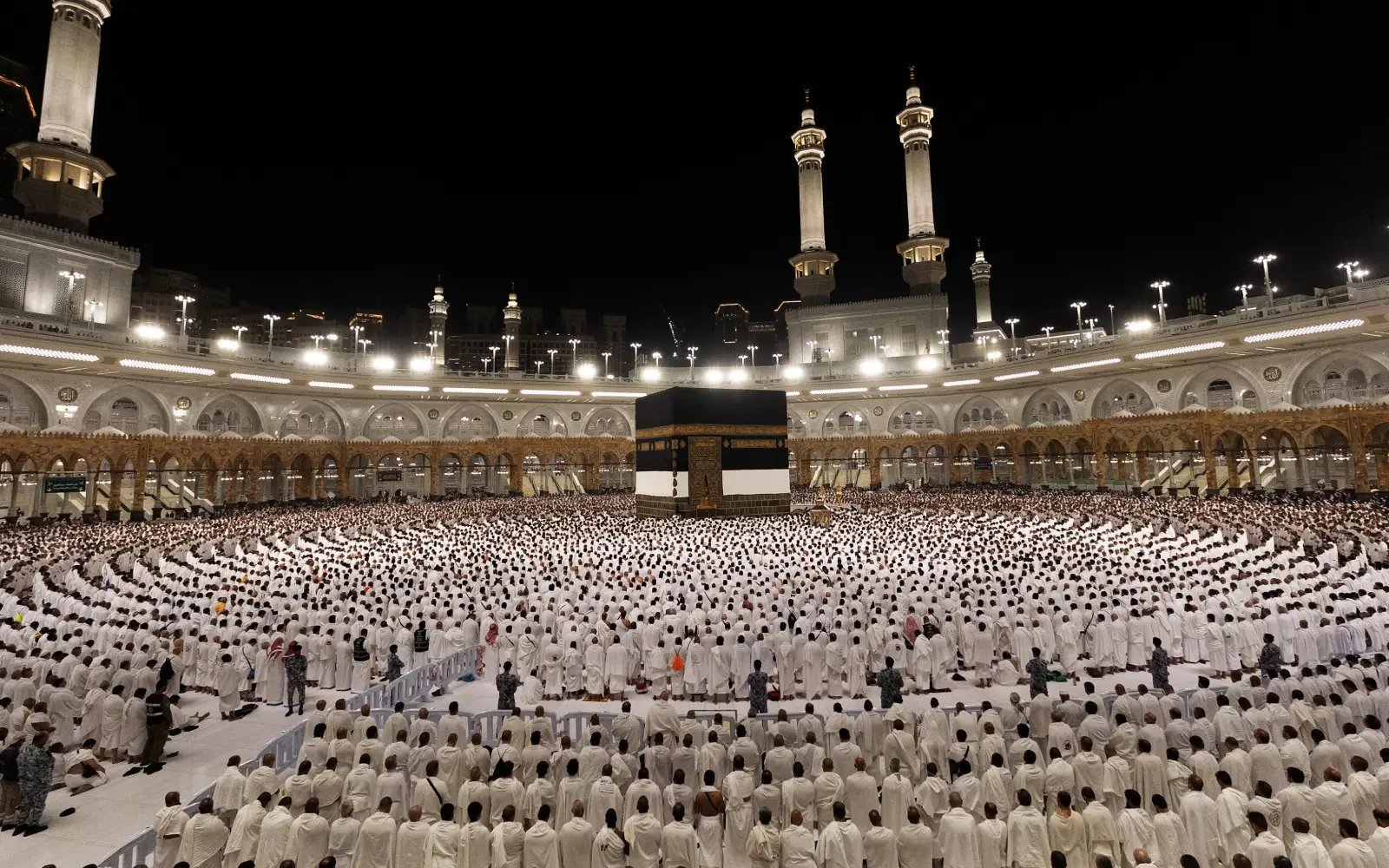
As the annual Hajj pilgrimage officially commences, more than a million Muslim devotees gathering in Mecca are facing a severe climate challenge. With daytime temperatures already crossing 40°C and forecasted to climb significantly higher, pilgrims are having to completely alter their daily schedules and rely on an array of heat-mitigation tactics just to survive the grueling outdoor rituals.
For many international travelers unaccustomed to the harsh desert environment, the conditions have proven overwhelming. Inas Gamal, a first-time pilgrim from Egypt, had initially planned to spend her days praying inside Mecca’s iconic Grand Mosque. Instead, the punishing sun forced her to retreat to an air-conditioned hotel room for all of her daytime prayers. “It’s very hot, much hotter than I imagined,” she shared. “I can’t adapt.”
The Extreme Climate Forecast
According to Saudi Arabia’s National Center for Meteorology, the thermal environment across the holy sites is expected to become increasingly dangerous as the week progresses.
| Metric | Details |
| Current Daytime Range | 40°C to 42°C |
| Projected Peak Temperatures | 42°C to 47°C in Mecca and surrounding holy sites |
| High-Risk Milestone | The climb of Mount Arafat, featuring virtually zero natural shade. |
| Historical Precedent (2024) | Over 1,300 fatalities recorded when temperatures crossed a catastrophic 50°C. |
Cooling a Million Devotees: Mitigation Tactics on the Ground
To protect worshippers from widespread heat exhaustion, heatstroke, and cardiac events, Saudi authorities and local vendors have deployed a massive logistical response across the holy city:
-
Industrial Cooling Systems: Worshippers are relying heavily on one of the most powerful centralized air-conditioning systems in the world to cool the sprawling indoor halls of the Grand Mosque. Outside, massive overhead fans, specialized mist-spraying towers, and cooled marble flooring help lower the ambient temperature of the courtyards.
-
Hydration and Nutrition: Fleets of trucks are continuously driving through pilgrim routes to distribute millions of bottles of ice-cold water. Concurrently, local ice cream stands and beverage stalls are being mobbed by crowds looking to temporarily lower their internal body temperatures.
-
The “Shift” Strategy: Like Gamal, many smart travelers are restricting their outdoor movements strictly to the cooler twilight and nighttime hours. Those moving during the day, like Algerian professor Mohamed Nabil—who logs up to 30,000 steps a day exploring the city—resort to constantly pouring water over their faces and wearing heavy UV-blocking sunglasses.
A Strained Medical Infrastructure
Despite these extensive precautionary measures, the physical toll of the heat has already begun to manifest. The Saudi Health Ministry reported that its medical teams had already treated 144 severe cases of heatstroke ahead of the official start of the rites.
With the most physically demanding rites on the horizon, the government has placed more than 50,000 healthcare professionals and a fleet of 3,000 advanced ambulances on high alert. For the hundreds of thousands of pilgrims on the ground, the spiritual journey of a lifetime has fundamentally transformed into a strict test of physical endurance against the elements.
