

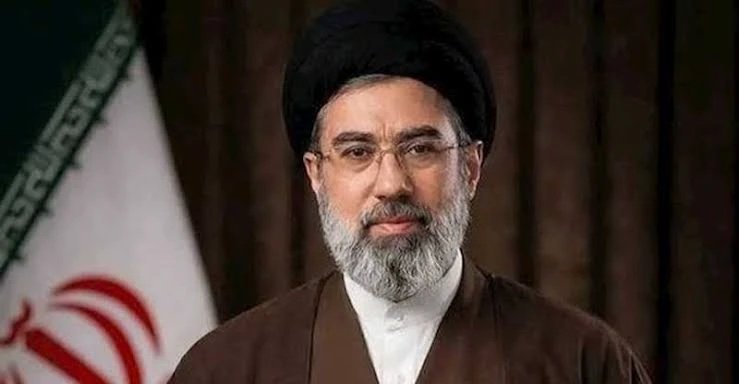
This New York Times report sheds crucial light on how power has reshaped itself in Tehran following the massive shockwaves of earlier this year. When Ayatollah Ali Khamenei was killed in the joint US-Israeli daylight airstrikes on February 28, 2026, it threatened to create a fatal power vacuum. While his 56-year-old son, Mojtaba Khamenei, swiftly stepped into the role of Supreme Leader, this intelligence reveals that the real machinery of the state is being driven by a collective dictatorship.
This “Band of Brothers” isn’t just a random assortment of hard-liners; they are a tightly-knit fraternity bound by a definitive generational experience and an ultra-militant ideological framework.
1. The Crucible: The Iran-Iraq War (1980–1988)
To understand these men, you have to look back to their youth. Most of these leaders were promoted to generals in the Islamic Revolutionary Guard Corps (IRGC) when they were only in their late 20s or early 30s, fighting a brutal, bloody war against Saddam Hussein’s Iraq.
Because the West and regional powers heavily backed Iraq during that conflict, these men developed a deeply ingrained, paranoid worldview: Iran stands entirely alone, and it must forge its path through absolute self-reliance and asymmetric warfare, no matter the human or financial cost.
2. The Weapon of Information
Following the war, this brotherhood moved out of the trenches and systematically took control of Iran’s vast domestic intelligence, judiciary, and security apparatuses. As expert Saeid Golkar points out, their power stems from absolute information dominance:
“They survey, they control, they spy on each other. Because of that dominance over intelligence, they gradually became dominant in almost any aspect of politics in Iran.”
By shadowing reformists, opposition figures, and even rival hard-liners for nearly 40 years, this tight network ensured the regime’s survival. This explains why the sudden assassination of Khamenei and 50 other top political and military leaders didn’t paralyze Tehran—the “mosaic strategy” of decentralized, fraternal command kept the gears turning.
The Key Players in the Brotherhood
The report explicitly profiles the core members pulling the levers alongside Mojtaba Khamenei:
| Leader | Current Role / Significance | Background & Reputation |
| Mohammad-Bagher Ghalibaf (64) | Speaker of Parliament & Lead US Negotiator | Former IRGC Air Force commander and Tehran mayor. Actively brags about personally beating student protesters in 1999. Currently acts as the crucial bridge between the military and political elite. |
| Mohammad Bagher Zolghadr (72) | Secretary of the Supreme National Security Council | Appointed in March to replace Ali Larijani (who was also killed in an Israeli strike). He is the ultimate “fusion” figure, synchronizing the judiciary, military, and political wings of government. |
| Ahmad Vahidi (67) | Chief of the IRGC | Took over the Guards in March after US-Israeli strikes killed his predecessor. He was the first-ever commander of the Quds Force in 1988 and helped orchestrate Iran’s regional proxy network (including Hezbollah). |
| Mohammad Ali Jafari (68) | Senior Military Advisor | Commander of the IRGC from 2007 to 2019. He engineered the “mosaic strategy” of decentralized command that is currently keeping the military functional despite heavy leadership losses. |
| Gholam-Hossein Mohseni-Ejei (69) | Chief of the Judiciary | Known notorious “hanging judge” who has mercilessly throttled domestic dissent and authorized a wave of executions against anti-government protesters. Under heavy US and EU sanctions. |
| Hossein Taeb (63) | Senior Cleric & Intelligence Figure | Former head of the IRGC Intelligence Organization. He is a vital piece of the puzzle because he served directly alongside Mojtaba Khamenei in the elite Habib Battalion during the Iran-Iraq war, giving him a direct personal line to the new Supreme Leader. |
What This Means for the Fragile Ceasefire
This report lands at an incredibly sensitive geopolitical moment. With the US-Iran war transitioning into a fragile, stop-start ceasefire, Donald Trump has openly expressed skepticism about negotiating, claiming the Iranian regime is in complete disarray and that “he has no idea who is actually in charge.”
The reality is quite the opposite. Iran isn’t decentralized into chaotic factions; it is tightly held by an ultra-hardline committee of war-hardened generals. While Ghalibaf is dangling potential peace talks in Islamabad to act as a diplomatic face, the men backing him are the architect of Iran’s regional proxy strategy and domestic repression. Any diplomatic breakthrough will have to pass through this unyielding “Band of Brothers.”
