

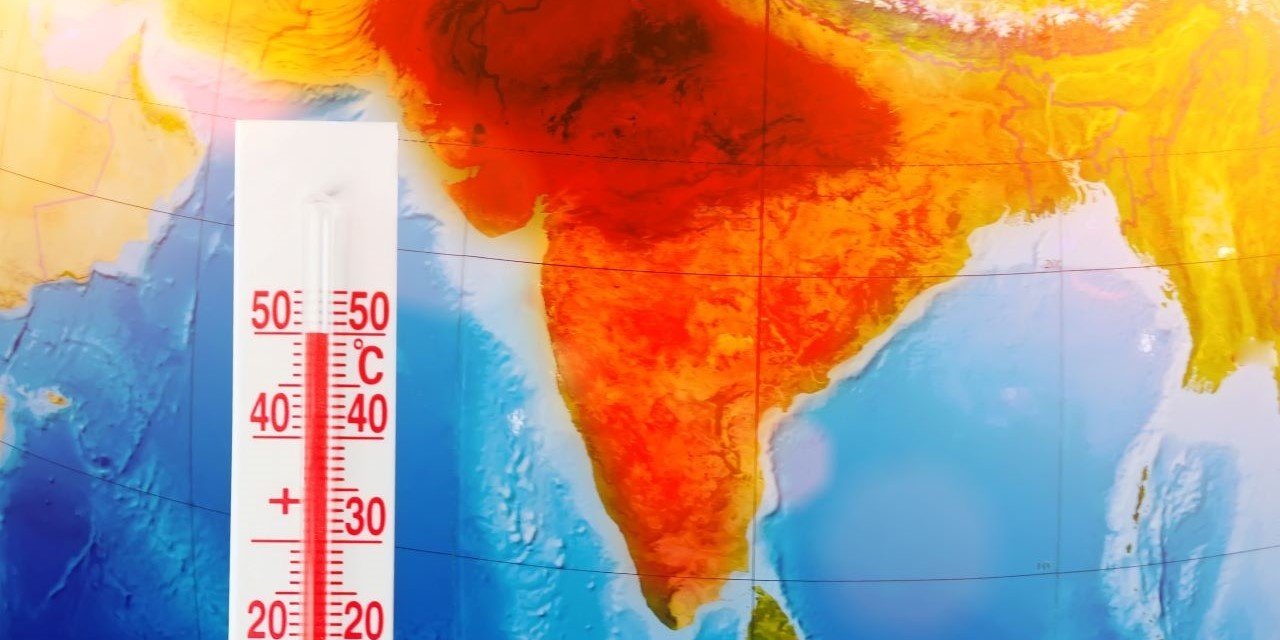
Large expanses of India are grappling with a punishing, severe heatwave as summer peaks across the subcontinent. Temperatures in major metropolitan hubs and regional districts have surged far past seasonal expectations, turning daily life into a battle against relentless atmospheric heat.
The baseline daytime data reveals a stark reality across the country’s main urban and regional sectors. Central and North India are experiencing the most intense conditions, while coastal belts contend with extreme, draining humidity.
The National Temperature Profile
The scale of the current thermal spike is heavily concentrated across the northern plains and central plateaus, though few areas have escaped entirely.
-
The Epicenter: Banda in Uttar Pradesh recorded a staggering 47.6 degrees Celsius, crossing the 47-degree mark for the second consecutive day. Brutal, matching conditions have been reported moving further south into the Vidarbha region of Maharashtra.
-
The Northern and Western Plains: National capital Delhi recorded maximum temperatures ranging between 42 and 44 degrees Celsius. Concurrently, Ahmedabad and Nagpur registered daytime peaks between 41 and 43 degrees, while Jaipur and Lucknow hit the 40 to 41-degree bracket.
-
Coastal and Southern Metrics: Hyderabad and Chennai experienced daytime highs hovering in the mid-to-high 30s. Mumbai and Kolkata tracked similar high-30s maximums, though localized maritime setups introduced intense humidity that made conditions feel significantly more severe.
Crucially, the heatwave is refusing to break after sunset. Fried residents hoping for overnight relief have faced disappointed conditions, as minimum nighttime readings in areas like Delhi and Jammu and Kashmir remained up to five degrees Celsius above the historical average.
The Complex Mechanics Fueling the Burn
While intense thermal spikes are seasonally typical for April and May due to clear solar radiation and dry, continental winds sweeping in from Rajasthan and Pakistan, meteorologists state this year’s dangerous spread is driven by a combination of local development patterns and global climate irregularities.
Domestic Heat Multipliers
On the domestic front, the rapid development of Urban Heat Islands has altered city climates. As natural vegetation and green canopies are replaced by concrete, steel, and reflective glass, metropolitan environments absorb and trap heat during the day, preventing it from radiating back into the atmosphere at night. This dynamic can spike urban centers up to 10 degrees Celsius higher than neighboring rural belts. This structural issue is compounded by stagnant atmospheric circulation patterns and lower-than-average pre-monsoon rainfall, which have effectively blocked cooler maritime air currents from penetrating inland.
The Global Impact of El Niño
Globally, the dominant driver is the strengthening of El Niño conditions in the equatorial Pacific Ocean. Data modeling from the World Meteorological Organization indicates an active 62% to 80% probability of this pattern solidifying through the summer months.
[Equatorial Pacific Warming]
│
▼
[Wind Patterns Shift South & East]
│
▼
[Moisture Blocks over South Asia]
│
▼
[Relentless Heat & Subdued Monsoon]
When surface waters in the Pacific warm intensely, it alters wind currents globally. For India, this typically translates to compressed atmospheric moisture and suppressed seasonal rainfall.
The Outlook: Monsoon Delay and Agricultural Headwinds
The immediate fallout of an active El Niño cycle is a direct threat to India’s water security. The India Meteorological Department (IMD) has already issued a formal warning indicating that the southwest monsoon is highly likely to settle below historical norms. Total seasonal rainfall across the country is projected at just 92% of the Long Period Average (LPA), carrying a five percent margin of variation.
The short-term forecast offers no immediate respite for the central and northwestern plains. The IMD expects severe heatwave conditions to persist for several more days, with isolated pockets likely to repeatedly breach the 45-degree threshold. Real relief remains entirely dependent on the arrival of deep western disturbances or localized convective thunderstorms capable of generating prolonged rainfall before the delayed monsoon system fully makes landfall.
Critical Heatwave Safety Protocols
With medical facilities bracing for an influx of heat-related illnesses and regional power grids facing extreme cooling demands, public health officials emphasize immediate preventative measures:
Hydration Thresholds: Drink water continuously, regardless of your active thirst levels. Incorporate electrolyte-rich fluids, buttermilk, or lemon water to restore systemic salt balances.
Peak Hours Restriction: Minimize direct, unprotected outdoor exposure between 11:00 AM and 4:00 PM, when solar radiation levels peak.
Symptom Identification: Actively monitor yourself and others for early indicators of heat stress or heatstroke, including sudden dizziness, intense headaches, nausea, a rapid pulse, or an absence of sweating despite extreme heat. Emergency medical attention should be sought immediately if these manifest.
