

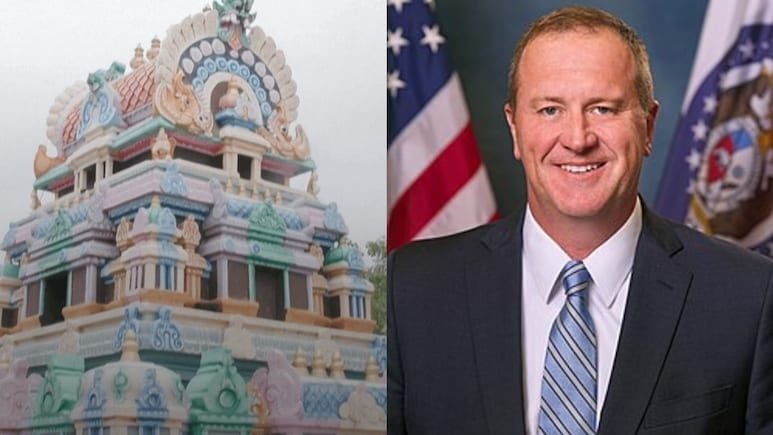
US Senator Eric Schmitt (R-Missouri) has sparked a significant online controversy after using a photo of Hyderabad’s Chilkur Balaji Temple—famously known as the “Visa Temple”—to attack the American H-1B visa program. In a series of posts on X, the Republican senator alleged that the US immigration system has been “gamed” by a global “Visa Cartel” that displaces American workers.
The Allegations: “Visa Cartels” and AI Training
Schmitt’s criticism was aimed at several employment and student visa categories, including H-1B, L-1, F-1, and OPT. His main arguments included:
-
Hollowing the Middle Class: He claimed these programs suppress local wages and “hollow out” the American middle class by forcing US graduates to compete with “cheaper labor.”
-
AI Subsidy Claims: The senator alleged that billions of dollars are flowing to India for AI training, which he claims is effectively “subsidized by Americans.”
-
“Ethnic Favoritism”: Schmitt accused Big Tech corporations of bypassing American merit in favor of “ethnic favoritism” by routing jobs through these specific visa pipelines.
-
Interview Fraud: He further alleged that Indian visa holders share confidential interview questions to help other applicants from India succeed.
The “Visa Temple” as a Flashpoint
To illustrate his point, Schmitt shared an image of the Chilkur Balaji Temple in Hyderabad. He mockingly referred to it as the “Visa Cartel’s” own temple where thousands “circle altars and get passports blessed.”
In Hyderabad, visiting the Chilkur Balaji Temple is a common cultural practice for students and IT professionals seeking divine blessings before visa interviews. For many, the temple represents a symbol of hope and aspiration, but Schmitt characterized it as evidence of a “gamed” system.
Context of the H-1B Program
The senator’s comments come amid long-standing tensions regarding the H-1B program, which is capped at 85,000 new visas annually but remains a primary route for skilled workers in the tech sector.
-
India’s Dominance: Indian nationals consistently account for 70–80% of all H-1B approvals, far outstripping China, which holds roughly 12%.
-
Corporate Savings: Critics like Schmitt argue that the lack of payroll taxes for certain foreign student permits and the lower relative wages of visa holders give corporations an unfair financial incentive to hire non-citizens.
Reaction and Controversy
The posts have drawn sharp criticism from the Indian-American community and tech advocates, who argue that the senator is conflating cultural traditions with systemic fraud. Supporters of the visa program maintain that these workers are essential for maintaining the US’s competitive edge in technology and innovation, particularly in the rapidly evolving field of AI.
