

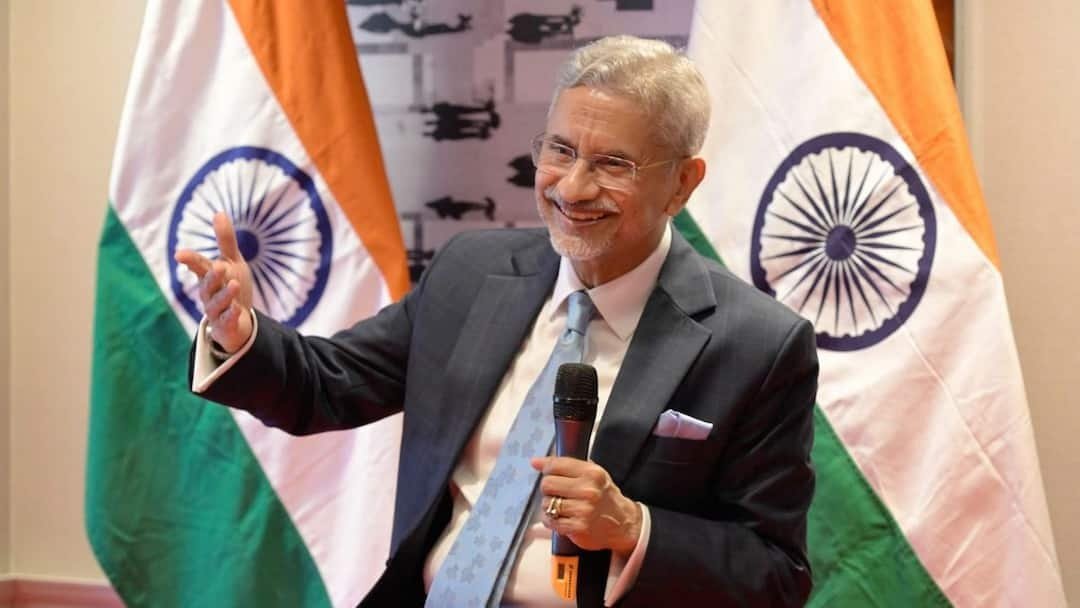
At the BRICS Foreign Ministers’ Meeting held on May 14, 2026, at Bharat Mandapam in New Delhi, External Affairs Minister S. Jaishankar issued a powerful call for a complete overhaul of the global governance system. Under India’s 2026 chairship, the meeting served as a critical precursor to the upcoming Leaders’ Summit, focusing on the convergence of wars, climate crises, and economic disruptions.
Key Pillars of the Address
1. Urgent Call for UN Security Council Reform
Jaishankar delivered a blunt assessment of the United Nations, describing its current state as “worrisome.”
-
Expansion: He demanded the expansion of the UN Security Council in both permanent and non-permanent categories.
-
The Cost of Delay: He warned that the continued resistance from great powers to reform multilateral institutions comes at a “high cost” to global stability.
-
Unilateral Sanctions: He condemned the use of unilateral economic sanctions, labeling them “unjustifiable” and harmful to developing nations.
2. The Gaza Crisis and Middle East Stability
Addressing the ongoing conflict in Gaza, India’s stance was direct and humanitarian-focused:
-
Ceasefire: A call for an immediate and sustained ceasefire.
-
Two-State Solution: Reaffirmation of India’s support for a durable, peaceful resolution through a two-state model.
-
Maritime Security: Expressed deep concern over the Strait of Hormuz and Red Sea blockades, noting that unimpeded maritime flow is “vital for global economic well-being.”
3. Zero Tolerance for Terrorism
In some of his sharpest remarks, Jaishankar targeted cross-border terrorism:
-
No Justification: Asserted that “zero tolerance” must be an uncompromising universal norm.
-
State Responsibility: Noted that cross-border militancy violates the core principles of international relations, an address with significant regional resonance.
A Deteriorating Global Landscape
Jaishankar identified a “convergence of challenges” that are disproportionately hitting the Global South:
-
Economic Pressures: Inflationary trends and constraints on energy, food, and fertilizer security.
-
Climate Justice: Insisted that climate action must be matched by “credible financing” for nations on the front lines of the crisis.
-
The Digital Divide: Highlighted the need for “trust and transparency” in emerging technologies to ensure equitable access.
Summary of Bilateral Engagements
On the sidelines of the summit, Jaishankar conducted high-stakes diplomatic meetings with representatives from several key nations:
-
Russia & China
-
Brazil & South Africa
-
Iran, Indonesia, & The Maldives
The “New Delhi” Vision
The takeaway from day one of the ministerial session was clear: India intends to use its BRICS presidency to transition from a “balancing power” to a “leading power” that champions a more inclusive and representative international order.
“Cooperation is essential, dialogue is necessary, and reform is overdue.” — S. Jaishankar
The sessions continue through Friday, May 15, as the bloc works to finalize the agenda for the 2026 BRICS Leaders’ Summit.
