

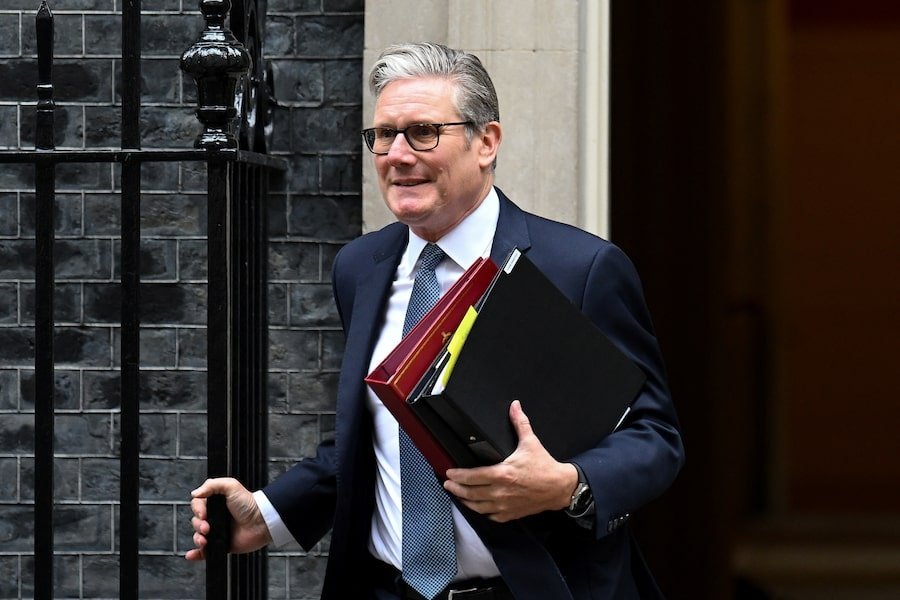
British Prime Minister Keir Starmer took a stand of total defiance during a high-stakes Cabinet meeting on May 12, 2026, officially refusing to resign despite a burgeoning revolt within the Labour Party. The Prime Minister is attempting to weather a political storm triggered by what analysts are calling a “historic electoral wipeout” in the May 7 local elections.
The scale of the defeat was staggering, with Labour losing over 1,100 councillors and ceding control of 28 councils across England, alongside heavy losses in the Scottish and Welsh parliaments.
Key Developments: A Government in Crisis
-
A Fracturing Front Bench: The pressure on Starmer intensified as high-profile junior ministers, including Miatta Fahnbulleh (Housing) and Jess Phillips (Safeguarding), resigned in protest. Both have publicly demanded a clear timetable for a leadership transition.
-
The “Governing” Mandate: Despite taking personal responsibility for the election results, Starmer told his Cabinet that the public expects the government to prioritize stability over internal party politics. He remains shielded, for now, by the fact that the formal mechanism for a leadership challenge has not yet been activated.
-
A Trio of Challengers:
-
Wes Streeting: The Health Secretary is viewed as the “establishment” favorite, backed by the party’s right wing, though he faces an uphill battle with the more progressive grassroots membership.
-
Angela Rayner: Now a backbencher following a previous tax controversy, Rayner is positioning herself as the champion of “working-class” politics and the “soft-left.”
-
Andy Burnham: The Mayor of Greater Manchester remains the public’s favorite. While he currently lacks a seat in Parliament to launch a formal bid, his allies are reportedly scouting for a by-election opportunity to get him back to Westminster.
-
The Perfect Storm: Why Starmer is Vulnerable
The election losses are only part of the problem. Starmer’s authority has been eroded by a series of compounding controversies:
-
The Mandelson Scandal: Outrage continues over the appointment of Peter Mandelson as the U.K. Ambassador to the U.S., a move plagued by scrutiny over his past associations with Jeffrey Epstein.
-
Economic Austerity: Decisions such as the elimination of the winter fuel allowance and the perceived absence of a cohesive “growth strategy” have alienated core voters.
-
The Multi-Front Squeeze: The recent elections showed Labour losing ground simultaneously to Reform UK and the Green Party, signaling a loss of identity at both ends of the political spectrum.
The Path Forward
All eyes now turn to the State Opening of Parliament on Wednesday, May 13. Starmer intends to use the King’s Speech to unveil an ambitious new legislative agenda—a high-risk “reset” designed to prove he still has the vision and the numbers to lead a deeply divided nation and party.
