

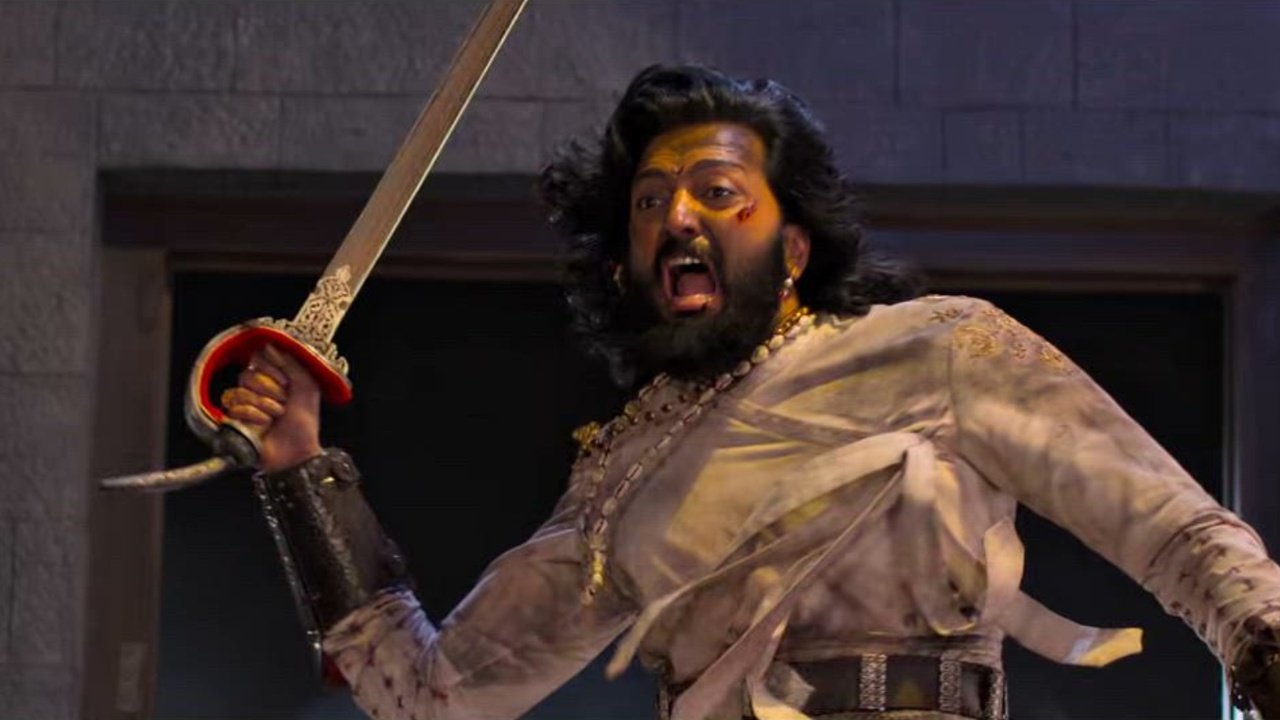
In the crowded landscape of Maratha historical epics, Riteish Deshmukh’s “Raja Shivaji”—a Marathi-Hindi bilingual—attempts something rare: it chooses measure over melodrama. While recent blockbusters like Tanhaji and Chhaava relied on heightened, textbook heroics to sway audiences, Deshmukh (who writes, directs, and stars) delivers a three-hour epic that feels more flesh-and-blood than superheroic.
The Plot: From Birth to Swarajya
The film covers the pivotal thirty-year window from 1629 to 1659, charting the rise of Chhatrapati Shivaji Maharaj against the Mughal and Bijapur empires. Unlike its peers, “Raja Shivaji” focuses on the strategic emergence of “Hindavi Swarajya,” culminating in the legendary confrontation with the brutal Bijapur commander, Afzal Khan.
Cast and Performances
The film is anchored by a cast that balances star power with surprising subtlety:
-
Riteish Deshmukh (Shivaji): Delivers a performance defined by restraint and intensity, portraying the ruler as a son, husband, and leader rather than an untouchable icon.
-
Sanjay Dutt (Afzal Khan): Plays the primary antagonist with a menacing, towering presence that effectively sets the stakes for the climax.
-
Abhishek Bachchan (Sambhaji): Appears as Shivaji’s impulsive elder brother, providing a convincing, free-spirited foil to the protagonist.
-
The Women: In a departure from genre norms, Bhagyashree (Jijabai), Genelia Deshmukh (Saibai), and Vidya Balan (Khadija Sultana) are given meaningful dialogue and agency.
Technical Highlights and Hurdles
| Feature | Analysis |
| Cinematography | Santosh Sivan makes his Marathi debut, providing immense visual flair and cinematic scale. |
| Directorial Tone | Eschews “massy” shouting matches for modulated performances and human drama. |
| Pacing | At over three hours, the narrative arc occasionally stutters, feeling stilted in parts. |
| Language |
Verdict: A Controlled Epic
“Raja Shivaji” is not an Islamophobic diatribe; it focuses on the nature of tyranny rather than religious identity. It highlights that Shivaji’s enemies included those within his own faith who oppressed the common people.
While the film isn’t always as sharp as a “tiger claw,” it succeeds by being a human-centric drama. It holds its horses until the final, gripping confrontation, making it a noteworthy—if slightly overlong—entry into Indian historical cinema.
Rating: 2.5 / 5
