

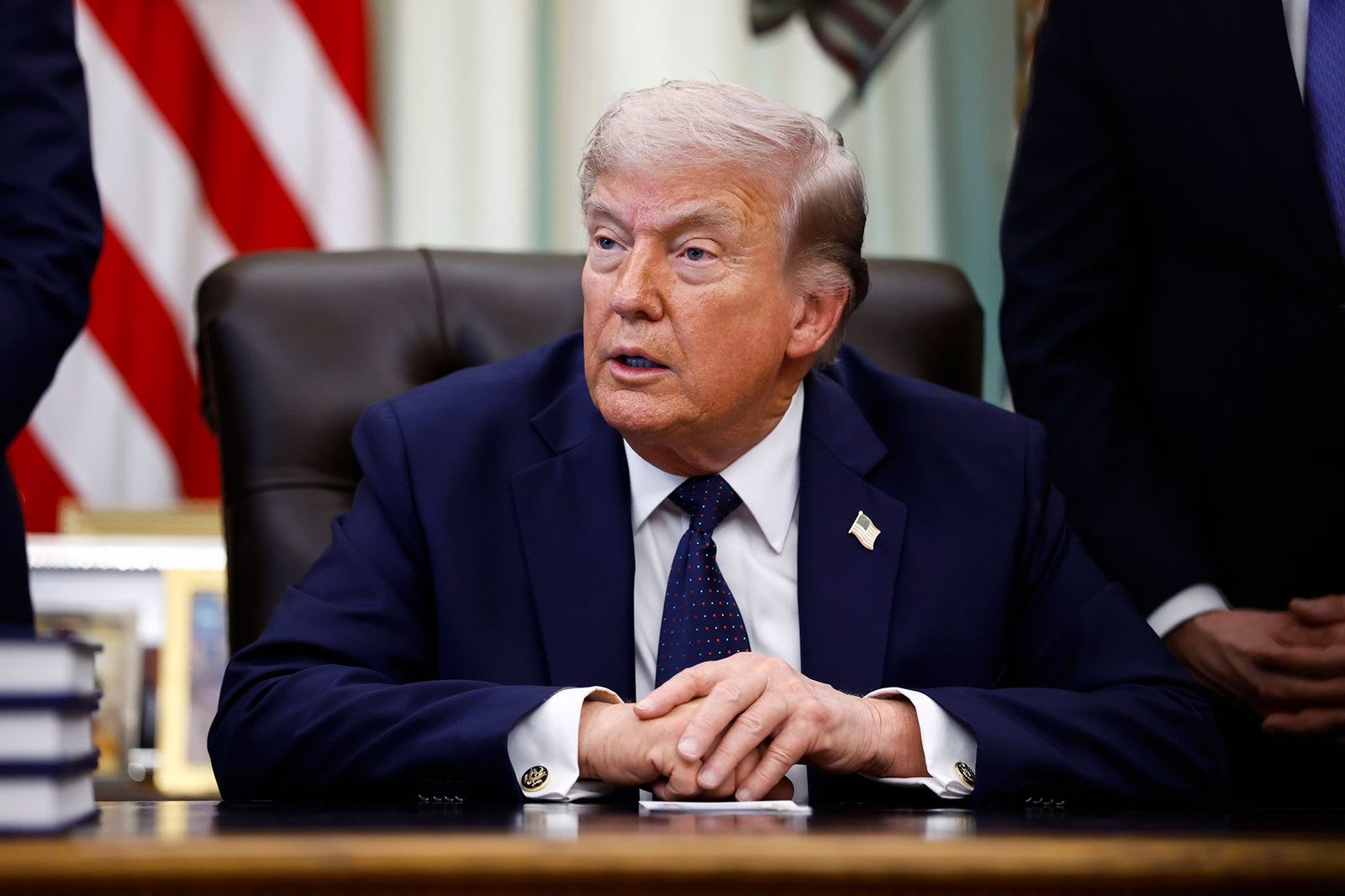
As the May 1 deadline looms, President Donald Trump finds himself in a high-stakes legal and military squeeze. Under the War Powers Resolution of 1973, a president cannot maintain military action for more than 60 days without a formal declaration of war or specific authorization from Congress.
With the US blockade of the Strait of Hormuz currently strangling 20% of the world’s energy supply, the next 48 hours will determine if the US ramps up for a full-scale war or retreats into a legal “grey zone.”
The Legal Bottleneck: War Powers Act
The War Powers Act is a “hard stop” designed to prevent “forever wars.” Because Trump lacks an AUMF (Authorization for Use of Military Force), his legal authority to command strikes or maintain the blockade expires this week.
-
The Chinese Factor: Analysts suggest the Hormuz blockade isn’t just about Iran; it’s a strategic move to starve China of fuel and secure maritime chokepoints. Ending the blockade to comply with US law would mean abandoning this geopolitical leverage.
-
The Mid-term Shadow: With the November mid-term elections approaching, Trump is desperate for a “shiny prize”—likely control over Iran’s oil or enriched uranium—to present to voters as a victory.
3 Scenarios: How the Conflict Could Resolve
| Scenario | Mechanics | Likelihood |
| 1. The Peace Deal | Iran re-opens Hormuz; US lifts the blockade and stops airstrikes. Trump claims he “prevented a forever war.” | Low (Tehran’s terms are currently too high for the White House). |
| 2. More Fighting | Republicans pass an AUMF via simple majority. This provides the legal cover for a potential ground invasion to seize resources. | Medium (Depends on GOP unity and the ferocity of Democratic pushback). |
| 3. Political Limbo | The May 1 deadline passes. Trump ignores it, citing “executive necessity.” The war continues in a legal grey zone. | High (Matches Trump’s previous patterns of challenging institutional norms). |
The “Safe Bet” Economy
The crisis is having an unprecedented impact on global markets. As West Asian supply remains volatile, investors are pivoting:
-
US Crude: Effectively becoming the “world’s safe bet” as the Hormuz crisis makes Middle Eastern oil a high-risk asset.
-
India’s Energy Security: India, which relies on the region for 40% of its crude, is watching the Hormuz deal closely. A re-opened strait would instantly stabilize Indian fuel prices.
The Trump Dilemma
Trump faces an asymmetry of deadlines: the War Powers hard stop (which he doesn’t control) vs. the Ceasefire clock (which he does). If he exits Iran without a clear “win,” he risks appearing defeated. If he stays without Congressional approval, he risks a constitutional crisis that could haunt the GOP through the 2028 election cycle.
The Bottom Line: By May 1, the US must either secure a legislative “go-ahead” for war or find a face-saving exit strategy. Anything in between leaves the presidency—and the global economy—in a dangerous state of limbo.
