

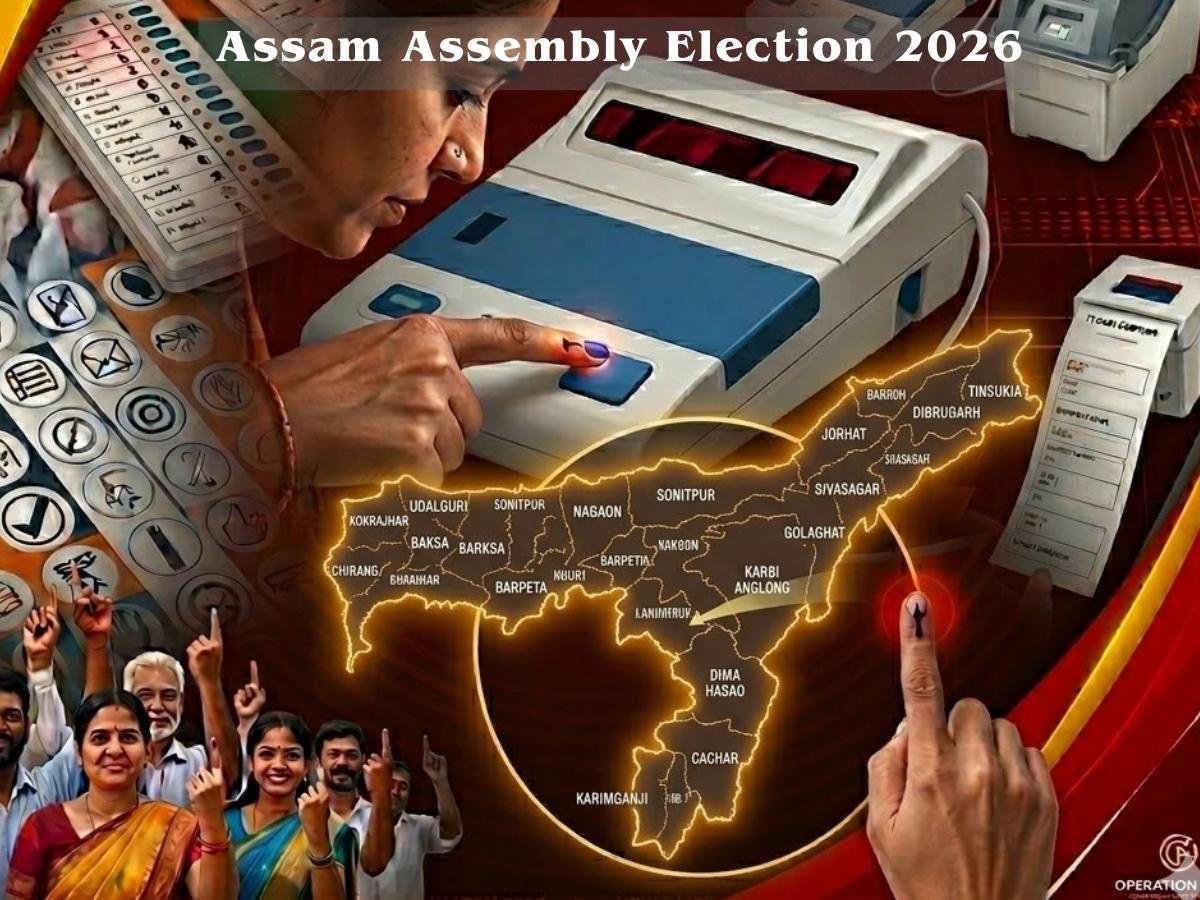
As Assam heads to the polls today, April 9, 2026, the election serves as a high-stakes test of the state’s changing demographics and the impact of the 2023 delimitation exercise. The campaign has been defined by the BJP’s focus on “Miya Muslims” (Bengali-origin Muslims) and the Congress’s attempt to consolidate diverse ethnic votes.
Demographic Breakdown of Assam (2026 Estimates)
Based on the latest available data and projections leading into the 2026 elections, the social and religious composition of Assam’s 2.5 crore (25 million) voters is as follows:
| Group | Estimated Population % | Key Details |
| Hindus | ~61.5% | Includes Assamese caste Hindus, Bengali Hindus, and most tribal groups. |
| Muslims | ~34.2% – 37% | Comprises roughly 37% of the total electorate; includes both indigenous (Gorias, Morias) and Bengali-origin (Miya) Muslims. |
| Christians | ~3.7% | Primarily found among Scheduled Tribes and the Tea Garden communities. |
| Tribals (ST) | ~12.45% | Bodos are the largest group (~35% of STs), followed by Mishing, Karbi, and Rabha. |
| Tea Tribes | ~14% – 15% | A critical voting bloc of over 35 lakh people, decisive in ~35 constituencies in Upper Assam. |
| Dalits (SC) | ~7.15% | Major communities include Kaibartta, Namasudra, and Jhalo-Malo. |
Key Battlefronts and Statistics
1. The Delimitation Impact
The 2023 delimitation exercise redrew the electoral map using 2001 Census data. According to Chief Minister Himanta Biswa Sarma, this was intended to ensure “indigenous communities” remain decisive in 103 out of 126 seats.
-
Muslim-majority seats: Reconfiguration has reportedly reduced the number of constituencies where Bengali-origin Muslims are the primary deciders from roughly 35 down to 24–29.
-
Reserved Seats: Seats for Scheduled Tribes (ST) increased to 19 (from 16), and Scheduled Castes (SC) to 9 (from 8).
2. The “Miya” Factor
The term “Miya” refers to Bengali-origin Muslims who migrated from the former East Bengal.
-
There are approximately 1.3 crore (13 million) Muslims in the state.
-
Of these, an estimated 9 million (90 lakh) are identified as being of Bengali origin.
-
This group has been the primary target of the BJP’s “anti-infiltrator” rhetoric, while the Congress and AIUDF compete for their support in Lower Assam and the Barak Valley.
3. The Tea Garden Communities
Concentrated in Upper Assam, the Tea Garden workers (Adivasis) are a swing demographic.
-
3.3 lakh families were promised digital land titles (pattas) by the BJP government to secure their loyalty.
-
Despite their influence, the demand for Scheduled Tribe (ST) status for the tea tribes remains a contentious, unfulfilled promise used by the Congress to woo them back.
4. Regional Shifts
-
Upper Assam: Historically the heart of the Assamese identity movement. The BJP-AGP alliance dominated here in 2021, winning nearly all seats despite anti-CAA protests.
-
Bodoland (BTR): The Bodo community (Assam’s largest tribe) controls 15 seats. The BJP is allied here with the BPF, while the UPPL (a former BJP ally) is fighting independently to maintain its footprint.
