

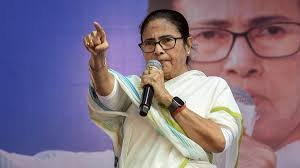
KOLKATA — With just a month to go before the high-stakes West Bengal Assembly elections, Chief Minister Mamata Banerjee has released the Trinamool Congress (TMC) manifesto, titled “10 Protigya” (10 Pledges). The document, unveiled at her Kalighat residence on March 20, 2026, focuses on an aggressive expansion of “doorstep” welfare schemes and significant cash incentives to secure a fourth consecutive term.
The manifesto is built on the success of the party’s flagship programs, Lakshmir Bhandar and Duare Sarkar, while introducing new social safety nets for the youth and healthcare seekers.
The 10 Strategic Commitments
-
Duare Chikitsa (Doorstep Healthcare): In a major expansion of her “Duare” (doorstep) model, the CM promised annual health camps in every block and town to deliver advanced medical care directly to citizens.
-
Hiked Lakshmir Bhandar: The monthly financial assistance for women is being increased by ₹500. General category beneficiaries will now receive ₹1,500, while SC/ST women will receive ₹1,700 per month.
-
Banglar Yuba-Sathi: Addressing unemployment, the party has pledged ₹1,500 per month as financial support for unemployed youth aged 21 to 40.
-
₹30,000 Crore Agri-Budget: A dedicated agricultural budget will focus on landless farmers and upgrading rural infrastructure, including a hike in paddy procurement prices to ₹2,500 per quintal.
-
Nischit Abasan (Assured Housing): A commitment to provide a pucca (permanent) house to every family in the state.
-
Ghore Ghore Nal (Piped Water): Ensuring 100% functional household tap-water connections across all 1.75 crore rural families.
-
Banglar Shikshayatan: Comprehensive infrastructural and digital (e-learning) upgrades for every government school in West Bengal.
-
Industrial Gateway: Positioning Bengal as the primary trade hub for Eastern India through new ports, logistics hubs, and a Global Trade Centre.
-
Old Age Pension: Expanding the safety net to ensure uninterrupted and universal pension support for all eligible senior citizens and widows.
-
Administrative Reform: The creation of seven new districts and the expansion of Urban Local Bodies to bring governance closer to local communities.
The Political Context
During the launch, Banerjee took sharp aim at the BJP-led Central Government, alleging an “undeclared President’s Rule” in the state. She accused the Centre of interference and “disenfranchising” the people of Bengal through the Special Intensive Revision (SIR) of electoral rolls.
The opposition has dismissed the manifesto as “unreliable.” BJP leaders argued that these promises are “tactics to fool voters,” pointing to the state’s industrial challenges and past governance issues.
Election Roadmap
The 2026 West Bengal Assembly elections will be held in two phases:
-
Phase 1: April 23, 2026 (152 seats)
-
Phase 2: April 29, 2026 (142 seats)
-
Counting of Votes: May 4, 2026
With Mamata Banerjee once again contesting from the Bhabanipur seat, the 2026 election is shaping up to be a historic clash of ideologies and welfare economics.
