

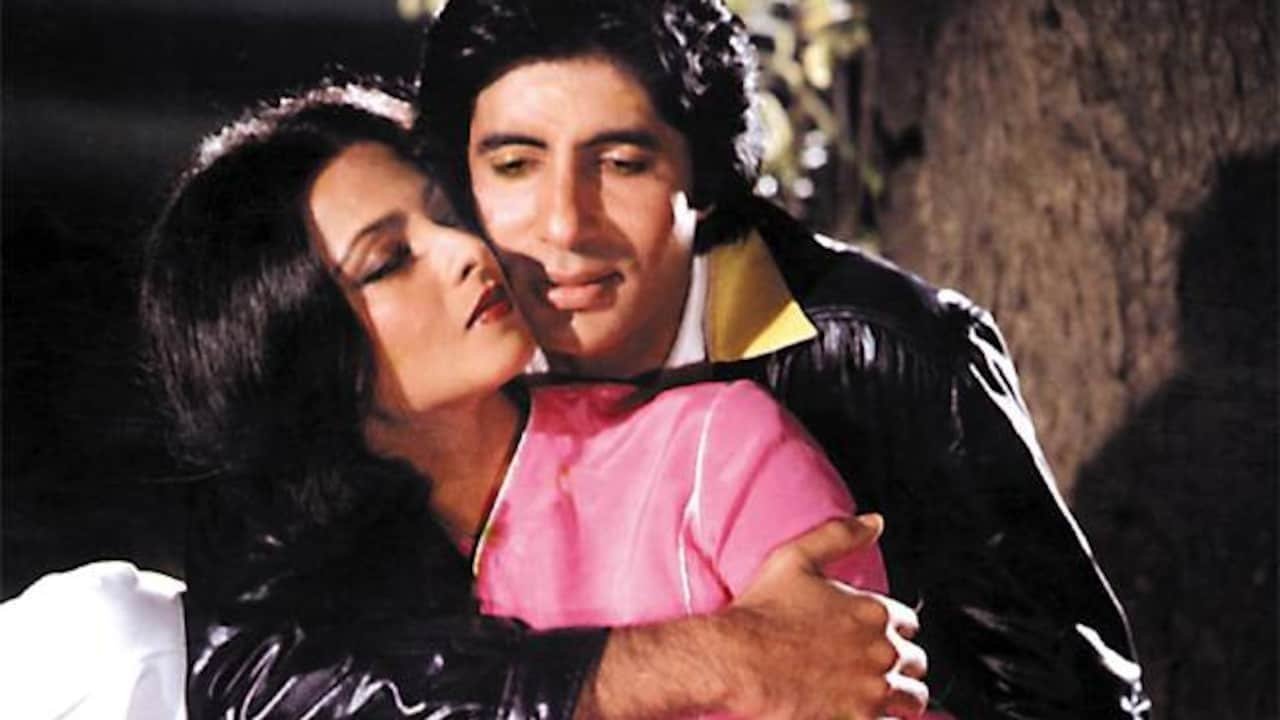
Fifty years ago, Do Anjaane (1976) brought together two stars who were polar opposites on a call sheet. Amitabh Bachchan was Bollywood’s unstoppable, famously disciplined “Angry Young Man” (Zanjeer, Deewar, Sholay). Rekha was mostly known for B-grade films and tardiness.
Expected to clash on set, Rekha was instead utterly mesmerized by Amitabh’s dedication and baritone. Though Do Anjaane was not a blockbuster, it earned Rekha critical respect as an actress—a transformation she credited entirely to Bachchan. Unfazed by his married status, Rekha famously stated that she merely wanted the honor of being associated with him without intent to break his home.
Media Bans and Strategic Hints
In the mid-1970s, during the Indian Emergency, Amitabh faced an informal press ban after top film editors blamed him for censorship. In response, Bachchan completely shut out the media, leaving publications to refer to him simply as “he,” “Lambuji,” or “the Superstar.”
Rekha used this narrative to her advantage. Dropping subtle clues in interviews while starring alongside him in Khoon Pasina, Alaap, and Immaan Dharam (all 1977), she openly declared her intense affection for “HIM.” By 1978, while earning critical acclaim for Ghar, she casually admitted to mental substitutions during romantic scenes with co-stars: “I would just substitute Vinod Mehra for ‘him’.”
Escalating Scandals and Bold Statements
As speculation peaked, the contrast in public responses grew starker:
-
Rekha’s Declarations: In a famous 1978 Stardust interview titled “Girl Without a Conscience,” Rekha boldly embraced the “other woman” label, claiming the role carried its own power.
-
Public Appearances: At Rishi Kapoor and Neetu Singh’s wedding in January 1980, Rekha created a sensation by wearing a white sari accompanied by a bold streak of sindoor in her hair.
-
Jaya Bachchan’s Stance: Addressing the media frenzy, Jaya maintained a firm public stance, stating that her husband’s commitment was to her, and his actions outside were a matter for his own conscience.
-
Amitabh’s Silence: Bachchan consistently denied the rumors and maintained his commitment to his family, stating: “A divorce will never happen in our case… I made an absolutely first-class choice when I took Jaya as my wife.”
Reel Life Mirrors Real Life: Silsila and the Coolie Accident
In 1981, director Yash Chopra pulled off Bollywood’s biggest casting coup by casting Amitabh, Jaya, and Rekha together in Silsila. Chopra later admitted he was constantly on edge during filming as real-life dynamics bled directly onto the set. The movie forever etched the trio’s public narrative into cinematic history.
The drama intensified in 1982 when Amitabh suffered a life-threatening injury on the sets of Coolie. While political dignitaries and industry figures visited him, Rekha was reportedly barred from the hospital. In a subsequent Filmfare interview, she expressed deep helplessness at being unable to communicate with him, claiming his outward denials were solely to protect his family and image.
The Persistent Mythology
Over the decades, the two stars took distinctly different approaches to their shared legacy:
-
Amitabh’s Stance: On Rendezvous with Simi Garewal, Bachchan attributed the ongoing rumors entirely to the media, clarifying that they had no social contact outside of their past professional work.
-
Rekha’s Retrospective: Director Muzaffar Ali (Umrao Jaan) noted that Rekha frequently referred to Bachchan with terms traditionally reserved for a spouse.
-
Modern Intersections: In 2012, both Rekha and Jaya served in the Rajya Sabha simultaneously. Later, in 2015, Rekha made a meta-cameo in R. Balki’s Shamitabh (co-produced by AB Corp), presenting an award to Dhanush (who used Bachchan’s voice in the film) while praising “God’s own voice.”
Half a century later, through subtle inside jokes on TV shows, crooned love songs, and enduring cinematic visuals, Rekha and the media have ensured that the mythology of Silsila remains firmly embedded in the public imagination.
