

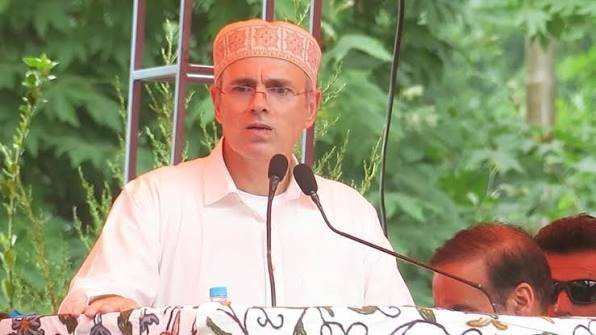
Jammu and Kashmir Chief Minister Omar Abdullah has launched a scathing critique of the Election Commission of India (ECI), asserting that the region’s earlier delimitation exercise was an “opaque” and “flawed” process “designed to benefit one political party”.
Speaking to reporters in Srinagar, Abdullah called for urgent “corrective action” within the poll panel to safeguard public trust in the democratic framework, warning, “If people lose faith in elections, what remains of democracy?”
Echoing National Concerns Over ECI Transparency
Abdullah’s remarks follow a prominent investigative report revealing that two of the ECI’s three commissioners had recorded objections at least 14 times over a ten-month period regarding key decisions made under Chief Election Commissioner Gyanesh Kumar without their involvement.
While the poll body responded to the reports by maintaining that internal disagreements are a normal part of its decision-making mechanism, Abdullah argued that this admission only validates growing public suspicion. “The statement they issued… that there are differences, proves that what is there is not right,” he noted.
A Precursor to Wider Electoral Controversies
Drawing parallels between national election controversies and local governance, Abdullah emphasized that Jammu and Kashmir faced manipulation of its electoral geography long before issues like the Special Intensive Revision (SIR) drew nationwide scrutiny.
Following the abrogation of Article 370 and the bifurcation of the erstwhile state into two Union Territories, a delimitation commission redrew the region’s 90 assembly seats. The process drew heavy criticism from local leaders and civil groups who alleged gerrymandering aimed at reducing the political weight of the Muslim-majority population beyond just the Hindu-majority Jammu areas. The Bharatiya Janata Party (BJP) has consistently denied these allegations.
