

A fresh political row has erupted between the Bharatiya Janata Party (BJP) and the Indian National Congress regarding the length and performance of the national song, Vande Mataram, at official and political gatherings.
Core Points of the Dispute
-
Congress Working Committee Decision: The Congress Working Committee (CWC) reaffirmed its stance to sing only the first two stanzas of Vande Mataram during party functions, adhering to a historic resolution adopted by the party in 1937.
-
BJP Criticisms: Calling the opposition party a “new Muslim League,” BJP national spokesperson Sudhanshu Trivedi asserted that restricting the song questions Congress’s patriotism and violates national sentiment. He argued that the move elevates party policy over national institutions.
-
Government Policy: The central government mandated the recitation of the full version of Vande Mataram at official and public events, backing the directive with legislation passed in Parliament to penalize disruptions during its singing.
Key Statements from Party Leadership
-
KC Venugopal (Congress): Accused the BJP of using emotional national symbols as a distraction tactic from pressuring public issues. He noted that the 1937 two-stanza policy was originally endorsed by freedom movement leaders including Mahatma Gandhi, Jawaharlal Nehru, Subhas Chandra Bose, Sardar Patel, and Rabindranath Tagore.
-
Mallikarjun Kharge (Congress): Defended his recent recitation of the two-stanza version at an event in Goa, stating he followed the tradition of past national leaders and former Prime Minister Atal Bihari Vajpayee.
Recent Triggers
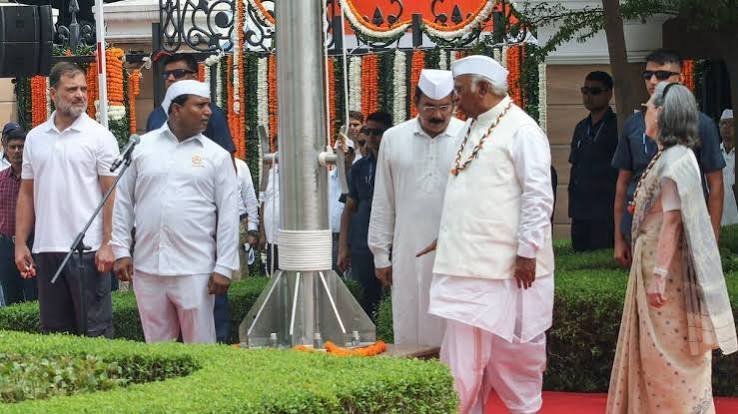
The debate intensified following Independence Day observances at the Congress headquarters and a subsequent event in Goa, where BJP leaders criticized senior Congress figures for not reciting the complete text of the national song. Congress representatives maintain that their practice reflects long-standing historic policy rather than disrespect.
