

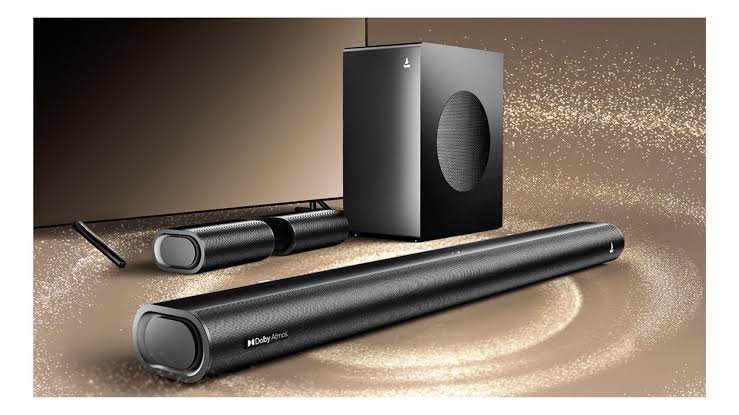
Upgrading your TV’s built-in audio with a soundbar instantly elevates your viewing setup, but choosing between 2.1 channel, 5.1 channel, and Dolby Atmos models can be confusing. Here is a direct breakdown of how these configurations compare to help you decide which system best fits your space and budget.
Channel Configurations Compared
| Feature | 2.1 Channel | 5.1 Channel | Dolby Atmos |
| Speaker Setup | Left, Right + Subwoofer | Left, Center, Right + 2 Rear Satellites + Subwoofer | Main, Surround, Subwoofer + Height/Up-firing drivers |
| Audio Processing | Stereo or Virtual Surround | True 5.1 Surround Sound | Object-based 3D Spatial Audio |
| Dialogue Clarity | Decent | High (Dedicated center channel) | Excellent (Dedicated center & overhead positioning) |
| Best For | Casual viewing, music, smaller rooms | Movies, sports, dedicated home theaters | Cinematic movies, modern gaming, immersive audio |
| Setup Complexity | Plug-and-play | Moderate (requires routing rear speakers) | Varies (depends on up-firing vs. modular physical drivers) |
| Price Point | Entry-level / Budget | Mid-range | Premium |
Understanding the Differences
2.1 Channel: Simple & Budget-Friendly
A 2.1 setup pairs left and right speakers with a dedicated subwoofer. It provides a massive step up from built-in TV speakers by delivering punchy bass and clean stereo sound. Because it lacks rear or center channels, it cannot produce true surround sound, but its compact footprint and effortless setup make it ideal for smaller bedrooms or basic TV viewing.
-
Top Options: Philips TAB4329 (100W), boAt Aavante 2.1 1600D (160W), Samsung HW-B45EF/XL (300W).
5.1 Channel: True Surround Sound
A 5.1 system introduces a center channel for crisp movie dialogue alongside separate left/right physical rear speakers. Splitting the audio across five distinct directions delivers a convincing cinematic experience for movies and sports. The trade-off involves running wires or providing power outlets for the rear surround units.
-
Top Options: Zebronics Juke Bar 7400 Pro (400W), Sony HT-S20R (400W), Samsung HW-B750F/XL (400W).
Dolby Atmos: 3D Spatial Audio
Dolby Atmos uses object-based audio to place sound vertically as well as horizontally. Utilizing upward-firing drivers or advanced spatial processing, Atmos bounces audio off your ceiling to make overhead effects—like rain or aircraft—feel realistic. While it commands a higher price and requires a standard, flat ceiling to reflect sound effectively, it delivers the most immersive home theater and gaming performance available.
-
Top Options: JBL Cinema SB590 (440W), Sony Bravia Theatre Bar 6 HT-BD60, Sonos Beam (Gen 2).
