

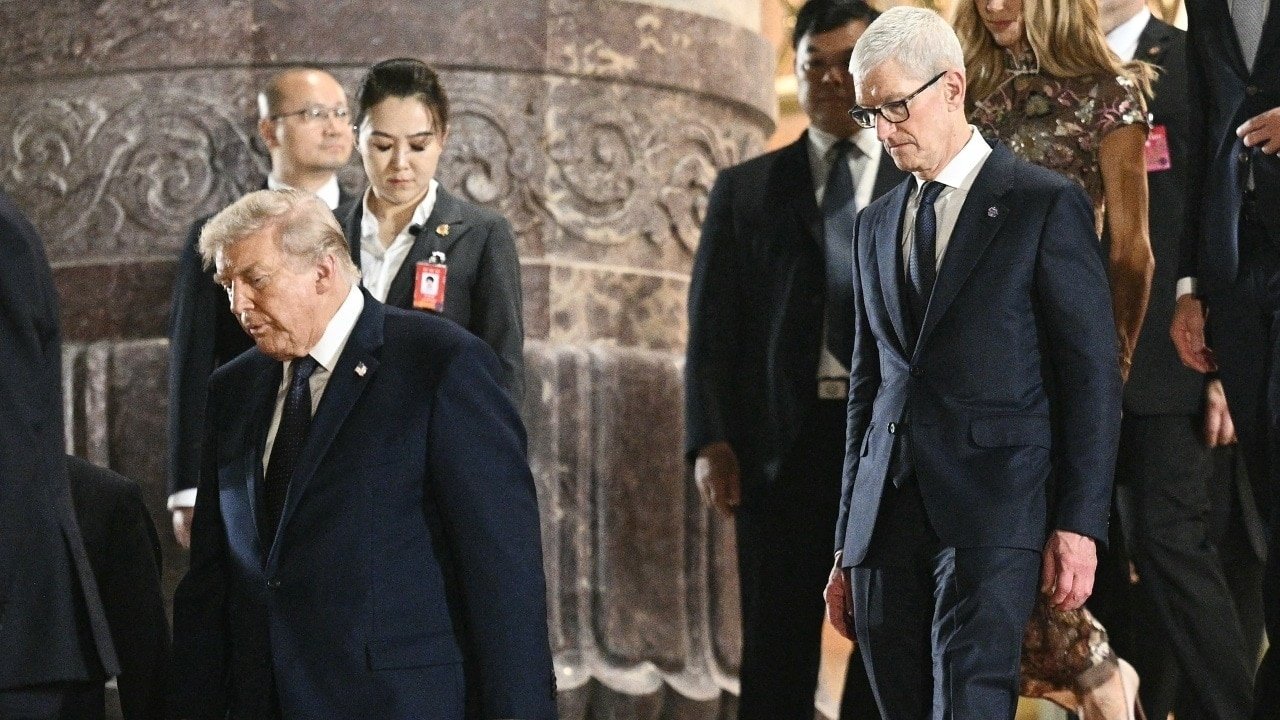
A fierce corporate tug-of-war in Washington has put President Donald Trump directly in the middle of two conflicting policy priorities: keeping consumer technology prices down and bolstering domestic semiconductor manufacturing.
Apple and Micron Technology—two of America’s most prominent tech giants—are lobbying the Trump administration with diametrically opposed agendas. Apple is seeking permission to use Chinese memory chips in devices sold outside the United States to alleviate soaring costs, while Micron is fighting aggressively to block any such allowance.
What Apple Wants
In recent weeks, Apple Chief Executive Tim Cook and top company executives pitched the proposal directly to President Trump, Commerce Secretary Howard Lutnick, and Treasury Secretary Scott Bessent.
-
The Proposal: Apple wants to source DRAM and NAND flash memory from Chinese suppliers ChangXin Memory Technologies (CXMT) and Yangtze Memory Technologies Corporation (YMTC)—specifically for Apple devices sold in international markets.
-
The Rationale: Memory chip prices have quadrupled over the past year due to overwhelming demand from AI data centers. Apple argues that bringing in Chinese suppliers would ease the global chip shortage, stabilize device margins, and prevent higher hardware prices from hitting consumers.
-
The Accusation: Apple has accused Micron of price-gouging and prioritizing high-margin AI data center clients over traditional consumer hardware makers.
Why Micron Is Fighting Back
Micron, currently the largest domestic producer of memory chips in the U.S., has launched an equally aggressive counter-campaign led by CEO Sanjay Mehrotra.
“Allowing Chinese state-backed memory manufacturers into major supply chains—regardless of where the final product is sold—could gut the domestic semiconductor sector the same way cheap foreign imports crippled American steel decades ago.”
— Micron Warning to White House Officials
-
National Security Concerns: Both CXMT and YMTC are designated as Chinese military companies by the Pentagon, with YMTC also included on the U.S. Commerce Department’s trade blacklist.
-
Long-Term Investment: Micron emphasizes that it is investing $250 billion to expand U.S.-based manufacturing capacity. The company argues that approving Chinese imports would undermine U.S. semiconductor independence.
The Policy Dilemma for the White House
This dispute leaves the White House balancing two key goals:
-
Short-Term Relief: Lowering manufacturing overhead for American companies and containing inflationary pressures on consumer electronics.
-
Strategic Independence: Rebuilding domestic manufacturing and curbing China’s presence in critical high-tech supply chains.
With both companies wielding immense influence and economic leverage, the administration’s upcoming decision will set a major precedent for U.S. trade, technology policy, and international supply chain regulation.
