

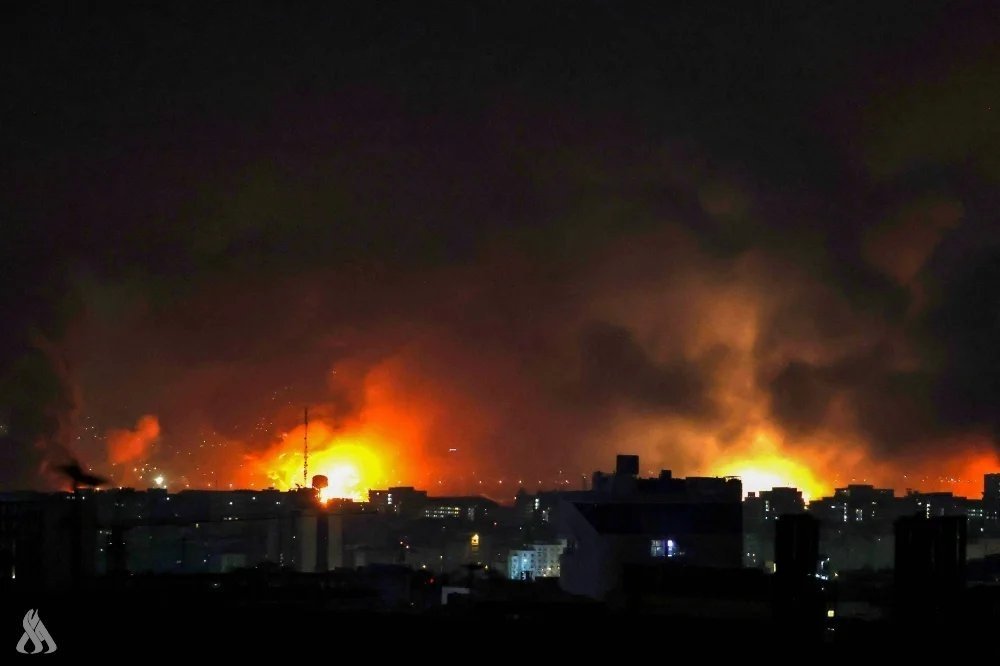
The rapid breakdown of the Islamabad Memorandum of Understanding (MoU)—signed less than a month ago on June 17, 2026—marks a dangerous return to full-scale kinetic warfare in the Persian Gulf. The fragile truce, which was intended to provide a 60-day window to negotiate a permanent end to the 2026 Iran War, collapsed after Iran attempted to leverage the text to assert hegemonic control over the Strait of Hormuz.
1. The Choke Point Conflict: Sovereign Right vs. Freedom of Navigation
The core trigger for the collapse is a fundamental disagreement over the interpretation of the interim agreement regarding the Strait of Hormuz.
-
The Iranian Position: Tehran, led by Parliament Speaker Mohammad Bagher Ghalibaf and backed by the IRGC Navy, asserts that the MoU granted Iran the explicit right to manage all maritime traffic through the strait. Iran attempted to enforce an Iranian-dictated traffic separation scheme, warning commercial vessels to follow pre-approved routes and threatening to levy transit fees.
-
The Flashpoint: To enforce this positioning, Iranian forces fired upon three merchant vessels transiting off the coast of Oman between July 6 and 7.
-
The American Response: President Trump viewed the targeting of international shipping as an immediate violation of the pact. Treating the MoU as null and void, the US Treasury instantly revoked temporary oil export waivers for Tehran, and U.S. Central Control (CENTCOM) initiated a massive, multi-day aerial and missile campaign.
2. Kinetic Scope of the US Multi-Day Strike Campaign
Unlike the targeted enforcement operations seen earlier in the conflict, the current US operation is structurally designed to degrade Iran’s anti-access/area-denial (A2/AD) coastal infrastructure.
-
Bushehr & Kharg Island: Strikes were reported along the southern Iranian coast near Bushehr, which houses Iran’s primary civilian nuclear power plant complex. While local state media reports indicate no direct damage to the nuclear reactors, the proximity of the strikes signals an immediate threat to the nearby Kharg Island oil terminal, through which 90% of Iran’s crude exports pass.
-
A2/AD Assets: Heavy bombardment targeted the southern port cities of Bandar Abbas, Chabahar, Sirik, and Konarak, specifically striking coastal radar installations, drone launch nodes, and IRGC naval command centers.
-
Inland Logistics: The expansion of strikes to an airbase in the southeastern city of Iranshahr and transportation infrastructure—such as the suspension of the Tehran-Mashhad railway—indicates the US is actively striking internal logistical lines to block the reinforcement of coastal batteries.
3. Regional Spillover and Contagion Risk
Iran’s strategic retaliation has immediately shifted from targeting US naval vessels to imposing economic and security costs on neighboring Gulf Arab states that host American military infrastructure.
-
Asymmetric Retaliation: The Iranian military deployed waves of one-way kamikaze drones and ballistic missiles against US-affiliated installations across the Gulf.
-
Targeted States: Air defense sirens and active interceptions have been confirmed in Kuwait (targeting Patriot missile batteries), Qatar (targeting early warning radar hubs), and Bahrain (threatening areas near the US Navy’s 5th Fleet headquarters).
-
Global Market Shock: The declaration that the ceasefire is over has injected immediate volatility back into global energy markets, sending crude oil prices surging by 8% as insurance premiums for shipping through the Middle East skyrocket.
The Diplomatic Outlook: While President Trump has left a narrow opening for ongoing discussions by stating he will “allow negotiations to continue,” his simultaneous rhetoric threatening to “finish the job” by leveling civilian infrastructure and power plants leaves little room for standard diplomacy. With Iran showing a willingness to accept severe domestic damage to preserve its leverage over the Strait of Hormuz, the region has transitioned from a managed pause back into an active, high-intensity regional conflict.
