

The mid-range smartphone ecosystem is experiencing an intense shift back to fundamentals. Rather than overwhelming consumers with flashy, unoptimized gimmicks, brands are focusing on consistent software support, reliable battery life, and high design standards.
Nothing’s entry into the budget-conscious segment with the Nothing Phone (4b) targets this exact sweet spot. It establishes a completely new “(b) series” entry point, designed to sit cleanly below the Phone (4a) and Phone (4a) Pro. Priced at ₹34,999 (with effective introductory bank offers lowering the starting point to ₹29,999), the device delivers Nothing’s signature aesthetic identity and clean software layout without demanding flagship money.
The Hardware Snapshot
| Metric | Specification |
| Display | 6.77-inch FHD+ AMOLED, 120Hz refresh, 2000 nits peak |
| Processor | Qualcomm Snapdragon 6 Gen 4 (4nm) |
| Memory & Storage | 8GB LPDDR4X |
| Rear Cameras | 50MP Main (Samsung, f/1.8, OIS) + 8MP Ultra-Wide (119.5°) |
| Front Camera | 16MP Selfie |
| Battery & Charging | 6,000 mAh (India Variant) |
| Software | Nothing OS 4.1 based on Android 16 |
| Durability | IP64 Dust/Splash Resistance |
Core Pillars of the Hands-On Experience
1. Refined Silhouette & The New Glyph Grid
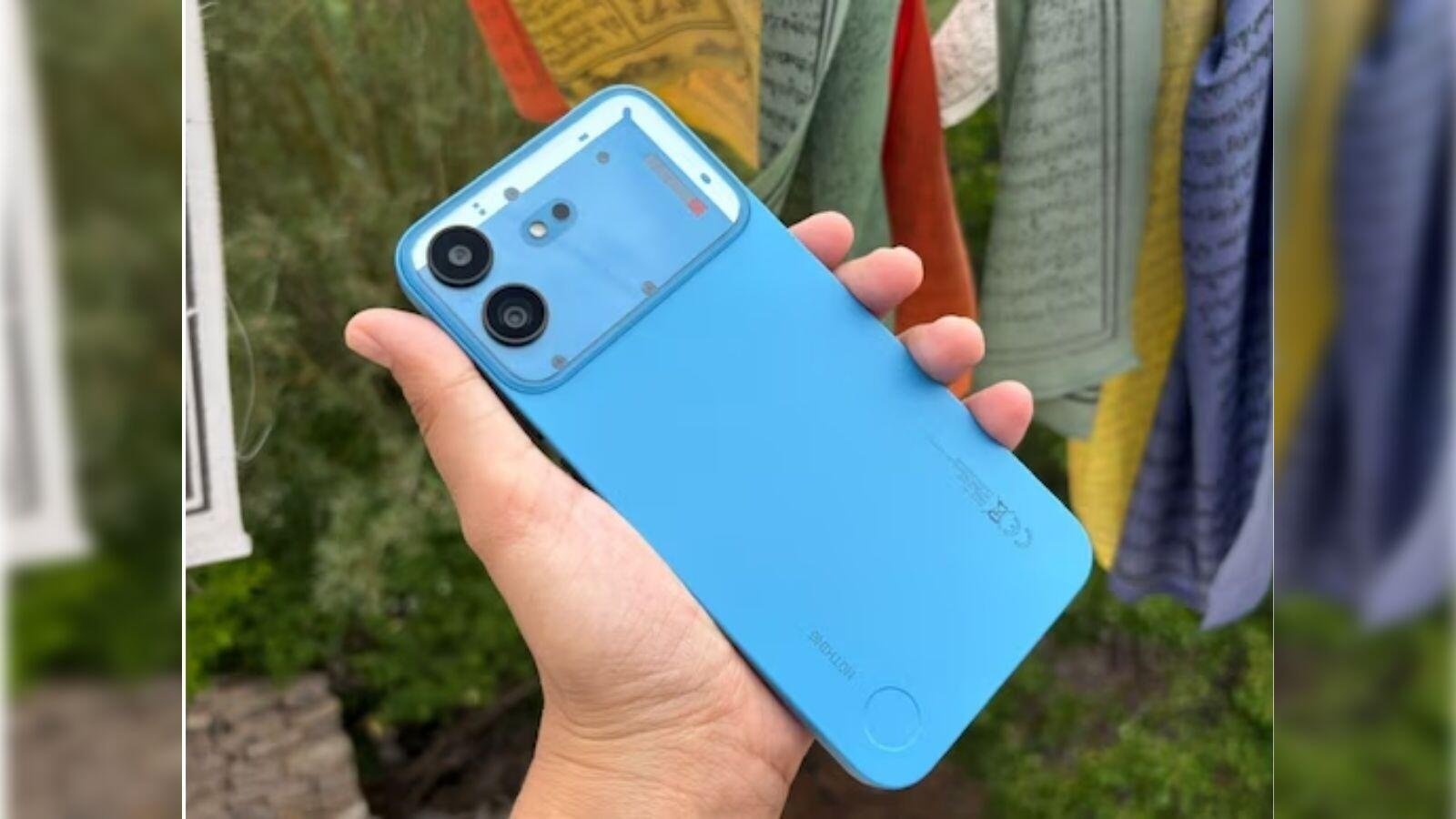
Nothing has not sacrificed its design pedigree to hit a more aggressive price point. The Phone (4b) opts for a durable polycarbonate unibody that feels dense and structurally sound, offering improved bend resistance over previous budget iterations.
The standout feature is the overhauled Glyph Bar, now integrated cleanly into a translucent camera housing. Utilizing a grid of 45 mini-LEDs split across five distinct zones, the interface offers increased peak brightness with zero light bleeding. Beyond aesthetic flair, it operates as a genuine secondary utility layer. Through custom API integration in Nothing OS 4.1, users can use the physical lighting arrays to visually track real-time delivery progress (such as Zomato or Uber), monitor Google Maps progression, watch a camera shutter countdown, or view live cricket score fluctuations.
2. A Massive, India-Specific Power Reservoir
One of the most significant architectural choices for the Indian market is the inclusion of a massive 6,000 mAh battery equipped with impact-resistant Safe Cell Technology (compared to the 5,200 mAh capacity found in global variants). This is the single largest battery capacity Nothing has ever packed into a smartphone.
The company claims the cell is built for longevity, engineered to retain 90% of its health metrics even after 1,200 charge cycles. While the 33W wired charging speed lags behind competitors offering 65W–100W solutions in this price bracket, the trade-off favors prolonged battery endurance over raw charging velocity.
3. Balanced Silicon & Large-Scale Cooling
The phone is driven by Qualcomm’s 4nm Snapdragon 6 Gen 4 processor. While power users and heavy mobile gamers across tech forums have questioned whether a 6-series silicon layer justifies a ₹35k sticker price, the interface feels incredibly snappy during regular everyday multitasking.
To offset performance throttling during extended use, Nothing has implemented a massive 20,829mm² total cooling system, headlined by a 4,400mm² dedicated Vapor Chamber. This thermal framework is designed to lower peak CPU temperatures by up to 18.8°C during sustained gaming sessions.
4. Enterprise Software Commitment
Software remains Nothing’s absolute competitive moat. Out of the box, the Phone (4b) runs on Nothing OS 4.1 built on Android 16. The UI remains entirely free from pre-installed bloatware, third-party system installers, or invasive notifications.
Crucially, Nothing is pairing this entry device with a robust support roadmap: 3 major Android OS upgrades and 6 years of security patches. This places its software longevity well ahead of typical mid-range lifecycles.
The Early Verdict: The Nothing Phone (4b) doesn’t try to win a spec-sheet war against performance-centric alternatives. Instead, it leverages striking design, exceptional battery limits, and a clean, long-supported software layer to appeal to everyday users who want an individualized smartphone experience that handles the basics flawlessly.
