

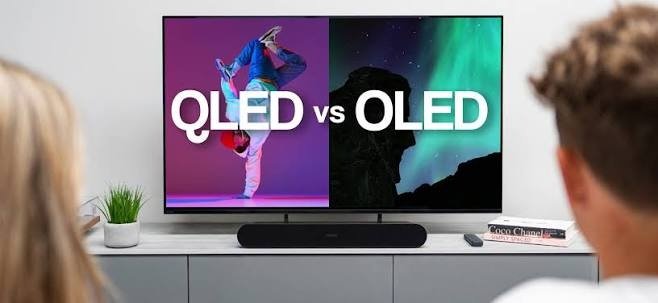
Navigating the world of smart TVs means encountering a flood of technical jargon like LED, QLED, and OLED. While these display technologies look similar on store shelves, they deliver vastly different experiences when it comes to brightness, contrast, color depth, and pricing.
Choosing the right screen type can instantly elevate your home theater, while a mismatched choice might leave you squinting through afternoon glare or missing out on deep cinematic shadows. This guide breaks down the core differences in plain terms to help you find the perfect smart TV for your space.
LED vs. QLED vs. OLED: Core Differences
LED TVs (Light-Emitting Diode)
LED TVs represent the traditional standard for modern flat screens. They utilize a liquid crystal display (LCD) panel paired with an LED backlight that shines through color filters to generate the picture.
-
The Experience: Extremely budget-friendly and widely available. They are excellent options for secondary rooms, bedrooms, or casual everyday viewing.
-
The Compromise: They struggle to achieve deep black levels, often rendering dark scenes as a muddy gray, and lack the vibrant pop of premium displays.
QLED TVs (Quantum-Dot LED)
QLED TVs are an advanced evolution of LED technology. They insert a layer of microscopic nanocrystals—called quantum dots—between the backlight and the screen. These dots emit highly precise colors based on their physical size.
-
The Experience: Capable of reaching massive peak brightness levels, making them the gold standard for sunlit living rooms because they easily cut through glare. They feature rich HDR performance, vibrant color volumes, and are entirely immune to screen burn-in.
-
The Compromise: Because they still rely on a master backlight panel, they cannot achieve the absolute, pitch-black contrast found in OLEDs.
OLED TVs (Organic Light-Emitting Diode)
OLED technology completely eliminates the traditional backlight. Instead, every single pixel on an OLED panel produces its own independent light and color.
-
The Experience: When a pixel needs to display black, it turns off entirely, resulting in “infinite” contrast and true, perfect black levels. They offer flawless viewing angles (no color fading when sitting to the side) and lightning-fast response times for gaming.
-
The Compromise: They carry a premium price tag, do not get quite as piercingly bright as high-end QLEDs, and carry a slight, theoretical risk of image burn-in if left on a static news channel for thousands of hours.
Direct Feature Comparison
| Feature | LED TV | QLED TV | OLED TV |
| Black Levels | Grayish black | Dark gray to black | Perfect, true black |
| Brightness | Normal | Super bright | Bright, but lower than QLED |
| Color Quality | Good | Excellent and vibrant | Deep and highly natural |
| Viewing Angles | Poor | Fair to good | Flawless / Perfect |
| Contrast Ratio | Low | Low to medium | Infinite |
| Burn-In Risk | None | None | Low risk |
| Price Range | Highly affordable | Mid-range to high | Premium / Expensive |
Top Smart TV Picks in India
1. LG 55-inch 4K Ultra HD B4 OLED Series (OLED55B46LA)
Designed for enthusiasts who demand zero-compromise picture quality. The self-lit pixels offer unmatched dark-room contrast, complemented by Dolby Vision and AI Picture Pro processing. It is highly optimized for next-generation gaming with a native 120Hz refresh rate, four HDMI 2.1 ports, VRR, AMD FreeSync Premium, and NVIDIA G-SYNC.
-
Platform: webOS
-
Pros: True black performance, premium gaming feature suite.
-
Cons: Moderate peak brightness; audio is average without a soundbar.
2. Sony Bravia 8M2 Series 65-inch OLED (K-65XR80M2)
A flagship masterpiece pairing QD-OLED display technology with Sony’s premium XR Processor. This model bridges the gap between pure OLED contrast and heightened color brightness. It stands out with Acoustic Surface Audio+ (where the screen vibrates to produce sound) and tailor-made integration features for the PlayStation 5.
-
Platform: Google TV
-
Pros: Flagship-tier color accuracy, cinematic built-in audio.
-
Cons: Premium, top-tier pricing.
3. Xiaomi Smart TV X Pro QLED Series 65 (L65MB-APIN)
The go-to choice for buyers wanting a massive 65-inch cinematic presentation without paying premium OLED prices. It packs a 4K QLED panel supporting Dolby Vision and HDR10+, driven by a punchy 34W speaker setup with DTS:X spatial audio.
-
Platform: Google TV
-
Pros: Massive value for money, vibrant color reproduction.
-
Cons: Built-in user interface can occasionally experience minor stutters.
4. TCL 43-inch 4K UHD Smart QLED (43T6D)
Perfect for smaller rooms, apartments, or premium desktop setups where you still want excellent color clarity. It packs full Quantum Dot technology, Dolby Vision, and an AiPQ Processor into a compact, near-bezel-less frame.
-
Platform: Google TV
-
Pros: Crisp 4K quality in a compact footprint, budget-friendly QLED entry point.
-
Cons: The operating system interface can feel slightly slow during heavy app switching.
5. Sony Bravia 2M2 Series 65-inch 4K LED (K-65S25BM2)
A reliable big-screen option from a tier-one brand. While it utilizes a standard LED panel, Sony’s 4K Processor X1 and 4K X-Reality PRO engine do an exceptional job of upscaling lower-resolution cable TV and streaming content to clean, natural-looking 4K.
-
Platform: Google TV
-
Pros: Superb motion processing, excellent brand reliability and upscaling.
-
Cons: Contrast is limited in completely dark viewing rooms.
6. Samsung 32-inch HD Smart LED (UA32H4550FUXXL)
A highly compact, basic television engineered specifically for small bedrooms, kitchens, or office spaces. It features a crisp HD Ready panel boosted by Samsung’s Hyper Real Picture Engine and runs a smooth smart ecosystem complete with Matter smart home hub support.
-
Platform: Samsung Tizen OS
-
Pros: Affordable, reliable performance for tight spaces.
-
Cons: Limited to basic HD resolution (768p).
Which Technology Fits Your Home?
-
Pick an LED TV if you are prioritizing maximum affordability, need a secondary television for casual viewing, or simply want reliable performance without a high upfront investment.
-
Pick a QLED TV if your television is going into a bright room with large windows, if you primarily watch sports and daytime TV, or if you want high-impact HDR color vibrancy on a mid-range budget.
-
Pick an OLED TV if you are building a dedicated home theater, frequently watch movies with the lights turned down low, or want a high-performance monitor substitute for next-gen console gaming.
