

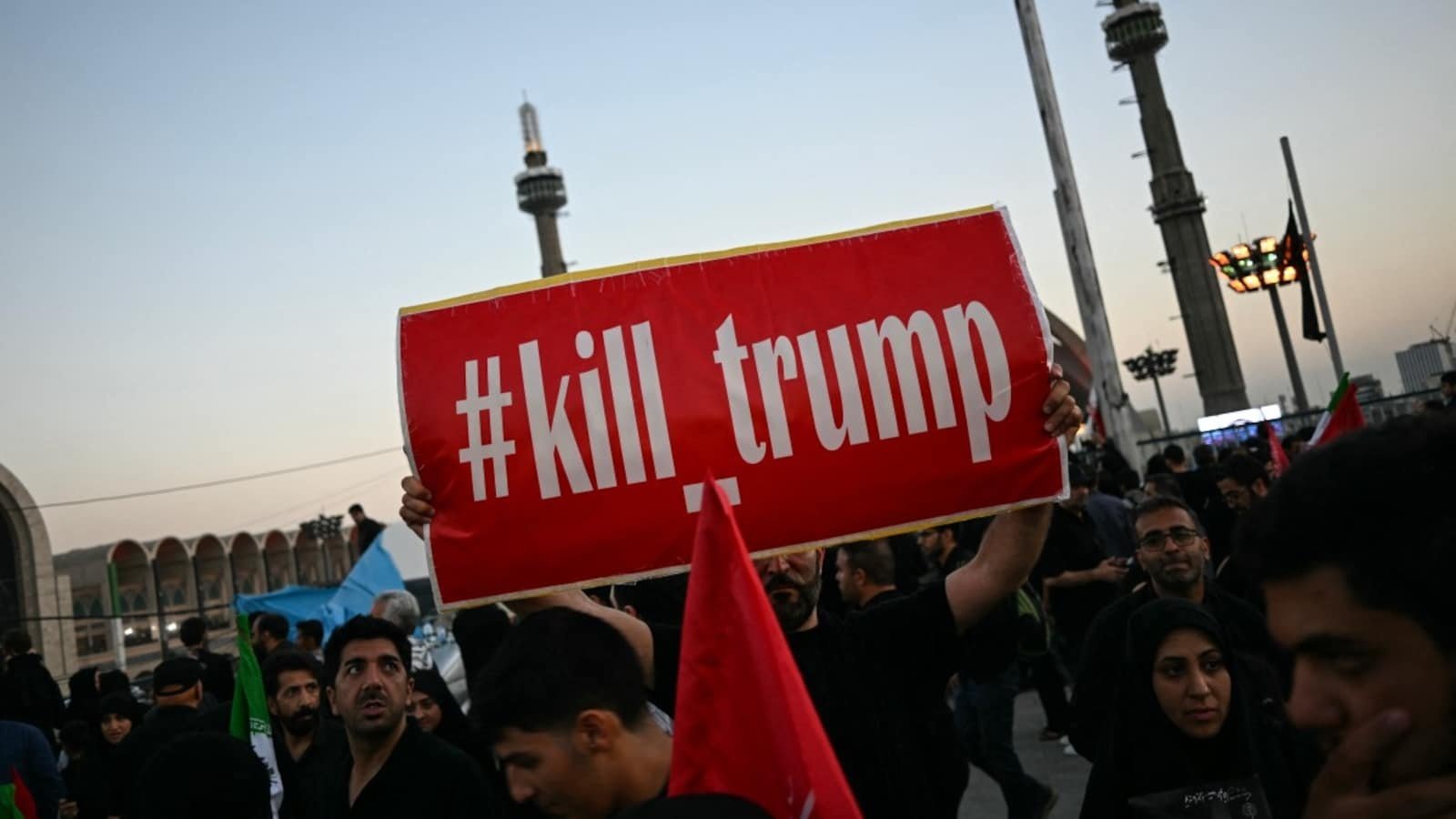
The packed Grand Mosalla prayer complex in Tehran erupted with fierce calls for vengeance as Iran’s top political and military elite reemerged from hiding to attend the funeral of the assassinated former Supreme Leader, Ayatollah Ali Khamenei.
Organized over four months after Khamenei and four family members were killed on February 28 during the opening day of the US-Israeli war, the week-long state funeral has transformed into a highly charged political demonstration.
Chants for Blood and Targeted Assassinations
Hundreds of thousands of black-clad mourners filled the sprawling complex, many staying overnight to secure a place for morning prayers. The crowd brandished Iranian tricolors alongside red flags—the traditional Islamic symbol for bloody retribution—while chanting “Death to America” and “Death to Israel.”
The calls for revenge took a highly specific turn, targeting current Western leadership:
-
Banners and Placards: Mass-produced posters and graffiti explicitly called for the assassinations of US President Donald Trump and Israeli Prime Minister Benjamin Netanyahu. Banners reading “Kill Trump” featuring a bullet running through his name were prominently displayed.
-
Bounties Offered: Aggressive placards depicting Trump and Netanyahu in crosshairs labeled them as wanted men, offering a reward of 100 plots of land (20 square meters each) to anyone who kills them “like dogs.”
-
Widened Rhetoric: Other prominent placards targeted new US leadership, featuring images of Vice President JD Vance and War Secretary Pete Hegseth overlaid with the warning: “There will be blood.”
“From now on the shroud is our garment. I swear by your blood; Trump’s murder is our responsibility… Why is the most despicable man in the world still alive? It would be a disgrace if we did not kill him.”
— Mohammad Rasouli, Official Ceremony Eulogist and Poet
The United Front: Leaders Reemerge
The funeral marked a major geopolitical milestone: the first time Iran’s high command has appeared collectively in public since the outbreak of the war. Facing a continuous threat landscape, their unified presence was intended to project structural resilience as Iran negotiates a permanent ceasefire with the US.
The high-profile attendees photographed included:
-
President Masoud Pezeshkian and Parliament Speaker Mohammad Bagher Qalibaf (Iran’s lead diplomatic negotiator).
-
General Esmail Qaani, head of the elite Quds Force, and Revolutionary Guard Chief General Ahmad Vahidi.
-
Three of Khamenei’s surviving sons: Mostafa, Meysam, and Masoud.
Notably Absent: The newly appointed Supreme Leader, Mojtaba Khamenei (Ali Khamenei’s other son), remained entirely out of public sight. Believed to have been wounded in the February airstrike that killed his father, Mojtaba has been kept in deep hiding due to active, targeted security threats against his life.
A Poignant Display of Loss
The prayers, led by 97-year-old Shiite cleric Ayatollah Jafar Sobhani, featured five family caskets laid out on an elevated stage. Among them were Khamenei’s daughter-in-law, Zahra Haddad Adel, and his 14-month-old granddaughter, Zahra Mohammadi Golpaygani. The miniature size of the toddler’s casket stood out as one of the most sobering visuals for the millions of pilgrims in attendance.
What’s Next for the Funeral Procession?
The massive logistical undertaking will map across two countries before its conclusion:
-
Monday: The caskets are being driven through the gridlocked streets of Tehran in a 10-to-12-hour procession toward Mehrabad International Airport.
-
Tuesday & Wednesday: The bodies will be transported to Qom, before crossing into Iraq for historic processions through the holy Shiite cities of Najaf and Karbala.
-
Thursday: The final burial will take place at the Imam Reza shrine in Mashhad, the late Supreme Leader’s birthplace.
