

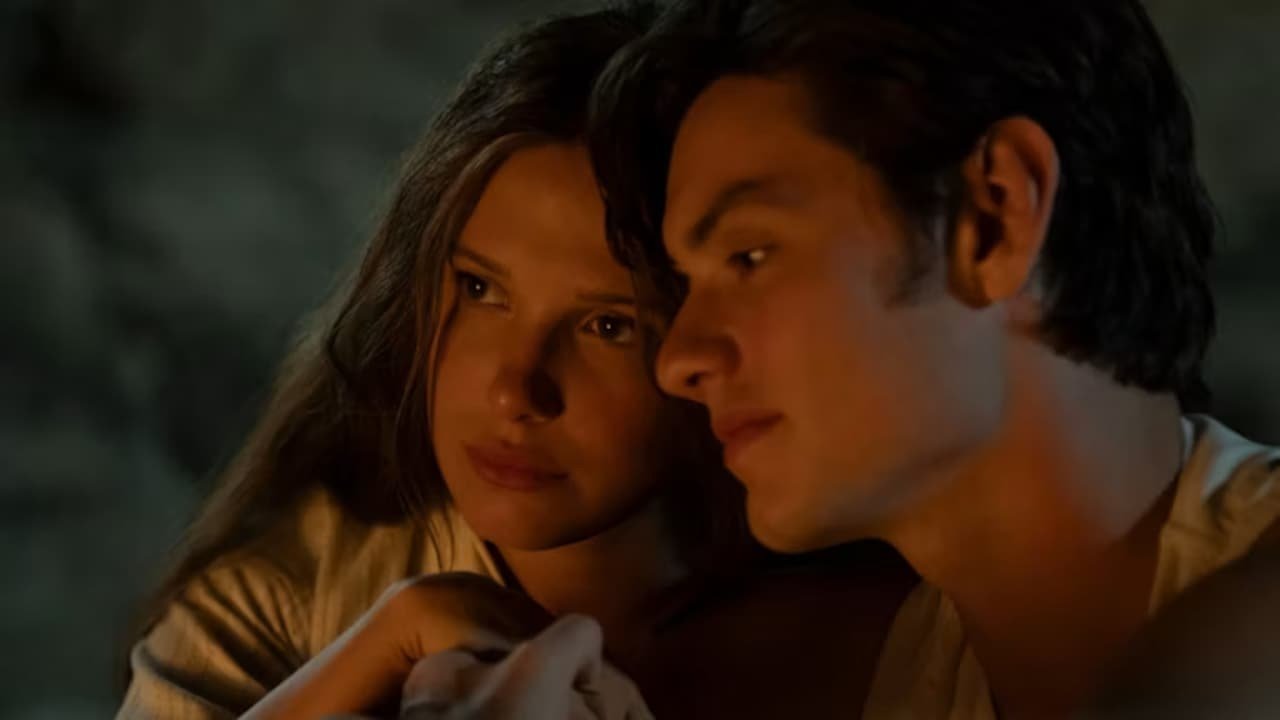
Cast: Millie Bobby Brown, Louis Partridge, Henry Cavill, Helena Bonham Carter, Sharon Duncan-Brewster, Himesh Patel
There is an odd comfort in returning to Baker Street, even when the detective holding the magnifying glass isn’t Sherlock Holmes. Over its last few entries, Netflix’s Enola Holmes franchise has carved out a successful niche by letting its titular heroine step entirely out of her famous brother’s shadow. Rather than framing Enola as a carbon-copy female variant of Sherlock, the series continues to celebrate her high emotional intelligence, impulsiveness, and deep empathy as structural core strengths.
Enola Holmes 3 arrives with noticeably higher emotional stakes, a scenic shift in setting, and a new director at the helm. While the sequel struggles to match the baseline sharpness and ingenuity of its predecessors, it remains a thoroughly engaging young adult mystery—saved by its immensely watchable cast and a lead actress who effortlessly holds the screen.
The Plot: A Personal Turn on a Sun-Drenched Frontier
The narrative finds Enola Holmes (Millie Bobby Brown) mapping out a major transition into adulthood alongside Lord Tewkesbury (Louis Partridge). However, their plans are derailed when a sudden, unexpected disappearance pulls Enola into her most personal investigation to date.
The case leads Enola to team up with the newly introduced Dr. John Watson (Himesh Patel). Their collective trail of clues carries the story far past London, shifting the backdrop to the sun-drenched coastlines of Malta. As the case deepens, familiar figures reappear—including Sherlock Holmes (Henry Cavill), Eudoria Holmes (Helena Bonham Carter), and a theatrical Moriarty (Sharon Duncan-Brewster)—weaving historical and geopolitical elements directly into the character’s personal journey.
Performance and Character Dynamics
The third installment shifts focus from constructing a complex, multi-layered whodunit to exploring Enola’s coming-of-age uncertainties. This thematic pivot provides Millie Bobby Brown with some of her strongest character work yet. She anchors the film with a mature performance that balances growing vulnerability with her signature enthusiasm. Her direct-to-camera fourth-wall breaks remain a major highlight, keeping a playful rapport with the audience even as the stakes rise.
The core relationship dynamics keep the narrative well-grounded:
-
Enola and Tewkesbury: The chemistry between Brown and Louis Partridge remains a major asset. Their bond feels uncomplicated, lived-in, and refreshingly devoid of typical young-adult romance tropes, shining brightest in quieter, character-driven moments.
-
The Supporting Ensemble: Henry Cavill returns with an understated, grounded gravitas as Sherlock, safely supporting rather than overshadowing Enola. Helena Bonham Carter injects her usual eccentric energy as Eudoria, while Sharon Duncan-Brewster delivers a highly entertaining, stylized take on Moriarty. Himesh Patel is a solid addition as Dr. Watson, though a crowded script leaves his character underutilized.
Technical Directing and Script Shortfalls
Stepping in for departing director Harry Bradbeer, Philip Barantini (Boiling Point) respects the established visual language of the franchise while delivering a distinctly polished cinematic aesthetic. Replacing the gray, foggy streets of Victorian London with Malta’s bright architecture gives the film a fresh look. The action sequences and hand-to-hand combat are well-staged, moving smoothly without interrupting the narrative flow.
However, Jack Thorne’s screenplay stumbles where a detective film can least afford to: the central mystery.
-
Predictable Deduction: The investigation lacks the clever reveals that defined the first two entries. Seasoned mystery fans will likely spot the culprit long before Enola does, with key clues occasionally feeling a bit too convenient.
-
Pacing Shocks: The film rushes through a few important emotional arcs to maintain its brisk runtime, leaving some promising subplots and supporting characters feeling underdeveloped.
Final Verdict
Enola Holmes 3 doesn’t quite match the freshness of the original or the tight construction of the second film, but it remains an incredibly likable addition to Netflix’s portfolio. Enola’s superpower isn’t cold, detached logic—it’s her capacity to listen, care, and lead with compassion. Even when the underlying mystery isn’t operating at peak capacity, the character herself is as engaging as ever.
