

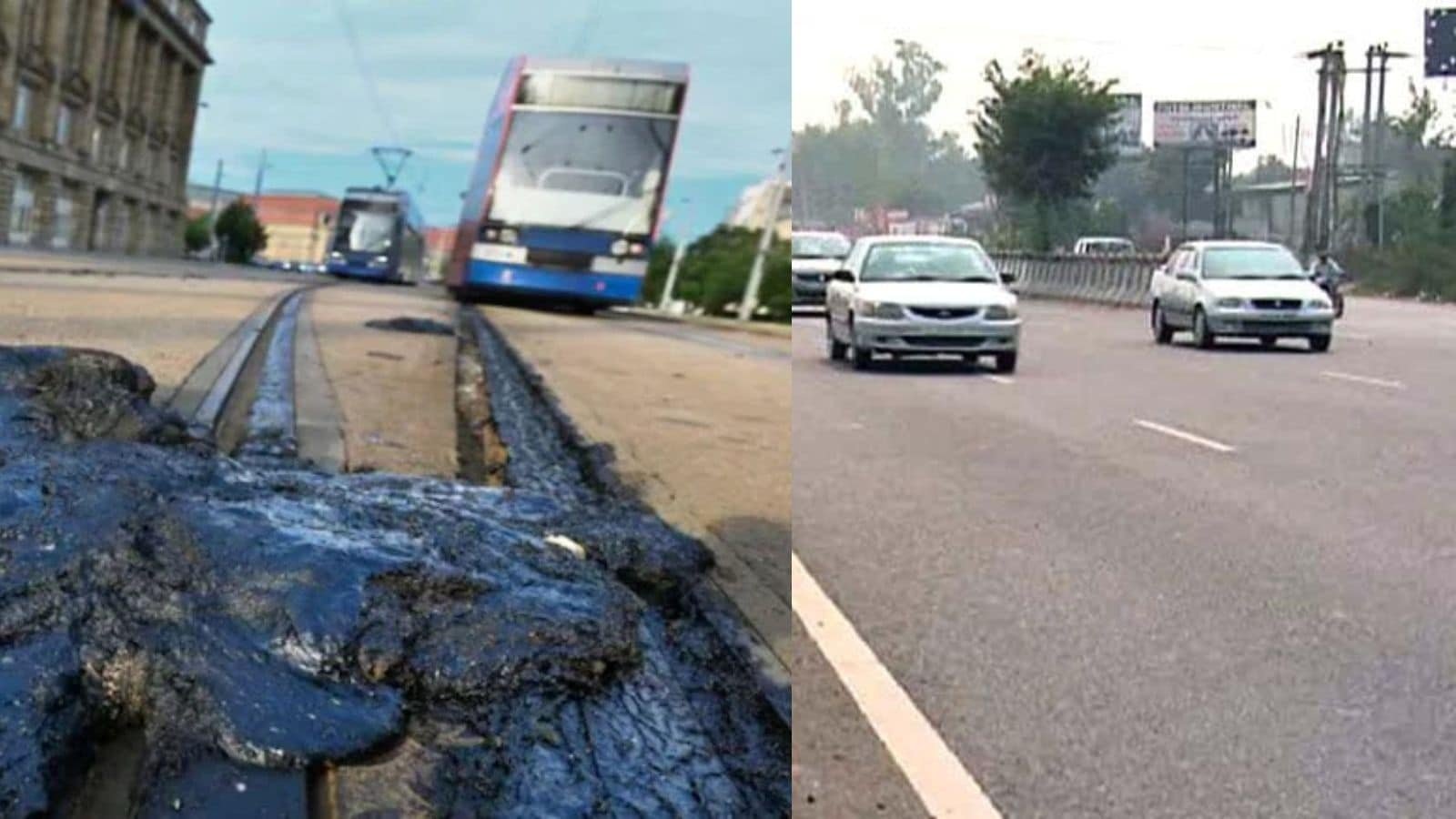
It is a striking contrast: a 40°C (104°F) heatwave can cause roads in the UK to soften and rut, while Indian roads routinely endure grueling temperatures well over 45°C (113°F) without breaking a sweat.
The explanation does not lie in one country building “better” or “stronger” roads. Instead, it comes down to a fundamental engineering principle: climate-specific material selection. Pavement engineers must design roads for the weather extremes they face most often, and what protects a road from a freezing winter makes it highly vulnerable to a scorching summer.
The European Dilemma: Engineering for the Freeze
In the UK and much of northern Europe, the primary environmental threat to infrastructure has historically been the winter. Roads must survive repeated freeze-thaw cycles, where water seeps into the pavement, freezes, expands, and tears the structure apart.
To counter this, UK roads are engineered using materials like Hot-Rolled Asphalt (HRA) and dense asphalt concrete. These mixtures prioritize flexibility:
-
Softer Bitumen: The “glue” binding the road together uses a lower-viscosity, softer grade of bitumen.
-
Finer Aggregates: The mix contains smaller stones and a higher proportion of bitumen.
This recipe ensures the road can safely contract and expand during harsh winters without cracking. However, when an unprecedented 40°C heatwave strikes, this built-in flexibility becomes a liability. The softer bitumen reaches its softening point, turning gooey. Under the immense weight of heavy trucks and buses, the weakened surface deforms, leading to severe rutting and sinking.
The Indian Blueprint: Built for the Bake
India faces the exact opposite climate challenge. Extreme sub-zero freezes are rare across most of the subcontinent, but months of intense sunlight, crushing traffic, and blistering summer heat are guaranteed.
To withstand these conditions, Indian road construction relies on high-temperature stability:
-
Harder Bitumen Grades: Engineers utilize stiffer, highly viscous binders like VG-30 and VG-40 (Viscosity Grade) bitumen. These require much higher temperatures to soften.
-
Larger Aggregates: The asphalt mix incorporates a higher percentage of larger, interlocking stones, which distribute heavy vehicle weight mechanically rather than relying solely on the bitumen.
This combination prevents the pavement from losing its structural integrity, ensuring that temperatures capable of warping a British highway are just another standard summer day for an Indian road.
The Climate Change Challenge: As global temperatures shatter historical records, engineers worldwide are being forced to rethink their formulas. A mix designed for a country’s past climate may no longer be equipped to handle its future.
