

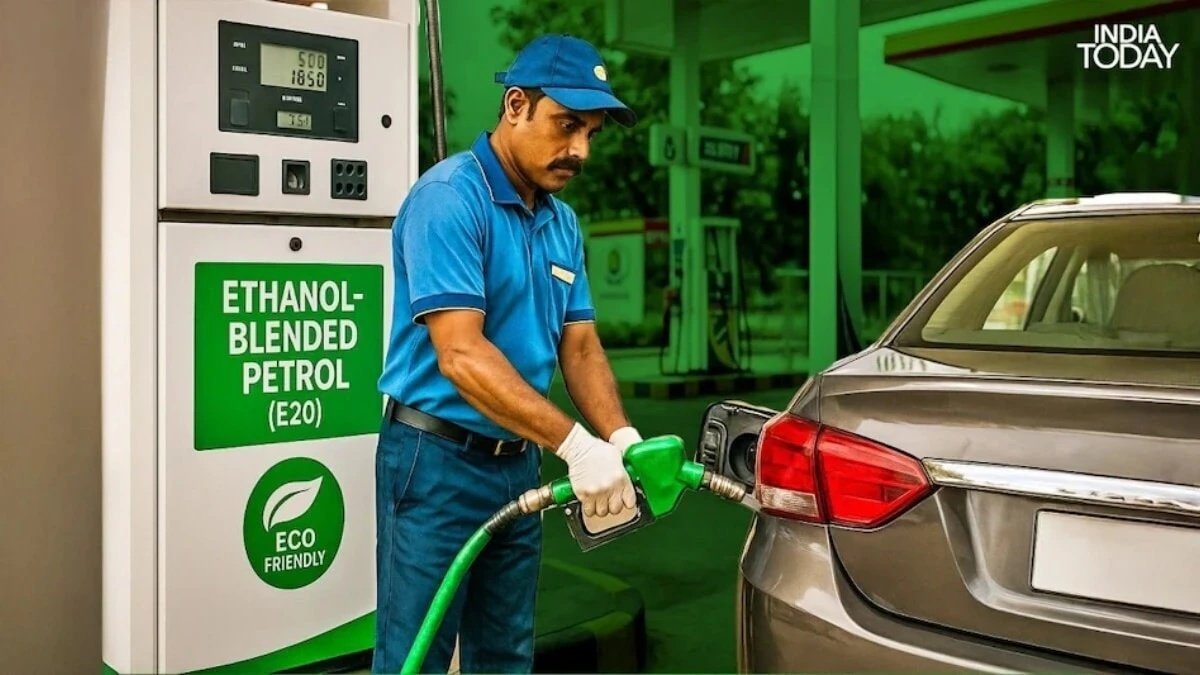
The Central government informed the Supreme Court on Tuesday that its ambitious 20% ethanol blending initiative in petrol remains an “ongoing experiment,” noting that the comprehensive impact of the policy will only manifest by next year.
Attorney General R Venkataramani, representing both the Centre and Bharat Petroleum Corporation Limited (BPCL), made the submission during a apex court hearing concerning a dispute over ethanol supply allocations for the 2025–26 supply year.
Key Legal and Policy Highlights
-
Status Quo Ordered: A vacation bench of the Supreme Court directed that status quo be maintained regarding the current ethanol supply allocations for 2025–26. The bench also issued formal notices to the Union government and 23 independent distilleries.
-
The High Court Dispute: The hearing arose from an appeal filed by BPCL challenging a Karnataka High Court order. The High Court had directed Oil Marketing Companies (OMCs) to reconsider representations from local distilleries that were requesting increased ethanol allocations.
-
Disruption Concerns: Attorney General Venkataramani argued that individual High Court interventions could fundamentally disrupt the Centre’s nationwide blending strategy. He pointed out that supply contracts had already been finalized back in October 2025, and that similar legal disputes are popping up across various state courts.
-
Centralizing the Cases: To ensure uniform adjudication and prevent conflicting regional rulings, the Attorney General revealed that the Centre plans to file transfer petitions to move all related cases to a single judicial forum.
The Blending Debate: Pros vs. Cons
The government’s aggressive push toward a 20% ethanol blend (E20) continues to trigger intense debate among policy experts, consumers, and automakers.
The Government’s Stance: The policy is a vital step toward strengthening national energy security. By cutting down on expensive foreign crude oil imports, reducing vehicular carbon emissions, and creating a robust market for agricultural byproducts, the initiative is designed to heavily boost domestic farmers’ incomes.
The Critics’ Concerns: Skeptics and consumer groups point out that higher concentrations of ethanol can cause corrosion in older, non-compliant vehicle engines. Additionally, because ethanol has a lower energy density than pure gasoline, motorists are experiencing a noticeable drop in overall fuel efficiency.
