

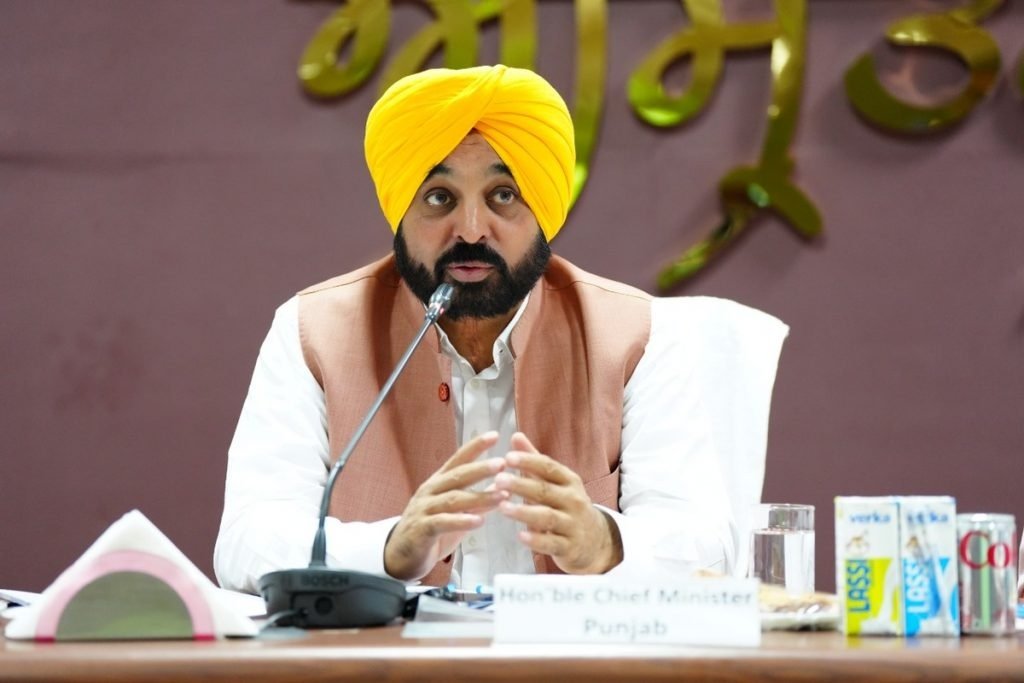
The Akal Takht’s religious decree has rapidly evolved from a regional state crisis into a federal standoff. By announcing that Sikh Union Ministers in the Central Government will entirely boycott Chief Minister Bhagwant Mann, the BJP has introduced an aggressive new dynamic.
This move effectively shifts the battle from standard electoral mudslinging to an institutional freeze.
1. The Strategy Behind the BJP Boycott
Historically, the BJP has struggled to break into Punjab’s rural, Sikh-majority electorate on its own, traditionally relying on its past alliance with the Shiromani Akali Dal (SAD). Now contesting independently, the party is using this crisis to achieve two major strategic goals:
-
De-legitimatizing AAP on Federal Ground: By cutting off interactions between Sikh Union Ministers and Mann, the BJP is trying to isolate the Chief Minister. They are framing him not just as a political opponent, but as an outcast who cannot effectively represent Punjab’s interests to the Central Government.
-
Out-Panthing the Akalis: With SAD weakened by its own past religious controversies, the BJP is trying to position itself as a strict protector of the Akal Takht’s authority.
2. Institutional Paralysis vs. Administrative Reality
While the Centre has not issued an official administrative directive to freeze relations, the political boycott by key ministers will inevitably impact Centre-State coordination.
Punjab is heavily dependent on federal cooperation for critical sectors like agricultural subsidies, direct benefit transfers, and security infrastructure. Forcing a situation where a state’s Chief Minister cannot sit across the table from key federal ministers creates serious governance friction.
3. AAP’s Counter-Defense: The “Political Conspiracy” Line
The Aam Aadmi Party is aggressively pushing back against this coordinated pressure. Their defensive strategy relies on a distinct counter-narrative:
The AAP Playbook: Frame the entire crisis as a deeply coordinated trap orchestrated by the BJP and traditional state parties. AAP argues that their political opponents, unable to defeat them on governance metrics like free electricity and local clinics, are weaponizing religious institutions and relying on “fake videos” to subvert a democratically elected government.
By demanding Mann’s immediate resignation, Punjab BJP chief Keval Singh Dhillon has made the stakes crystal clear. The BJP is betting that the moral authority of the Akal Takht will permanently break AAP’s rural support. Meanwhile, AAP is banking on the hope that voters will view the Centre’s heavy-handed boycott as an attack on Punjab’s state autonomy.
